
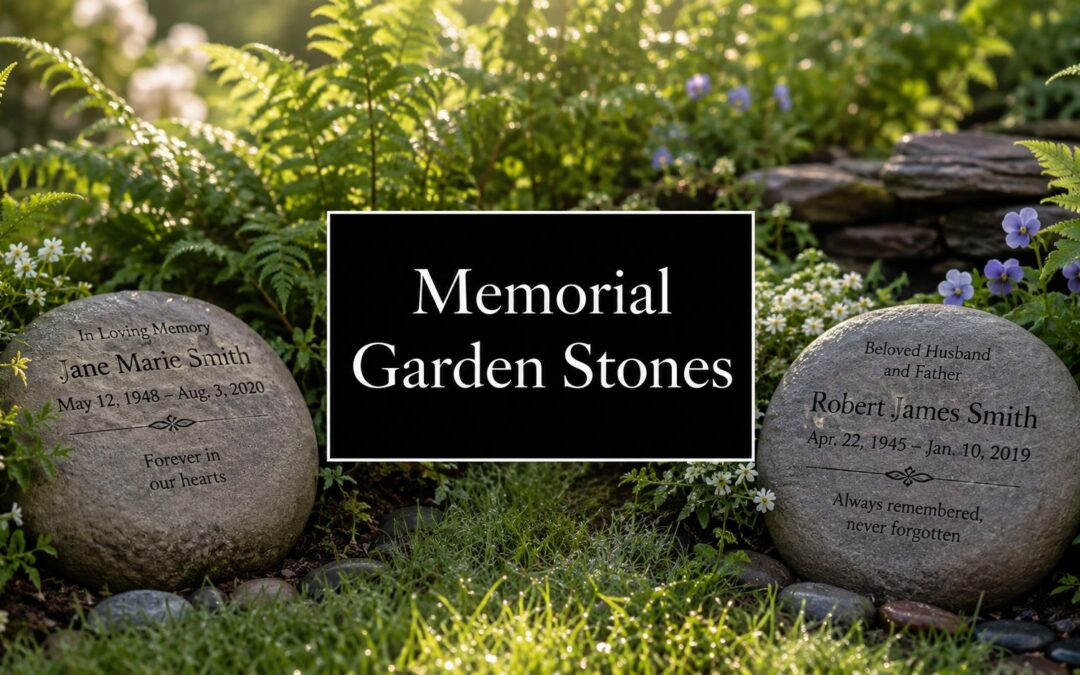
You're standing in the middle of a practical choice, not a decorative one. The flowers have faded, the ashes have been scattered or placed, and now you want something small enough for a garden, personal enough to feel right, and tough enough to stay legible outdoors. That's where personalized memorial garden stones matter, because the question isn't just what looks beautiful today, it's what will still read clearly after years of sun, rain, and handling.
In Australia, that decision often comes after cremation, which is the dominant funeral pattern and a strong reason compact memorial markers have become so relevant. The Australian Funeral Directors Association reported cremation accounted for 73.1% of all Australian funerals in 2023, while burial still represented 26.9% (AFDA reporting referenced here). That mix matters, because families are choosing between cemetery traditions and smaller outdoor remembrance spaces, often in suburban gardens, courtyard corners, or shared memorial areas.
The production side matters just as much as the sentiment. A Trotec laser setup gives shops a repeatable, non-contact engraving method that's suited to consistent memorial work, especially when a family wants matching pieces or a planner is batching orders. If you want to see how that workflow connects to custom engraving and memorial plaque production, Evright Industrial explains its approach here.
Who Personalised Memorial Garden Stones Are Really For
The first decision is usually emotional, but it becomes practical very quickly. A family might want something more permanent than flowers, smaller than a headstone, and personal enough to feel like the person they're remembering. That's the place personalized memorial garden stones fill, especially when the memorial needs to sit in a garden rather than a cemetery plot.
The most common buying moments
In Australian homes, these stones often follow cremation, a scattering, or the creation of a small remembrance corner. They're also used for pet memorials, shared family garden spaces, and quiet courtyard settings where the memorial needs to stay modest and weather-aware. Because they're compact, they suit places where a full monument would look out of scale or may not be permitted.
The broader memorial market also shows how much families now expect design to be personal rather than generic. Industry commentary notes that 40% of consumers request digital personalisation such as QR codes or photos, and 35% want a QR code etched onto a memorial marker, while the average consumer spend on a single monument is about $3,500 (market commentary). Those figures aren't about garden stones alone, but they do show the shift toward individualised memorial design.
Practical rule: if the stone will live outdoors, buy for the site first and the sentiment second. The best inscription in the world won't matter if the surface fades, chips, or moves.
A good supplier should be able to answer straightforward questions about placement, finish, and engraving method without making the process feel vague. If they can't explain how the memorial will perform in your actual garden, you're not looking at a production specialist yet. A useful starting point for custom memorial plaque-style work is Evright Industrial's memorial products page, because it reflects the kind of production thinking that matters when remembrance has to last.
Stone Materials and Finishes That Survive the Outdoors
The substrate does most of the long-term work. If the base material is wrong for the site, even careful engraving will not rescue it later. For Australian outdoor use, the key question is whether the material can handle UV, rain, heat, frost, irrigation splash, and salt air without losing clarity.

What each material does outdoors
Cast concrete is the workhorse option when a maker uses low-water mixes with Portland cement, natural fine sand, graded aggregates, and admixtures. The finish matters as much as the body of the stone, because outdoor-grade concrete is paired with water-based UV-stable stains and two coats of outdoor sealant to resist abrasion and help colour stay stable in weather exposure (durability spec). That makes it a sensible choice for exposed beds and general garden placement.
Natural granite and slate suit buyers who want a more premium, traditionally enduring surface. Granite usually handles long-term outdoor exposure well, while slate can give a softer look but needs careful finishing if the memorial sits in a harsher location. For general context on natural stone, R.E. and Sons Landscaping natural stone is a helpful companion read.
Resin and polyresin designs are easier to handle, because lighter constructions around 2 to 2.6 lb are simple to place. The trade-off is stability outdoors. By contrast, heavier memorial forms such as 15" x 15" at 23 lb and 21" x 21" at 40 lb are used where fixed placement is needed because mass reduces movement from wind, foot traffic, and runoff (weight and stability data).
Laser-marked metal plaques can work well where a flatter, cleaner look is wanted, especially for compact memorials or coordinated installations. They are more of a precision marking solution than a sculptural stone solution, so the choice depends on the site and visual style.
For a sheltered courtyard, lighter and cleaner finishes can work. For a full-sun memorial bed, sealed cast concrete or solid natural stone is the safer long-term decision.
| Stone material comparison for Australian outdoor conditions | Typical weight & size | Best outdoor use | Key trade-off |
|---|---|---|---|
| Cast concrete | Commonly around 11.5" x 11.5" x 1" and 13–14 lb when sealed for outdoor placement (durability spec) | Exposed gardens, family memorial beds | Needs sealing and good pigment stability |
| Natural stone | Size varies by slab and cut | Long-term outdoor memorials, premium finish | Heavier and usually costlier to work |
| Resin or polyresin | Around 2 to 2.6 lb in lighter styles (weight and stability data) | Sheltered spaces, temporary displays | Less stable in harsh outdoor conditions |
| Laser-marked metal plaque | Compact plaque formats | Courtyards, coordinated memorial installations | Less like a traditional stone memorial |
The finish is what separates a decorative object from a weather-ready memorial. If the supplier does not mention sealant, pigment stability, or outdoor exposure, they are probably selling appearance rather than longevity.
Engraving Methods and How They Age
The engraving method changes the surface, and the surface determines how the memorial ages. Families often ask about the wording first, but the more useful question is how those words are formed on the material. That choice shapes legibility, contrast, and whether the inscription still reads clearly after years outside.

How the workshop method changes the result
Laser engraving is a non-contact process, so the machine marks the surface without striking it. That matters for consistency when a workshop needs repeatable detail across several stones or matching family pieces. It gives clean results on names, dates, symbols, and small artwork, and it suits controlled production where the same layout has to hold up across multiple orders.
The way a laser marks the stone changes with the material. On hard granite, the mark can stay crisp and tightly defined. On softer slate, the same style can read a little differently because the surface structure accepts the laser in another way. That is why a proof alone does not tell the whole story. The stone itself decides how sharp the final line will be.
Sandblasting removes material by force, so it creates a deeper, more traditional cut. It works well on some stone types, but the depth and edge profile depend on the substrate and the quality of the mask. Hand chiselling gives the most artisanal feel, though it takes more labour and does not suit fine detail as easily. For a memorial that needs a strong tactile face, both approaches can work, but they behave very differently under long outdoor exposure.
Printed or vinyl overlays sit in a separate category. They may look sharp at first, but they do not age like an engraved surface, especially under sun, irrigation, and outdoor cleaning. A print layer can fade, lift, or edge-wear long before the stone itself shows trouble, so it is better treated as a visual addition than as the main long-life marking method.
That difference matters more in Australia than many buyers expect. A memorial in a shaded courtyard can tolerate more surface decoration, while a marker in open garden conditions needs the inscription to survive UV, moisture, and routine rinsing. The workshop rule is simple. If the mark sits on top of the material, it has more to lose. If it sits in the material, it usually lasts better.
The market is also shifting toward image-heavy memorials, which is why many buyers now ask about photo panels, symbols, and code-based tributes (market commentary). That trend puts more pressure on the engraving method itself. Fine artwork only stays readable if the process can hold the smallest lines cleanly in the chosen stone, rather than just looking good on a screen proof.
The producer's job is to match method to substrate. A laser-marked surface on slate behaves differently from a sandblasted granite face or an acrylic insert, and the long-term result depends on how the material handles UV exposure, moisture, and cleaning. The same design can age well on one substrate and fail early on another, which is why the material choice and the marking method need to be considered together.
A good example is a family name set in a shallow printed layer on a stone that sits near sprinklers. The first season may look fine, then the edges soften and the contrast drops. By contrast, a properly engraved face from Evright Industrial's laser engraved memorial stones keeps the design in the stone itself, so the workshop is relying on material depth and controlled marking rather than surface decoration.
Workshop rule: if a design depends on tiny lines staying readable, choose the method that holds detail in the actual material, not the method that only looks sharp in a proof.
Sizing, Layout and Inscription Guidance
Size affects not just appearance, but readability from the path. A memorial can feel intimate and still need enough face area for the text to breathe. For a home garden, a practical size range is 8 to 16 inches across, while a larger 18 to 24 inch flat slab works better when the stone is meant to be a dedicated focal point (size guidance).
What belongs on the stone
The most common inscription elements are birth and death dates, a name, a sentimental quote, and a small image or symbol (inscription guidance). That's enough for most families. More text usually makes the design harder to read, especially on textured surfaces or smaller stones.
The placement choices matter just as much as the wording. Keep the name far enough from the edge that the stone still feels balanced, and avoid stacking too many lines into a small area. If a quote is meaningful but long, it may belong on a separate plaque or in a larger slab rather than on the main marker.
A useful way to think about layout is this:
- Start with the name: it should be the clearest element on the face.
- Add the dates next: these usually sit below the name and need less visual weight.
- Place the symbol last: a small flower, heart, cross, paw print, or similar motif can anchor the design without crowding it.
- Use contrast deliberately: dark text on a textured light stone, or lighter infill on a darker face, tends to read better from a distance.
Don't design for the close-up proof alone. Design for the person walking past the garden path in afternoon light.
If the memorial is part of a broader garden layout, a design tool can help you visualise how much visual space the stone will really occupy. For that kind of planning, ai for garden design can be useful for seeing how the memorial sits among plants, paving, and sightlines. The goal is simple, the stone should read clearly without taking over the whole space.
Ordering Process, Lead Times and Approvals
A memorial order usually starts with a proof, and that first step matters more than many buyers expect. The proof fixes spelling, dates, line breaks, image placement, and the way the inscription sits on the stone. Once those details are approved, the workshop can move to stone selection, layout setup on the Trotec laser, engraving or sandblasting, sealing, finishing, inspection, and packaging. For batch jobs, funeral homes and memorial planners often need that sequence controlled carefully so each piece matches the next.

The checkpoints that prevent avoidable mistakes
Portrait work needs extra attention because the photo file sets the limit on what the engraving can hold. If the image is soft, cropped poorly, or crowded with contrast, the finished mark will carry those weaknesses no matter how precise the machine is. A workshop can sharpen a layout only so far. It cannot invent detail that was never present in the source image.
Lead time also depends on the stone itself and how it is prepared for dispatch. A personalised stone typically needs at least a couple of days to cure or dry after the mortar is prepared and the lettering is added (production-time note). After that, the workshop still has to complete inspection, then pack the piece so the face, edges, and any infill arrive in good condition. Tight packing and the right dispatch timing help prevent scuffs, chipped corners, and movement inside the carton before the memorial reaches the site.
For planners handling multiple memorials, batching matters. The same approval workflow should apply to each piece, along with the same font rules and image checks, or small differences become obvious once the stones are installed side by side. Funeral directors should ask for written confirmation on spelling, dates, artwork resolution, final layout, and packaging and delivery timing before any marking starts.
A simple approval checklist helps:
- Proof sign-off: no engraving starts until the layout is approved.
- Image check: portrait or QR artwork needs usable resolution.
- Material confirmation: the base material and finish should match the intended site.
- Dispatch timing: collection or delivery should be confirmed after curing, inspection, and packing.
The buyer who asks for those checkpoints usually avoids the most painful mistakes. In memorial work, a typo is not a small issue, it is the whole stone.
Pricing Factors and What Moves the Quote
A memorial quote becomes easier to read once you separate the parts that shape it. Material choice, size, image work, inscription detail, fixings, and finishing all sit on different cost tracks. Once those are clear, you can choose where the memorial needs refinement and where a simpler approach still suits the site.
What adds cost
A larger or heavier stone costs more because the material bill rises and handling becomes more involved. That is why a small resin piece sits in a different price band from a cast concrete marker or a solid natural stone memorial. Image work also adds time, especially if a photograph needs cleaning before laser or sandblast engraving.
Custom shapes usually push the quote higher than a standard slab. Ground stakes, mounting hardware, or fixed placement components add another layer because they change the installation method and the level of stability the stone needs outdoors. Sealing and painted infill also affect the price, since they add production steps and help the memorial hold up better over time.
There is also a wider market context to keep in mind. The average consumer spend on a single monument is about $3,500 (market commentary). Garden stones usually sit well below that figure, but the comparison helps families see why a custom outdoor memorial still carries real production value.
A quote that looks cheap can hide the trade-off in finish, legibility, or outdoor stability. Ask what is included, not just what appears on the headline price.
If you are comparing suppliers, ask for the total and the breakdown. Check whether the price includes proofing, sealing, image preparation, and any fixings needed for the site. A clear breakdown makes it easier to compare two memorials that may look similar online but behave very differently outdoors.
Durability, Maintenance and Australian Conditions
Australian weather asks different questions of a memorial than an indoor keepsake does. Sun, salt, frost, irrigation runoff, and smoke all attack a stone in different ways, so the key test is not only how it looks on day one, but how the inscription behaves after years of exposure. A memorial that reads clearly in a sheltered garden can age very differently on an open verge or near the coast.

Matching upkeep to the placement
Maintenance starts with where the stone sits. A memorial in full sun needs more regular attention to sealant condition, because ultraviolet exposure slowly breaks down protective coatings and can make painted infill look tired sooner. A piece placed under a tree or in a sheltered bed may avoid that direct sun load, but it can pick up leaf tannins, sap, and damp patches that leave stains if they are left sitting on the surface.
Coastal placement needs special care. Salt deposits build up on the face of the stone and around carved edges, and those deposits can speed up sealant failure if they are not rinsed away gently. After coastal rain, a soft freshwater rinse is usually better than scrubbing, because the aim is to remove residue without wearing the finish. The same approach helps around sprinkler zones, where mineral marks can collect at the edges of lettering and make the surface look patchy.
Cleaning products matter just as much as the cleaning method. Harsh bleach, acidic bathroom cleaners, and abrasive powders can strip protective layers or dull a polished face, especially on painted or sealed memorials. A mild soap solution, clean water, and a soft cloth are safer starting points for most outdoor pieces. If the memorial has a delicate image or filled lettering, pressure washers and stiff brushes are usually too aggressive for routine care.
Re-sealing is part of long-term outdoor care, not a sign that the stone was made poorly. The right interval depends on exposure, because a piece under harsh sun or coastal spray will usually need attention sooner than one in a protected garden bed. Look for fading, water no longer beading, or colour infill that appears chalky at the edges. Those are the practical signs that the surface protection is thinning.
Mass and mounting still matter after installation. A heavier memorial is less likely to shift in wind or runoff, but it still needs a stable base and periodic checks if it sits in loose soil. If the stone is fixed in place, the fixings and the bedding around it should be checked after heavy rain or ground movement. A memorial can be durable and still suffer if the site itself is neglected.
For families comparing memorial products with outdoor plaques, Evright Industrial's custom outdoor memorial plaques is a useful reference for how placement and finish affect long-term care. The core lesson is simple. Choose the cleaning routine and re-sealing plan for the actual site, not for an ideal indoor setting.
Choosing a Supplier and Bringing It All Together
The best suppliers talk in terms of material, method, placement, and approval, not just sentiment. When you're comparing options, ask how the memorial will be engraved, what sealing is used, how proofs are handled, and whether the design can be matched across multiple pieces if you need a coordinated memorial. Those answers tell you far more than a glossy product photo.
Questions worth asking before you order
A good quote should make these points clear:
- Proof turnaround: how quickly will you see the artwork before production starts?
- Material and sealant: what base material is being used, and how is it protected for outdoor placement?
- Image limits: what resolution or file quality is needed for portraits and symbols?
- Batch consistency: can multiple memorials be made with matching layout and finish?
- Placement advice: does the supplier adjust the design for sheltered, exposed, or fixed installation?
A supplier using Trotec laser machinery can usually give a more consistent outcome on detailed work because the engraving process is controlled and repeatable. That matters when families want a specific name layout, a small portrait, or a QR code that still scans clearly later. It also matters for funeral homes and planners who need pieces to match without hand-to-hand variation.
Placement outside private homes can bring local rules into the picture. Cemetery, council, and strata environments may all have different expectations around memorial objects, so it's sensible to confirm permission before a stone is installed in a shared or public setting. That's especially true when the memorial is going into a common garden, memorial area, or council-managed space.
If you want a supplier that can discuss artwork, materials, and lead times for custom engraving or memorial plaque-style work, Evright Industrial is one practical place to start. They work with precision engraving and can help with custom memorial pieces that need to stand up in demanding environments while still looking personal.
If you're ready to turn a design into a memorial that still reads clearly outdoors, talk to Evright Industrial about custom engraving, materials, and production timing. They can help you choose a format that suits the garden, the climate, and the inscription you want to preserve for years to come.
Recent Comments