

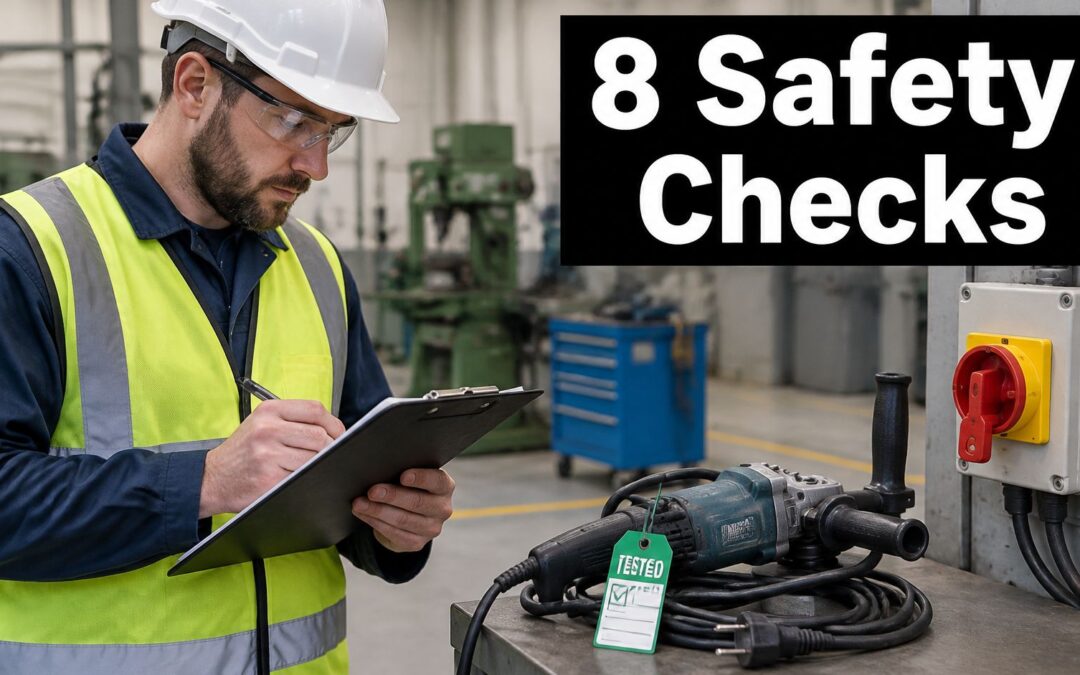
You're walking the floor before an audit when the small problems become obvious. A warning label has faded into its background, an isolator has no equipment reference, and the portable grinder beside the maintenance bench has an unreadable test tag. The procedures might be filed correctly, but the person standing at the machine still can't verify what's safe.
Physical identification connects your safety system to the actual workplace. Signs, tags, labels and plates help workers recognise hazards, locate controls and match equipment to inspection records. They don't replace guarding, competent maintenance or safe work procedures, but missing identification can make those controls harder to apply.
The stakes extend beyond presentation. Safe Work Australia's key WHS statistics recorded 139,000 serious workers' compensation claims in 2022–23, with body stressing accounting for 32.7%.
Before starting your safety compliance checklist, bring the asset register, current drawings, emergency plan and outstanding maintenance actions onto the floor. Coordinate broader indoor air quality and structural checks separately, so a signage walk doesn't get mistaken for a complete building inspection.
For every defect, record the location, responsible person, corrective action and close-out evidence. Prioritise anything that prevents safe isolation, hazard recognition or emergency response.
1. Hazard and Safety Signage Compliant with AS 1319
Check the sign from the worker's approach, not from directly underneath it. A sign can look acceptable in a close-up photograph yet disappear behind a door, merge into pipework or become unreadable through a scratched face shield.
Use AS 1319, Safety signs for the occupational environment, as the reference for sign categories, colours, shapes and symbols. Confirm the applicable requirements for your workplace rather than assuming any yellow rectangle counts as an adequate warning.
Inspect the message and its position
Run the physical inspection against a sign register that identifies the hazard, location, sign category and condition.
- Correct category: Distinguish warnings, prohibitions, mandatory actions and emergency information.
- Useful sightline: Position the sign before the worker enters the hazard area.
- Readable message: Check contrast, lighting, viewing angle and the distance from which someone needs to act.
- Suitable construction: Match the substrate, marking method and fixings to cleaning chemicals, abrasion and weather.
For hazardous chemicals specifically, Safe Work Australia's signs and placards guidance says signs must be next to the relevant hazard and clearly visible to approaching people. Check applicable placarding arrangements at emergency-service entrances as well.
Say a fabrication workshop has paper warnings beside machine guards. Replace damaged signs with suitably specified engraved aluminium or polymer signs, then check them under normal operating lighting before accepting installation.
Engraving alone doesn't establish compliance. A durable plate with the wrong symbol, inadequate contrast or an incorrect message is still unsuitable. Keep required colours and symbols intact, and inspect the finished sign rather than approving it solely from artwork.
2. Electrical Equipment Identification and Isolation Labelling
An isolator marked “pump” isn't useful when several pumps stand nearby. The identifier needs to distinguish the equipment, match the electrical documentation, and remain readable where the electrician operates the switch.
Treat AS/NZS 3000, the Wiring Rules, and applicable electrical safety requirements as references for the electrical contractor's verification. Don't let an administrative label replacement become an opportunity for unqualified workers to open switchboards or investigate circuits.
A practical check starts with a walk between the equipment and its documented supply. Compare the switchboard schedule, single-line diagram, equipment identifier and isolator label, then have discrepancies resolved through the authorised electrical process.
Isolation rule: A matching label helps identify the intended supply. It never proves that equipment is de-energised.
Reconcile before replacing
Check the following before ordering replacement plates:
- Equipment reference: Use the same identifier on the machine, isolator and drawing.
- Supply information: Identify additional supplies where relevant, including backup or control supplies.
- Physical condition: Look for loose fixings, corrosion, worn lettering and labels hidden by handles.
- Change history: Confirm alterations have been reflected in both drawings and field identification.
For a water utility pump station, a suitable approach might be engraved stainless steel identifiers selected for the local environment. The contractor should reconcile the identifiers with the drawings during commissioning, not copy whatever the old labels happened to say.
Metal plates can suit harsh locations, but their material, attachment and placement need electrical review. Never drill into an enclosure or compromise its protection to fit a more durable label.
Close the finding only after the authorised person verifies the identification and the updated documentation.
3. Lockout/Tagout (Isolation Point) Identification
Say a food-processing line has electrical drives, compressed-air actuators and a raised assembly that can move under gravity. Labelling the electrical isolator alone leaves the maintenance crew without a complete picture of the energy sources.
Lockout/tagout identification must match the isolation procedure. Give each relevant isolation point a distinct reference, then reproduce that reference in the procedure, equipment photographs and maintenance records. Use machine-safety references such as AS 4024 within a competent assessment, rather than treating a numbered tag as proof of safe isolation.
Follow the whole energy path
Walk the procedure with an authorised worker who understands the machine. Identify supplies, stored energy, connected equipment and the means of confirming the safe state before work begins.
- Identify the point: Mark the actual valve, disconnect or other isolation device.
- Match the procedure: Use identical references and clear location descriptions.
- Verify the method: Confirm how workers isolate, secure, release stored energy and check effectiveness.
- Control changes: Review identification after modifications, relocation or altered contractor arrangements.
A permanent isolation-point plate and a personal danger tag have different jobs. The plate identifies the device; the lock and personal tag support the worker's isolation process. Neither substitutes for the other.
Oil-resistant engraved identifiers can suit hydraulic equipment, while washdown areas need markings and fixings compatible with cleaning and hygiene requirements. Don't attach a tag where it obstructs valve operation or disappears behind an open guard.
Finish with a practical handover check: can an inducted contractor locate the specified point without guessing? If not, improve the location description and physical marking before accepting the procedure.
4. Fire Safety Equipment and Emergency Signage
An extinguisher sign above an empty bracket fails an audit on its own. So does an exit arrow pointing workers toward a route now blocked by temporary racking.
Start with the emergency plan and walk the actual escape routes. Under the model WHS Regulations, the emergency plan covers response, evacuation, emergency-service notification, medical assistance, communication, testing and worker instruction, as explained in Safe Work Australia's emergency plans fact sheet.
Use AS 2444 and AS 2293, alongside applicable building and fire requirements, when checking extinguisher arrangements, emergency lighting and exit signage. An engraved location plate can mark where equipment sits, but it never replaces a required illuminated exit sign.
Check visibility during normal operations
Inspect with the site in its usual working condition: parked vehicles, open doors, loaded shelving and temporary work areas all change what people can see.
- Equipment location: Match extinguishers, hose reels and alarm controls to the plan.
- Unobstructed access: Confirm workers can reach equipment and follow evacuation routes.
- Sign condition: Check arrows, mounting security, contrast and required illumination.
- Plan accuracy: Update mapped locations when equipment or access arrangements change.
A distribution centre might fix a durable engraved identifier beside each extinguisher bracket, with directional signage checked against the evacuation plan. The maintenance record should name the same location, so a serviced or replaced unit returns to the right bracket rather than the nearest empty wall.
For the signage review itself, the guidance on emergency exit signage requirements covers sign types, siting and visibility. Outdoor egress paths also depend on line marking that stays legible; the Water Works Power Washing compliance tips show how faded markings get restored through routine cleaning, while AS 2444, AS 2293 and applicable building and fire requirements remain the governing reference for Australian sites.
Walk the evacuation route as someone unfamiliar with the building. Familiarity hides an unclear arrow or an obstructed sign.
5. Hazardous Chemical Container Labelling (GHS)
Identify the contents before choosing the label material. A beautifully engraved tank plate becomes dangerous if the tank's contents change and nobody updates the identification.
For hazardous chemicals, check the applicable Australian Globally Harmonized System (GHS) labelling requirements against the product's current safety data sheet. Distinguish container labels from storage-area signs, pipe identification and emergency placards, because they serve different purposes.
Your inspection should cover original containers, reusable dispensing equipment and decanted products. Apply any permitted immediate-use exceptions carefully rather than assuming every unlabelled spray bottle is acceptable because someone recognises its colour.
Compare the label with the product
- Product identity: Match the product identifier to the SDS and chemical register.
- Hazard information: Verify applicable pictograms, signal words, hazard statements and precautionary information.
- Supplier details: Retain the information required for the relevant container and supply circumstances.
- Condition and accuracy: Check that splashes, solvents and abrasion haven't obscured essential text.
Consider a cleaning team dispensing concentrate from a bulk unit into reusable containers. Give the dispensing point clear identification, label the reusable containers appropriately and establish who replaces labels when the product changes.
For fixed tanks, engraved plates can provide durable identification, provided the complete required information remains available and accurate. Portable containers may need chemical-resistant printed labels to accommodate detailed text and changing contents.
Don't trade completeness for permanence. A short engraved product name isn't a substitute for required hazard information.
Treat an unreadable or uncertain container as a control failure. Secure it against use, establish its identity through the authorised process and correct the labelling before returning it to service.
6. Plant and Machinery Asset Identification
The asset number on the machine should lead to the correct inspection history without someone explaining which spreadsheet entry it “probably” means. Unique identification is the connection between the physical asset and its records.
Safe Work Australia's plant duties guidance addresses risk management and information across installation, use, inspection, maintenance and decommissioning. Build the asset check around that lifecycle, including applicable plant registration requirements in the jurisdiction where the equipment operates.
Keep identity separate from changing status
A permanent identifier should stay with the asset. Inspection due dates and service status belong in records or replaceable status tags that can be updated without altering the permanent identity.
Check that the physical identifier agrees with the maintenance system, registration records where applicable, and incident reports. Preserve manufacturer rating plates and safety warnings rather than covering them with a new asset tag.
- Machine identity: Assign a unique reference that won't be reused ambiguously.
- Component identity: Separately identify replaceable motors, gearboxes or attachments when their histories need tracking.
- Record access: Use a readable identifier alongside any QR code, so access doesn't depend entirely on a scanner.
- Transfer control: Reconcile records when plant moves, changes ownership or goes to a contractor.
For example, a council could identify a pump assembly and its separately maintained motor with related but distinct references. Inspectors can then distinguish work completed on the motor from work completed on the pump.
When specifying industrial nameplates, consider mounting position and attachment as carefully as marking durability. A plate attached to a removable cover can lose its connection to the asset when covers are exchanged.
7. Personal Protective Equipment (PPE) Requirement Signage
A hearing-protection sign doesn't control the noise source. PPE signage communicates a requirement after the site has assessed the hazard and selected suitable controls; it doesn't justify leaving a preventable exposure unchanged.
Position mandatory PPE signs at the decision point, before workers enter the area. Someone carrying materials through a doorway shouldn't discover the eye-protection requirement only after reaching the machining cell.
Review signs against current tasks and risk assessments, not just the previous sign register. A workshop that changes its cutting process may need different protection, revised boundaries or stronger engineering controls.
Verify the requirement behind the symbol
Ask the supervisor to show how workers obtain suitable PPE, understand its limitations and report defects. Check that contractors and visitors receive the same clear instructions.
- Entry coverage: Inspect every normal access route, including side doors.
- Task accuracy: Match signs to the actual exposure and required protection.
- Practical availability: Confirm suitable PPE is accessible before entry.
- Worker understanding: Ask workers what the sign requires and when additional task-specific protection applies.
Say a food-processing facility installs washdown-resistant mandatory PPE signs. The material must tolerate cleaning, but the message must also remain consistent with hygiene controls, task risks and the equipment workers are issued.
Consultation matters beyond visible hazards. Safe Work Australia's WHS reporting guidance identifies inspections, employee surveys, worker-representative feedback and injury metrics as useful reporting inputs.
Beyond the sign: Ask whether workload, fatigue or production pressure prevents workers from following the requirement. A clear sign won't correct an unworkable task.
Record those findings for operational action rather than closing the item because the sign is present.
8. Equipment Inspection and Test Tagging (AS/NZS 3760)
A readable test tag is evidence of a recorded inspection or test, not a guarantee that a tool remains safe today. A damaged lead, loose plug or cracked housing still requires action even when the displayed date appears current.
Use AS/NZS 3760 with applicable jurisdictional and industry requirements to determine inspection and testing arrangements. There isn't a universal testing interval for every portable appliance, so don't copy another site's schedule without checking equipment type, operating environment and relevant duties.
Match the tag, tool and register
Start with the permanent equipment identifier, then reconcile it with the inspection record and attached status tag.
- Record identity: Confirm the register describes the actual item, not a similar replacement.
- Test information: Check the recorded test date, next due date where applicable, result and tester identity.
- Physical condition: Inspect leads, plugs, strain relief, enclosures and evidence of unauthorised repairs.
- Failed equipment: Remove it from service, control access and record the defect and disposition.
For a contractor moving tools between sites, an engraved asset identifier can support traceability when a replaceable test tag becomes damaged. It doesn't replace the required inspection information or authorise continued use when the status can't be verified.
Keep permanent markings on a suitable surface without obscuring manufacturer information or damaging the enclosure. Avoid improvised attachment methods that interfere with ventilation or normal handling.
The guide to electrical safety standards in Australia can support the standards review, but a competent person must resolve the actual testing requirements.
Close the finding when the equipment's identity, condition and recorded status agree, not when somebody has attached another tag.
The 8 Safety Compliance Checklist Items at a Glance
| Checklist Item | Governing Standard | What to Verify | Best Marking Solution |
|---|---|---|---|
| Hazard and Safety Signage Compliant with AS 1319 | AS 1319; WHS Regulations | Correct sign category, symbols, visibility, legibility, and placement before hazard exposure | High-contrast engraved aluminium, stainless steel, or UV-stable polymer signs |
| Electrical Equipment Identification and Isolation Labelling | AS/NZS 3000; WHS Regulations | Isolation labels match circuits, equipment references, and current drawings; warnings identify multiple supplies | Engraved metal tags or labels at each isolation point |
| Lockout/Tagout (Isolation Point) Identification | WHS Regulations; AS 4024 series | Each energy isolation point matches the LOTO procedure and equipment documentation | Permanent engraved identifiers on valves, isolators, and breakers |
| Fire Safety Equipment and Emergency Signage | AS 2444; AS 2293 | Equipment and exits are identified, visible, correctly located, and recorded in the emergency plan | High-contrast engraved signs; reflective or photoluminescent signs where needed |
| Hazardous Chemical Container Labelling (GHS) | WHS Regulations; Hazardous Chemicals Code of Practice; GHS | Product identifier, signal word, pictograms, hazard and precautionary statements, supplier details, and secondary-container labels | Chemical-resistant engraved labels for fixed tanks and piping; durable labels for portable containers |
| Plant and Machinery Asset Identification | WHS Regulations; applicable plant registration requirements | Unique asset identifiers match registers; rating plates, capacity details, and warnings are legible | Permanently engraved stainless steel or aluminium asset tags |
| Personal Protective Equipment (PPE) Requirement Signage | WHS Regulations; AS 1319 | Required PPE matches the risk assessment and is clearly signed at area entry points | Durable engraved signs with clear mandatory PPE pictograms |
| Equipment Inspection and Test Tagging (AS/NZS 3760) | AS/NZS 3760 | Tags show test date, next due date, and tester; equipment matches the register and failed items are removed from service | Durable test tags with engraved equipment identifiers linked to the test register |
Turn the Checklist Into Permanent Compliance
A safety compliance checklist earns its keep at the point of verification, when a worker or auditor stands in front of the asset and checks that the record matches reality. Durable identification holds that connection through washdown, weather, chemicals and repeated handling. Permanence alone is not enough. The mark must carry accurate information, sit where the work happens and change only under a controlled process.
When a walkdown turns up failures, sort the actions before you schedule anything. An unidentified isolator is an urgent safety control, a scratched asset plate with a legible reference is an identification repair, and a procedure that names the wrong equipment is a documentation change. Each category has a different owner and a different clock. Give every action an owner, a due date and a verification method, and treat the close-out as a physical check rather than a signature.
Safe Work Australia's reporting on workplace harm supports reviewing controls after incidents, equipment changes and altered work methods. Apply the same discipline to identification when machines move, circuits are modified or contractors take over equipment. A tag that survived the original plant can point at nothing after a shutdown rearranges the line.
Specify the mark before production
Order work from an approved schedule containing the exact wording, identifier, material, dimensions, fixing method and installation location. Record the environmental exposure and the required symbols or colours. A request for a durable label, without those details, leaves the supplier guessing at the job the label has to do.
Our work at evright.com covers asset labels, safety signage, steel plaques, panels, switch plates, electrical switchboards and identifying markers for defence and essential services items. The laser engraving process directs a focused beam onto a compatible material to alter its surface and produce a lasting mark without relying on printed ink.
The result still depends on material selection, contrast and exposure. Laser marking is not a reason to promise that every finish will remain unchanged in every environment, so check the finished sample against the conditions and legibility requirements of the actual installation.
We mark customer-supplied items, with a full sampling and testing program before full production, across electrical, essential services, manufacturing, health services, mining, construction and machines work where consistent identification has to match the register rather than merely look tidy.
Keep this Australian site checklist distinct from other regulatory systems. A driver qualification file checklist addresses a different documentation context and does not establish Australian industrial compliance.
Take the checklist on the site walk, photograph failing identification and build a reconciled replacement schedule. After installation, have the responsible person verify each mark against the asset, the procedure or the emergency plan before closing the action.
Evright Industrial produces durable asset identification, safety signage and engraved plates that connect your safety records with equipment on the floor. Visit Evright Industrial with your replacement schedule, environmental requirements and proposed identifiers to discuss marking and sampling for your site.
Recent Comments