
From Factory Floors to Meaningful Keepsakes
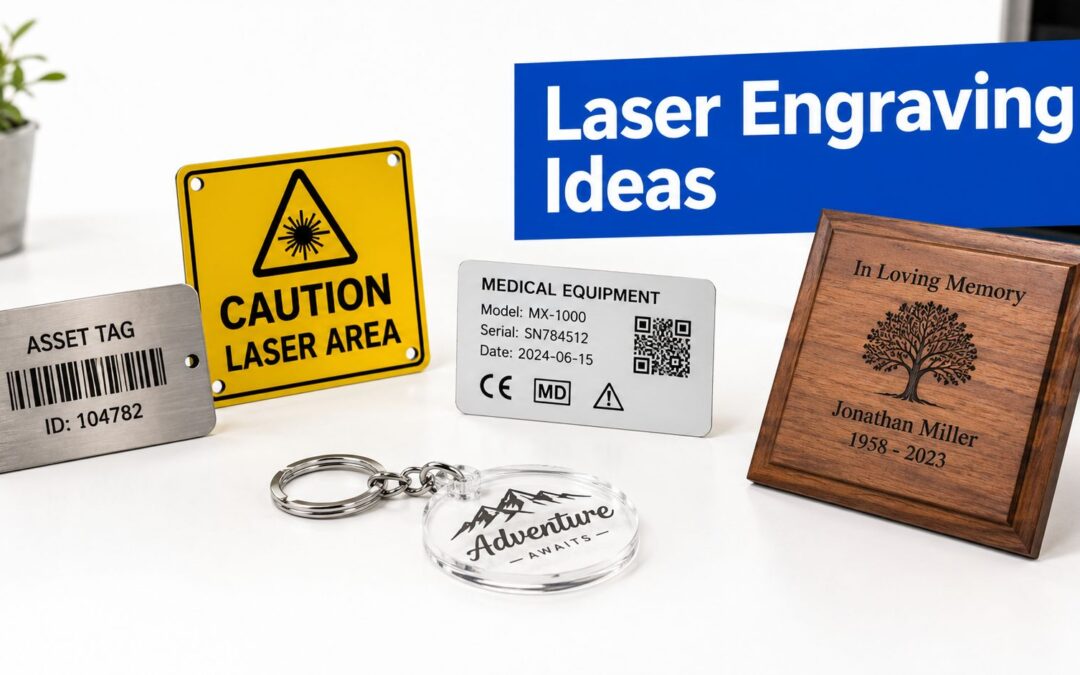
A busy Australian workplace rarely needs just one kind of mark. One machine needs an ID plate that still scans after years of handling. Another area needs a warning sign that stays legible in sun and grime. Somewhere else, a plaque needs a cleaner finish because the job is remembrance, not maintenance. Good laser engraving ideas start there. Not with the prettiest material, but with the environment, the viewing distance, and the exact information the item must carry.
That's why the most useful engraving ideas aren't organised by hobby material. They're organised by operational use. A fleet tag for a mine site, a hospital equipment label, a roadside sign support marker, a memorial plaque, a recognition award, or a pet tag all ask different things from the same production method. The best result comes from matching the artwork, substrate, contrast, and fixing method to the setting.
Trotec Laser machinery is the right visual reference for this kind of work because precision only matters when it survives real use. The machine is part of the story, but so are the coating, the substrate, the text size, and the finish.
If you already have approved artwork or a written specification, Evright Industrial helps turn that into durable engraved products through Trotec Laser production, with a focus on asset labels, signage, plaques, and identification pieces built for practical use.
1. Industrial Asset Identification and Tracking Labels
If the mark has to stay readable for the life of the asset, adhesive shortcuts usually become a maintenance problem later. Laser engraved asset labels suit equipment that gets washed down, bumped, serviced, and audited, especially when the label also needs a barcode, QR code, serial number, or maintenance field.
Australian asset practice leans heavily toward systematic identification, not decorative marking. The University of Sydney's asset identification standard requires assets to be identified, recorded, and labelled in a systematic and consistent manner in the CMMS, and it also expects the label to include the asset's estimated operational life, as set out in the University of Sydney Asset Identification and Labelling Standard.
What works on real equipment
Anodised aluminium is often the first pick when you need low weight, clean contrast, and a professional finish. Stainless steel is stronger when heat, solvents, abrasion, or outdoor exposure are likely to be constant.
A practical format for industrial asset tracking labels usually includes a human-readable asset name first, then a shorter unique ID, then the code. That order matters because maintenance staff often read before they scan.
- Use contrast first: Black-on-silver or dark-on-light combinations are easier to spot in low plant lighting.
- Reserve quiet space around codes: Crowded layouts make barcode or QR performance less reliable once dirt builds up.
- Add service fields carefully: Maintenance dates are useful, but they shouldn't compete with the permanent identity line.
Practical rule: If a technician can't read it quickly with gloves on and poor light overhead, the layout still needs work.
Mining fleet panels, portable plant, hospital devices, and transport equipment all benefit from the same discipline. Keep the label simple, permanent, and easy to reconcile with the asset register.
2. Safety Signage and Compliance Labeling
A warning sign usually gets judged in a split second. On a noisy site, staff do not stand still to admire layout. They glance, confirm the hazard, and keep moving. That is why engraved signage earns its place on panels, plant, service points, and restricted-access areas where the message has to stay legible after cleaning, weather, UV exposure, and daily contact.
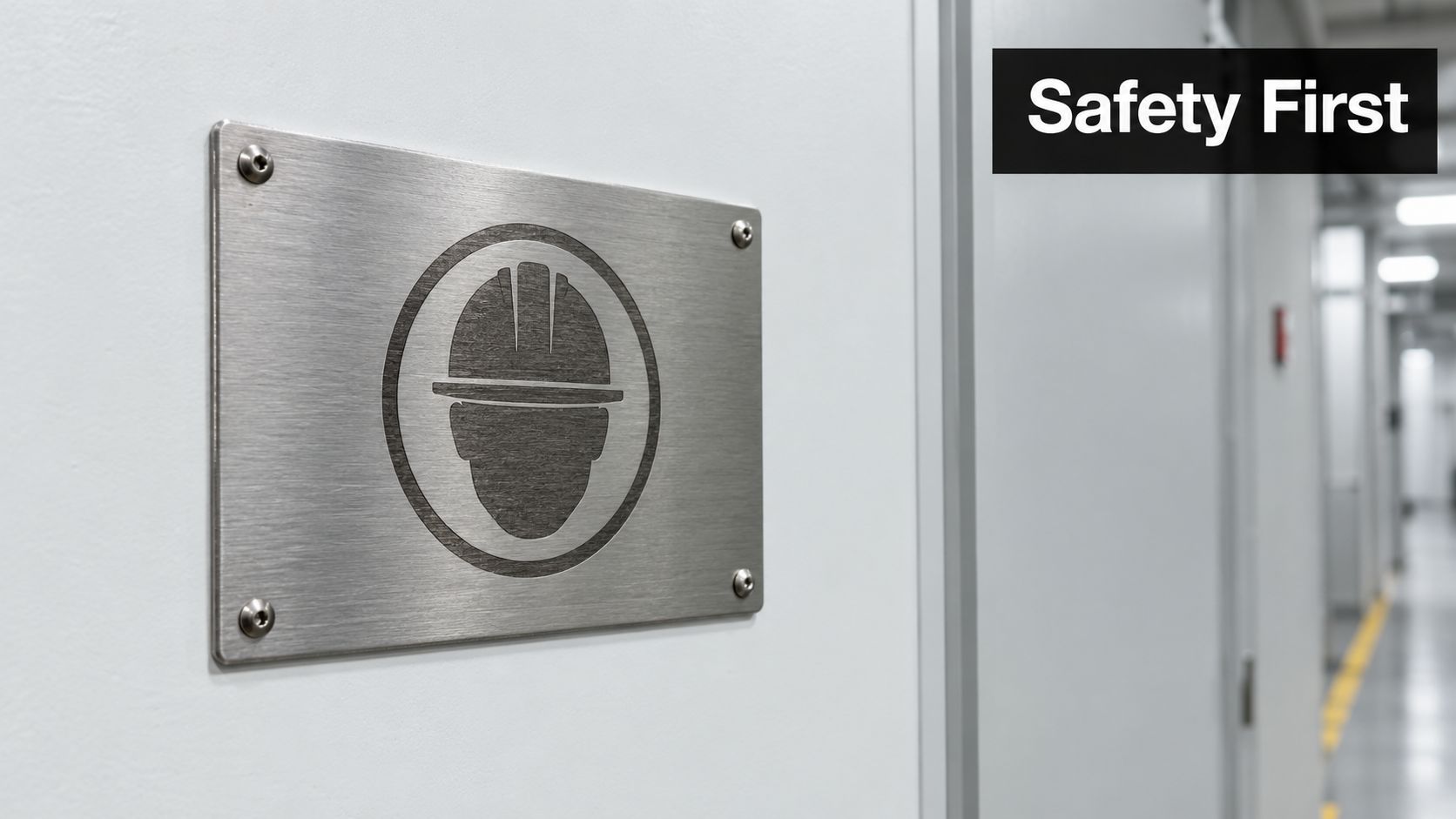
WorkSafe ACT identifies AS 1319-1994 as the Australian Standard covering the design and use of safety signs in work environments, including emergency information signs for safety equipment, exits, and first aid resources, while also noting that exit and emergency-lighting signage must be assessed under the separate AS/NZS 2293.1 and NCC framework, as outlined in this WorkSafe ACT summary of emergency services equipment signage. That split affects artwork setup from the start. A machine isolation label, an extinguisher marker, and an exit sign may sit in the same facility, but they do not all follow the same production logic.
The practical decision is less about whether a sign can be engraved and more about where it will live. Traffolyte and other engravable laminates suit indoor plant rooms, switchboards, and sheltered service areas where you need clean colour contrast and fast turnaround. Anodised aluminium and stainless steel make more sense for washdown zones, exterior plant, corrosive settings, or any location where printed faces tend to fade or lift. Trotec Laser systems are useful here because fine pictograms, small compliance text, and serialised panel references can be cut or marked cleanly without soft edges.
File preparation matters more than many buyers expect. Safety artwork should be built around the viewing condition first, then the logo or branding, if branding is even needed. I usually advise keeping the signal word or hazard class visually dominant, separating symbol and text blocks, and leaving enough margin that fixings do not interrupt the message. If the sign will be mounted on mesh, ribbed cabinets, or uneven doors, proof the design against the mounting surface rather than against a plain white screen.
For buyers reviewing layout conventions on industrial labels, it can help to compare power pack signs and see how critical information is prioritised for quick reading.
Production method also changes the finish. Engraved laminates are economical and easy to standardise across a facility, but they are not the first choice for every outdoor application. Direct marking onto coated or anodised metal gives a sharper, more permanent result where abrasion resistance matters, although the material cost is higher and colour options can be narrower. That trade-off is routine in compliance work.
Evright Industrial supplies safety signage made for Australian workplaces, which is the right direction when the brief includes durability, fixing method, standards alignment, and repeatable production rather than decorative engraving alone.
3. Custom Memorial and Commemorative Plaques
A memorial plaque is usually ordered at a difficult moment, and the practical decisions still matter. The piece has to suit the setting, carry the inscription clearly, and keep that clarity after years of weather, cleaning, or handling.
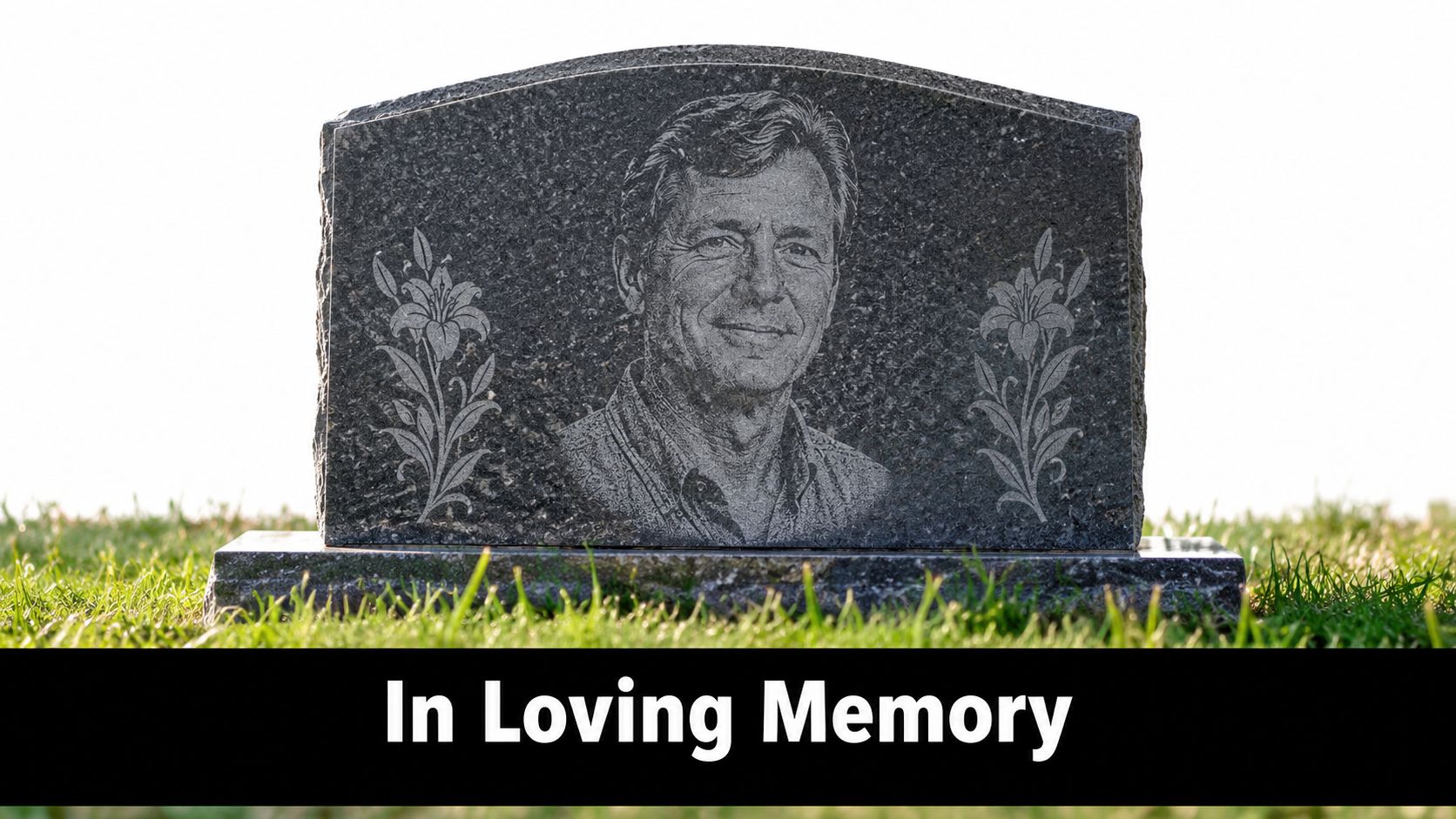
I usually sort memorial jobs by where they will live first. Cemetery plaques and garden memorials need materials that handle constant exposure, so granite, anodised aluminium, and other durable metals are safer choices. Chapel, school, club, and donor memorials often have more freedom on finish, including timber or brass-look laminate, because UV, salt, and standing water are less of a threat.
The design work is quieter than in many other engraving categories. A family name, dates, and one well-set line of wording often reads better than a crowded tribute with flourishes, borders, and multiple image elements competing for space. That restraint is not only aesthetic. It gives the lettering enough room to stay legible once the plaque is mounted and viewed from a natural standing distance.
Portraits and artwork need careful file preparation. A phone photo with busy background detail rarely engraves well without cleanup. Trotec Laser systems are useful here because fine control over power, speed, and resolution helps preserve tonal separation, but the source image still decides a lot of the final result. In production, I would rather simplify an image early than promise detail the substrate cannot hold.
There are a few recurring trade-offs:
- Granite gives permanence and suits outdoor memorials, but layout revisions need to be resolved before production because rework is limited.
- Metal plaques can produce crisp text and consistent repeat runs, especially for walls of remembrance, though colour range may be narrower than families expect.
- Timber can feel warmer indoors, but it needs the right species and finish if humidity or cleaning are part of the brief.
- Script fonts can add formality for names or headings, but longer inscriptions read better in a simpler typeface with more open spacing.
For inscription structure, line order, and readable wording options, memorial plaque wording examples are a useful reference during proofing. Readers comparing environmental considerations around end-of-life services may also want to review reporting for sustainable funeral services.
Evright Industrial can support memorial plaque production where the brief needs durable material selection, repeatable engraving quality, and a finish suited to the site rather than a generic gift-style approach.
4. Medical Equipment and Healthcare Facility Signage
A nurse reaching for a pump, a technician checking a sterilised tray, and a biomedical contractor servicing a device all read labels differently. In a healthcare site, engraved marking has to support that real workflow while still standing up to disinfectants, handling, and audit requirements.
The practical question is not just what to engrave. It is where the mark sits, how it will be cleaned, and whether staff can read it in one glance under fluorescent light, behind a trolley, or through a clear cover. Room signs, instrument set identifiers, pathology storage labels, and biomedical asset plates each need a different approach.
For reusable equipment, low-profile construction matters. Raised edges, deep recesses, and awkward corners can hold residue or make wipe-down slower. On small devices, I would usually reduce branding first and protect the asset ID, service reference, and any required room or department code. That hierarchy serves maintenance teams better than a crowded plate.
For facility signage, readability and finish often pull in different directions. Satin metals can reduce glare, but they may show scratches sooner in high-contact corridors. Laminates can deliver strong contrast and efficient replacement cycles, though they are not the right choice for every aggressive cleaning regime. Trotec Laser systems help here because repeat runs stay consistent across door signs, storage labels, and equipment tags, which matters when a hospital wants one standard across multiple departments.
A useful way to prepare files is to split the job into three groups before production:
- permanent equipment identification
- replaceable operational labels
- public-facing wayfinding or room signage
Each group needs its own text hierarchy, corner treatment, fixing method, and material thickness. That separation also prevents a common mistake. Using one signage spec for every healthcare application.
For production, clean vector artwork, controlled font weights, and clear serial or set-number fields save rework later. Evright Industrial can support that process with material selection and engraving formats suited to healthcare use, especially where the brief has to balance durability, cleaning compatibility, finish consistency, and budget across a larger site.
5. Electrical and Essential Services Equipment Identification
Electrical identification has to perform when access is awkward. Switchboards, transformers, control cabinets, and service enclosures often need more than a name. They may need voltage details, circuit references, warning language, and asset IDs in one durable format.
In field conditions, engraved plates tend to outlast printed stickers, especially where UV, grime, and frequent access wear down the surface. Trotec Laser production helps when the panel contains a mix of compact text, symbols, and ordered data that must remain clear.
Separate the critical information
Don't place everything at the same visual weight. The equipment name, hazard warning, and operational reference each serve different users. Maintenance staff, contractors, and emergency responders read signs differently, so hierarchy is not just a graphic choice.
South Australia's sign installation requirements show how Australian infrastructure standards value permanent physical identification. They require sign supports to be clearly marked with the supplier or manufacturer name, applicable Australian Standard, grade, and other specified information, and the marking must be applied after surface coating as indelible lettering or a durable, graffiti-resistant, UV-stable sticker visible after installation, as specified in the South Australian sign installation standard.
That principle translates directly to electrical and essential services work. If coating, weather, and installation handling are expected, the identifier has to survive them.
- Prioritise the warning line: Hazard information should sit apart from asset administration data.
- Allow room for gloved reading: Crowded text blocks slow down field work.
- Mount for visibility: The best plate is useless if the open door or conduit run hides it.
6. Tool and Equipment Inventory Management System
Tool control only works when the mark is fast to check and hard to lose. That's why some of the most practical laser engraving ideas are also the least glamorous. Numbered tools, marked cases, and department-coded portable equipment save time during audits and reduce confusion between crews.
This visual comparison shows why permanent marking is often chosen over disposable labelling for tools and mobile equipment.
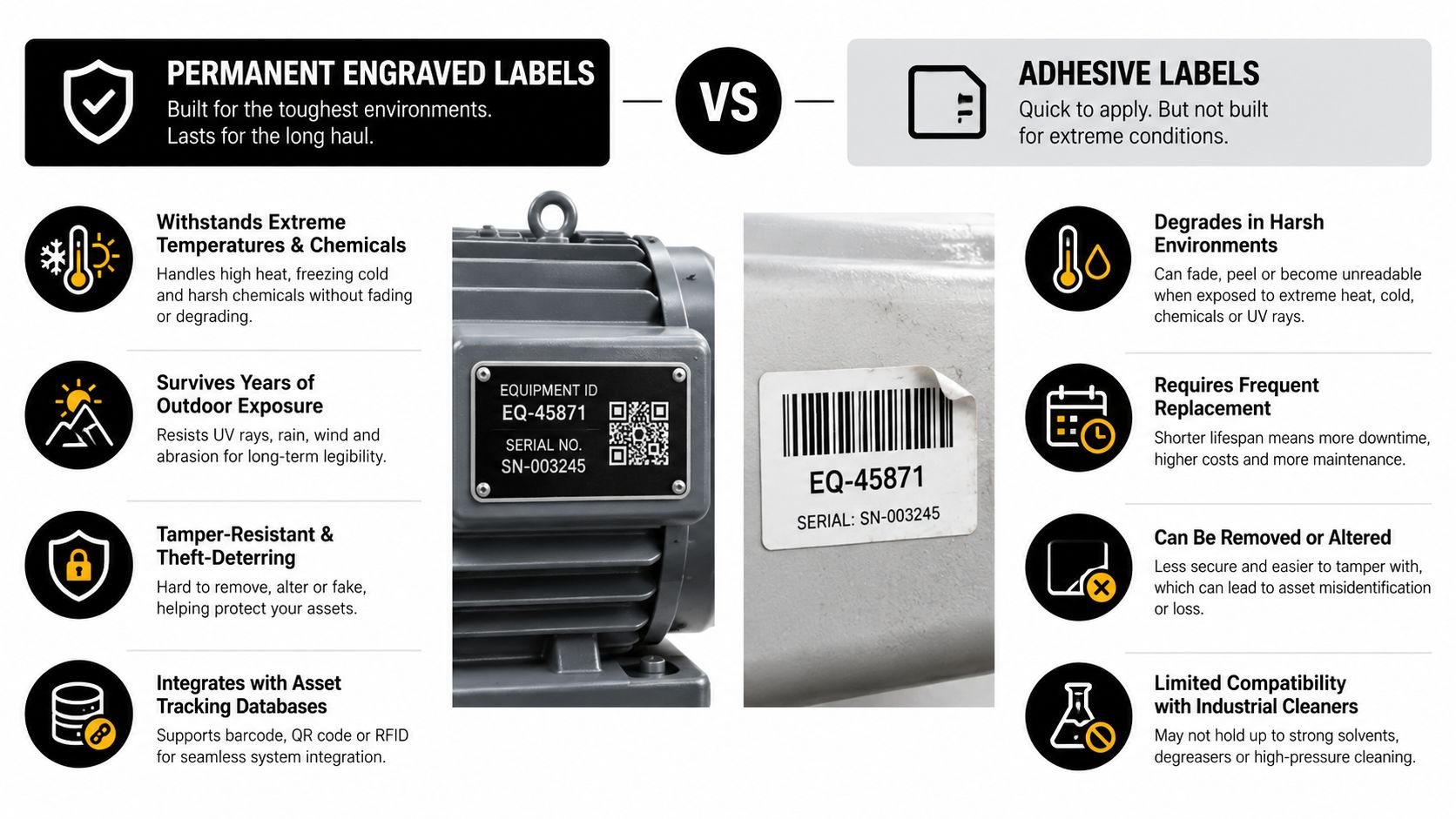
Make audits easier, not more complex
Construction kits, maintenance trolleys, hospital workshop tools, and laboratory support equipment all benefit from a straightforward marking logic. The best systems usually combine a visible number, a short department code, and a code field if scanning is part of the process.
Australian industrial benchmarking for permanent asset labelling describes a demanding specification level of positioning accuracy at or below ±5μm and repeatability under <0.005mm deviation after 10^6 cycles, aligned with durable use cases such as equipment IDs and safety signage, as outlined in this performance benchmarking overview. That benchmark shows the level of consistency serious identification work aims for.
Here's a short production clip that suits this kind of precision-led workflow with Trotec Laser machinery:
- Mark the storage as well as the tool: Cases and drawers should match the item logic.
- Avoid moving parts and grip zones: Engraving placement shouldn't affect safe use.
- Keep the naming convention short: Long IDs are harder to read during stocktakes.
When inventory teams get this right, the system feels boring in the best possible way. Everything is easy to find, easy to count, and easy to return.
7. Infrastructure and Government Asset Security Marking
Public assets live rough lives. Street furniture, traffic control hardware, utility gear, pump assets, and field equipment all face weather, accidental impact, and sometimes deliberate tampering. Security marking has to remain visible enough to support accountability without interfering with function or maintenance access.
A good government asset mark usually combines ownership identity with a register-friendly code. It should also fit the installation logic of the asset. A utility box, roadside fixture, and mobile works unit won't all accept the same plate size or fixing method.
Marking for traceability, not just ownership
Many generic laser engraving ideas miss the point here. The mark isn't only there to say who owns the asset. It needs to match a register, support inspections, and survive the actual installation environment.
Australian asset labelling guidance also stresses that labels should be tested in the access and lighting conditions, not just reviewed on a desk, as set out in SA Water's asset labelling requirements. That's especially important for field assets where shadows, dust, enclosure depth, and viewing angle all affect readability.
Field note: If a plate only reads well at arm's length in ideal light, it isn't ready for roadside or utility work.
Useful applications include public works fleet IDs, utility cabinet ownership tags, council asset plates, and markers on water or sewer infrastructure. Trotec Laser production helps because repeatability matters when a whole asset class needs one standard format across many locations.
8. Custom Awards, Recognition Plaques, and Corporate Gifts
Not every engraving job is about compliance. Some are about permanence in a different sense. A well-made award plaque or recognition piece becomes part of office display, company history, or someone's career memory.
This category gives you more room with materials and finishes, but it still benefits from production discipline. Acrylic, metal, timber, and mixed-material awards all respond differently to laser settings, edge finish, and graphic density. Trotec Laser machinery is useful here because logos, text alignment, and repeat consistency need to stay tight across a full recognition program.
Good awards are readable first
Corporate buyers sometimes overcomplicate awards with too many messages, multiple logos, and tiny sponsor lines. The strongest pieces usually feature a single visual hierarchy. Event name, recipient, achievement, and date. That order is hard to beat.
Examples that work well include service awards, retirement plaques, annual performance recognition, fundraising acknowledgements, and executive gifts with restrained branding. If the object is going on a desk or shelf, tactile quality matters almost as much as the engraving itself.
A few practical choices help:
- Match material to brand tone: Brushed metal feels different from warm timber, and both can be right.
- Proof logos at final scale: Fine brand details can disappear if reduced too far.
- Decide on finish early: Matte, polished, frosted, and painted-fill looks each change how formal the piece feels.
The best laser engraving ideas in this category don't imitate industrial tags. They borrow the same precision, then apply it with better spacing, cleaner finishing, and a more considered presentation.
9. Veterinary and Pet Identification Tags and Plaques
Pet identification is small-format work, which means every design mistake gets amplified. If the tag is tiny, the text has to be shorter, the hierarchy clearer, and the material choice tougher than many people expect.
A pet tag lives with knocks, moisture, fur, mud, and constant movement. That rules out a lot of decorative approaches. Durable metal tags with clean contrast are usually the safer call for everyday wear, while plaques and memorial pieces can use broader material choices depending on where they'll be displayed.
Put the right information on the front
Too much text turns a useful tag into a cluttered one. Pet name, owner contact, and a concise secondary line often do more than trying to include every possible detail.
Practical examples include clinic-issued ID tags, service animal tags, memorial plaques for gardens, kennel or breeding identification, and alert tags for animals with care requirements. Trotec Laser production suits these jobs because tiny characters and compact layouts need to stay crisp.
- Prioritise one reachable phone number: The fastest contact path should be obvious.
- Keep medical notes brief: Use plain wording if an alert must appear on the tag.
- Choose water-tolerant materials: Daily wear means outdoor exposure is normal.
Pet tags are one of those laser engraving ideas where restraint wins. Small object, simple layout, durable finish.
10. Sustainable and Eco-Friendly Material Engraving Solutions
Sustainability changes the material conversation. It's no longer enough to ask whether something looks good on day one. Buyers increasingly want to know whether the piece will last, how often it might need replacing, and what the material choice means over its full life.
That matters for awards and plaques, but it matters just as much for operational signage and labels. A short-life item that needs repeated replacement can create more waste and more labour than a better-specified durable option.
Think beyond the purchase price
Australian signage guidance notes that sustainable material options can carry a 10-25% upfront premium, while longer lifespan can still lower total spend, and LED-based alternatives can use 50-75% less energy than fluorescent equivalents, according to this overview of sustainable signage materials. That doesn't tell you which engraving substrate to choose on its own, but it does reinforce a practical point. Lifecycle thinking beats sticker-price thinking.
Australia's laser etching and engraving market is projected to expand at a 5–7% CAGR from 2026 to 2035, with industrial automation accounting for about 40–45% of demand and the market remaining heavily import-dependent for equipment, as summarised in this Australia market analysis. In practical terms, that supports a shift toward more automated, specification-led production rather than one-off decorative work.
Sustainable laser engraving ideas can include responsibly sourced timber awards, lower-waste signage formats, long-life metal labels that reduce relabelling, and simple designs that minimise scrap during layout.
Choose the material with the longest useful life for the setting, not the one that only looks sustainable in a catalogue.
10 Laser Engraving Applications Compared
| Title | 🔄 Implementation complexity | ⚡ Resource requirements | 📊 Expected outcomes | 💡 Ideal use cases | ⭐ Key advantages |
|---|---|---|---|---|---|
| Industrial Asset Identification and Tracking Labels | Medium, design + material selection, database integration | Moderate, metal/composite substrates, batch engraving capacity | Durable traceability; automated scanning; reduced loss (⭐⭐⭐⭐) | Manufacturing floors, mining fleets, transportation assets | Permanent, scan-ready IDs; long-term cost savings |
| Safety Signage and Compliance Labeling | Medium–High, must meet regulatory specs | Moderate, outdoor-rated/reflective materials, compliance checks | Consistent legibility; regulatory compliance; fewer accidents (⭐⭐⭐⭐) | Electrical panels, chemical storage, machine safety signage | Compliance-grade, inspection-ready permanent signs |
| Custom Memorial and Commemorative Plaques | High, photo conversion, design approvals | High, premium materials (brass, granite, timber), skilled engraving | Photorealistic, long-lasting tributes; high perceived value (⭐⭐⭐⭐⭐) | Cemeteries, funeral homes, memorial installations | Fine-detail photo engraving; weather-resistant personalization |
| Medical Equipment and Healthcare Facility Signage | High, sterilization & regulatory validation | High, biocompatible materials, sterilization testing | Sterile-safe IDs that survive autoclave/disinfection; improved traceability (⭐⭐⭐⭐) | Surgical instruments, diagnostic devices, labs | Sterilization-resistant engraving; supports infection control |
| Electrical and Essential Services Equipment Identification | Medium–High, safety standard compliance | Moderate, heavy-duty metals, high-contrast finishes | Field-legible IDs for emergency response; long-term durability (⭐⭐⭐⭐) | Substations, switchboards, utility infrastructure | Weather/UV-resistant, critical for emergency identification |
| Tool and Equipment Inventory Management System | Medium, database setup and placement planning | Moderate, rapid batch engraving, QR/barcode systems | Fewer losses; faster audits; improved maintenance scheduling (⭐⭐⭐⭐) | Construction sites, maintenance shops, rental fleets | Fast batch marking; integrates with inventory software |
| Infrastructure and Government Asset Security Marking | High, government specs and multi-agency coordination | High, bulk production, tamper-resistant materials | Tamper-proof IDs; supports recovery and accountability (⭐⭐⭐⭐) | Public works vehicles, municipal assets, utilities | Tamper-resistant, legally compliant asset marking |
| Custom Awards, Recognition Plaques, and Corporate Gifts | Low–Medium, logo reproduction and finishing | Moderate, premium acrylic/wood/metal, finishing services | Professional presentation; enhanced employee recognition (⭐⭐⭐) | Corporate awards, events, donor recognition | High-quality logo engraving; premium aesthetic finish |
| Veterinary and Pet Identification Tags and Plaques | Low, concise layouts, small-scale engraving | Low, stainless steel/anodized tags, simple materials | Improved reunification; vet-accessible medical data (⭐⭐⭐) | Pet tags, shelters, veterinary clinics | Durable small-scale engraving; critical ID information |
| Sustainable and Eco-Friendly Material Engraving Solutions | Medium, material sourcing and handling | Moderate, bamboo/recycled wood/cork, energy-efficient processes | Eco-conscious products with reduced footprint; brand alignment (⭐⭐⭐) | Eco brands, sustainable awards, compostable packaging | Sustainable substrates; lower environmental impact |
Choose the Mark That Fits the Environment
The easiest way to sort these laser engraving ideas is by the job they need to do.
The first group is durable identification for demanding assets. That includes industrial asset labels, electrical plates, tool control marks, and infrastructure security tags. In these cases, the engraving has to stay legible through handling, cleaning, UV exposure, weather, and routine maintenance. The material, fixing method, code size, and placement matter more than surface decoration.
The second group is high-visibility communication. Safety signage and healthcare identification belong here. These jobs need a fast reading path, clean hierarchy, and a finish that supports routine use rather than competing with it. A hazard sign, emergency equipment marker, or hospital equipment tag shouldn't make the reader work to understand it.
The third group is expressive work with a lasting purpose. Memorial plaques, awards, recognition pieces, and pet memorials fit that category. The production standards are still real, but the emphasis shifts toward tone, finish, readability, and emotional suitability. Clean spacing and the right substrate usually outperform elaborate design.
For file preparation, a few habits prevent most production problems:
- Supply vector artwork where possible: Clean vector files hold edges and lettering better than low-quality raster artwork.
- Check readable type sizes: Small text may look fine on screen and fail once engraved on the actual substrate.
- Test barcodes and QR codes early: Scan on the intended material, not only from a digital proof.
- Confirm engraving placement: Hinges, handles, glare, and access panels can all make a good design unusable.
- Review material samples: Colour, grain, reflectivity, and coating finish all affect contrast.
- Set finish expectations before production: Deep mark, light etch, painted fill, brushed face, and satin plate all communicate differently.
- Approve from the final proof, not memory: Names, serials, dates, and asset references should be checked before the run starts.
Laser engraving has been moving toward permanence for a long time. A key milestone was the commercialisation of focused CO2 laser beam applications in 1967, a development later tied into modern engraving workflows, as noted in this brief history of laser engraving. That history still shows up in current practice. The most successful jobs are the ones where permanence, contrast, and legibility matter more than novelty.
If you want a useful benchmark, judge every concept by the setting it must survive. Outdoor infrastructure needs one answer. Washdown production needs another. A memorial plaque needs another again. The right result comes from matching the artwork and finish to the environment, then producing it consistently on Trotec Laser machinery.
For readers comparing suppliers, custom engraving that lasts is a helpful way to frame the conversation around durability instead of novelty. If you already have specifications, approved artwork, or an asset list, Evright Industrial is one relevant option for turning that information into precise engraved labels, signs, tags, and plaques through practical production methods.
Evright Industrial produces engraved asset labels, safety signage, identification plates, and plaques using Trotec Laser machinery for practical Australian applications. If you've got approved artwork, an equipment schedule, or a signage specification, visit Evright Industrial to see how the team turns those files into durable engraved products built for real operating conditions.
Recent Comments