

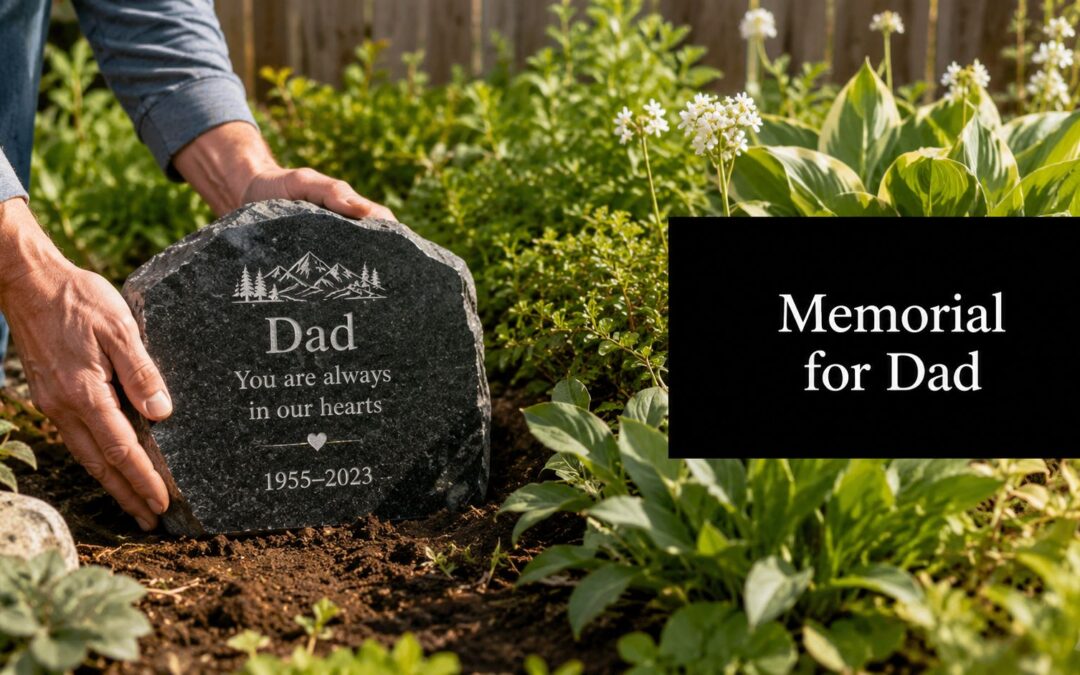
Losing your dad changes ordinary places. A corner of the garden, the path he used, the seat where he had his tea. Those spaces can start to carry memory, and many families want something solid there. Not flashy. Not temporary. Just a tribute that feels right when you stand beside it.
That's why personalized memorial garden stones for Dad matter. They give grief a physical place to rest. They can be simple, private, and close to home, which often feels more comforting than something purely decorative kept indoors.
This is also a far more shared experience than many people realise. In Australia, the Australian Bureau of Statistics recorded 190,939 deaths in 2023, which was 0.7% higher than 2022, with a crude death rate of 7.3 deaths per 1,000 people and a population of 26.7 million in June 2023, as noted in this bereavement and memorial market reference. Behind those figures are families making careful choices about how to remember someone well.
A good memorial stone doesn't begin with engraving. It begins with thinking about where it will live, how it will weather, and whether it will still feel dignified years from now. That's where craftsmanship matters.
Honouring His Memory with a Lasting Tribute
A memorial stone often starts with a very practical thought. You want somewhere to go. Not always a cemetery. Not always a formal monument. Sometimes the right tribute is a quiet stone near the roses, under a tree, or beside a path your dad loved.

Why a garden stone feels different
A garden memorial has a daily quality to it. You don't have to make a formal visit. You notice it while watering the plants, pruning, or sitting outside as the day draws to a close. That familiarity is what makes it powerful.
For fathers especially, families often want a tribute that feels grounded. A polished plaque indoors can work beautifully, but a stone outdoors tends to feel more connected to lived memory. It belongs to the rhythms of weather, light, and seasons.
A lasting tribute isn't only about what the stone says. It's about whether the place around it invites you back.
What families usually want from it
Balance is often preferred over a large monument in a suburban garden. The stone should be visible without overwhelming the space. The wording should honour him without sounding generic. The material should last without demanding constant upkeep.
That last point gets overlooked. Many retail listings focus on sentiment and appearance, but durability is what turns a memorial item into a true long-term marker. If the stone flakes, stains badly, or becomes hard to read, the emotional value suffers with it.
A well-made memorial stone can hold a short message, a name, dates, or a symbol that meant something to him. It can be formal, warm, understated, or even humorous if that suits his character. The important part is that it feels like him, not like a template.
Choosing the Right Foundation Stone Materials and Sizes
Material choice decides whether the memorial will age with dignity or struggle outdoors. Families often begin by looking at colour or shape. The better starting point is density, weather resistance, and how well the surface accepts engraving.

What works outdoors and what doesn't
For outdoor memorials, granite is usually the strongest choice. It's dense, stable, and dependable in exposed conditions. It also holds engraved detail well, which matters if you want fine text, a portrait element, or a meaningful symbol.
Sandstone can look warm and natural, but it's a risk for long-term outdoor use. Guidance from DIY memorial stone practice warns that makers should choose hard stone over soft sandstone in wet climates, keep inscriptions shallow, and use stencils rather than freehand lettering, because deep cuts can crack the stone and soft stone can dissolve over time, as explained in this memorial stone carving guidance video.
Bluestone can suit some Australian gardens beautifully. It has a restrained, architectural look and can feel less formal than polished granite. The trade-off is that surface behaviour varies, so the finish and intended engraving detail need to be assessed carefully before production.
Memorial stone material comparison
| Material | Durability | Engraving Detail | Maintenance | Best For |
|---|---|---|---|---|
| Granite | Excellent for long-term outdoor use | Very good, especially for crisp lettering and defined artwork | Low | Permanent memorials |
| Bluestone | Strong when properly selected and finished | Good, depending on surface texture | Moderate | Naturalistic or contemporary gardens |
| Sandstone | Variable and often poorer in wet exposure | Softer detail, more vulnerable to wear | Higher | Shorter-term or sheltered use |
| Slate | Clean visual character but can vary by piece | Good for fine lines on suitable pieces | Moderate | Rustic, flatter marker styles |
| Marble | Elegant appearance but more sensitive outdoors | Can take detail well | Moderate to higher | Sheltered settings where appearance is prioritised |
Practical rule: If the memorial will sit outside year-round, choose the stone for weather resistance first and appearance second.
Choosing the right size for the space
Size should follow purpose. A subtle marker near a flower bed can work well when the garden itself carries most of the emotion. A larger plaque-style stone suits a dedicated remembrance area where the stone is the focal point.
Think in these terms:
- Small stones work when you want a private marker that feels discovered rather than announced.
- Mid-sized pieces tend to be the most balanced for home gardens because they're readable without dominating the overall setting.
- Larger formats suit open areas, memorial corners, or places where several family members may gather.
Thickness matters too. Thin stone can look neat in a showroom but feel visually slight once it's outdoors among soil, mulch, and planting. A memorial should have physical presence. It doesn't need to be oversized, but it should feel settled and intentional.
If you're comparing formats, Evright's personalised memorial stepping stones show how layout, footprint, and use in a garden setting affect the final result.
Crafting the Message Designing Inscriptions and Graphics
The inscription is where most families pause. Stone feels permanent, so every word seems to carry extra weight. The easiest way through that pressure is to stop trying to write the perfect tribute in one go. Start with the truth of who he was.
Begin with his character, not the wording
A good memorial inscription doesn't have to sound poetic. It has to sound recognisable. If your dad was formal, a simple and respectful line may suit him best. If he was warm, funny, or had a favourite saying, the stone can reflect that too.
Some families choose a direct tribute:
- Beloved Dad
- Forever in our hearts
- Loved always, missed every day
- In loving memory of our father
Others want something more personal:
- Gone fishing
- A quiet man, a steady hand
- He loved this garden
- Always fixing, always caring
Short inscriptions usually age better visually. They're easier to read from a standing position, and they leave space for the stone itself to breathe.
Include the essentials cleanly
Names and dates need clear hierarchy. The name should usually be the strongest element on the stone. Dates can sit beneath in a smaller size. If the family wants a relationship marker such as Dad, Father, Pop, or Grandpa, place it where it supports the design rather than crowds it.
A few solid layout combinations work well:
- Name first, then dates, for a classic memorial style
- Relationship first, then name, when the family bond is the emotional centre
- Message first, then name, when the tone of remembrance matters most
If you're stuck on phrasing, these memorial plaque wording examples can help narrow the tone without forcing you into generic language.
Keep the wording short enough that someone can read it in one quiet glance.
Graphics that actually add meaning
Graphics work best when they reveal something specific about him. A rose, gum leaf, cross, fishing motif, tools, military insignia, or a line drawing based on a personal sketch can all feel appropriate if they come from real memory.
The mistake is adding decoration just to fill space. Every visual element should earn its place.
Useful graphic choices often include:
- Occupation markers for a tradesman, serviceman, farmer, or engineer
- Personal interests such as fishing, gardening, cars, or footy
- Faith symbols if belief shaped his life
- Natural motifs tied to a place he loved
A memorial stone often looks stronger with one carefully chosen graphic than with several competing ones. Good design on stone is restraint. Too much detail can make the tribute harder to read and less timeless.
The Art of Permanence Understanding Engraving Options
The engraving method affects how the memorial reads from day one and how it holds up later. This reveals a real difference between decorative production and durable craftsmanship.

Why process matters before the first mark is made
A durable outdoor memorial normally follows a controlled sequence. Placement rules and size constraints are checked first, then a dense stone such as granite is selected, the inscription and artwork are drafted, and a full rendering is approved before fabrication starts. That proof-first approach mirrors professional monument workflows, as described in this granite memorial design guide.
That proof stage isn't a formality. It prevents the most painful errors. Crowded wording, lettering that looks too small, artwork that loses definition, or proportions that felt fine on paper but look wrong on stone.
Trotec Laser compared with older methods
Sandblasting has long been used in memorial work and still has its place, especially for bold, traditional carving styles. But if you want controlled fine detail, modern laser engraving gives you tighter execution.
With Trotec Laser systems, the engraver can produce sharper lettering, cleaner line work, and more consistent reproduction from an approved digital file. That becomes especially valuable when the design includes smaller text, delicate artwork, or a more exact layout.
The key difference is control. Sandblasting often favours broader forms and deeper physical removal. Laser engraving allows a more precise response to the artwork and the stone surface being used.
For families who want to understand how a digital design becomes an engraved memorial, Evright's granite plaque engraving process shows the practical workflow from artwork through to finished production on professional equipment.
A short look at the production style helps make that clearer:
What permanence actually looks like
Permanent doesn't mean indestructible. It means the memorial is made with methods that respect the conditions it will face. Outdoor exposure, moisture, debris, sun, and garden maintenance all test the mark over time.
That's why sharp design discipline matters:
- Readable typefaces hold up better than decorative scripts.
- Balanced spacing keeps names and dates legible even after surface weathering.
- Material and method pairing should be chosen together, not separately.
- Proof approval gives the family one calm chance to assess everything before it becomes final.
Precision isn't only aesthetic. It protects meaning.
Placing and Caring for Your Memorial Stone
A memorial can be beautifully made and still fail in practice if it's poorly placed. Families often focus on the wording and material, then treat installation as the easy last step. It isn't. Stability, visibility, and upkeep decide whether the stone remains part of daily remembrance or slowly becomes an obstacle.

Australian guidance around outdoor memorial objects often emphasises stability, safe placement, and upkeep, because site placement, grief use, and maintenance burden affect whether the memorial is used and preserved, as discussed in this memorial placement reference.
Choosing the right place in the garden
Start by asking how the memorial will be visited. If you want a quiet reflective stop, place it where someone can stand or sit comfortably. If the memorial is meant to be seen every day, position it along a natural line of sight from the house or path.
Avoid these common problems:
- Trip points near stepping routes, edges, or hidden planting
- Mower conflict where whipper snippers and wheels will keep striking the edges
- Poor drainage that leaves the base wet for long periods
- Unstable soil that shifts after rain or irrigation
A memorial stone can be permanent, movable, or intentionally temporary. That choice changes everything from base preparation to size. A family that may relocate later often benefits from a movable tribute rather than a fully fixed installation.
A simple installation approach
You don't need an elaborate foundation for every garden stone, but you do need a stable one.
A sound basic method is:
- Clear the area of roots, loose mulch, and soft surface debris.
- Level the base so the stone won't rock or lean.
- Use compacted sand or gravel where drainage matters.
- Seat the stone firmly so it feels planted, not perched.
If the stone is taller, heavier, or narrow relative to its height, get advice on proper support. Outdoor memorials should never feel easy to tip.
Cleaning without damaging it
Maintenance should be simple enough that the family will do it. Gentle cleaning is usually better than aggressive restoration.
Use mild soap, water, and a soft cloth or soft brush. Avoid harsh chemicals and abrasive pads. If moss or lichen starts to build, remove it carefully rather than scraping hard across the engraved face.
A memorial needs care that preserves the surface, not cleaning that strips it back.
Check the stone periodically for chips, shifting, or pooled water around the base. Small corrections made early are far easier than dealing with a tilted or damaged memorial later.
Your Guide to Ordering A Budget and Timeline Checklist
Most families feel better once the project becomes concrete. Instead of thinking about the whole memorial at once, break it into decisions that can be made one by one.
What usually affects budget
Cost tends to move with three main factors:
- Stone choice because denser and more suitable outdoor materials require different sourcing and production effort
- Size and thickness because larger pieces change handling, installation, and engraving area
- Design complexity because extra artwork, layout refinement, and fine detail take more preparation
The cheapest option on paper often becomes the poorer value if it weathers badly or looks undersized once placed in the garden.
A practical checklist before ordering
Use this short list to keep the project organised:
- Measure the site: Check the space where the stone will sit and note any slope, edging, or drainage issues.
- Decide the role: Choose whether the stone will be a permanent marker, a movable tribute, or a temporary grief object.
- Draft the wording: Write the name, dates, and one or two message options.
- Collect artwork: Find any symbol, sketch, or reference image that reflects your dad's life.
- Review the proof carefully: Check spelling, spacing, scale, and overall balance before approval.
- Plan aftercare: Know who'll clean it and how the surrounding garden will be maintained.
If you do those things first, the ordering process becomes much calmer. You're no longer buying an object. You're commissioning a tribute that fits its place, carries meaning, and has the best chance of lasting well.
If you're ready to turn an idea into a finished memorial, Evright Industrial can help with custom laser engraving for plaques and memorial applications. Start with your wording, preferred stone style, and where the tribute will live in the garden, then work from an approved design proof before fabrication begins.
Recent Comments