
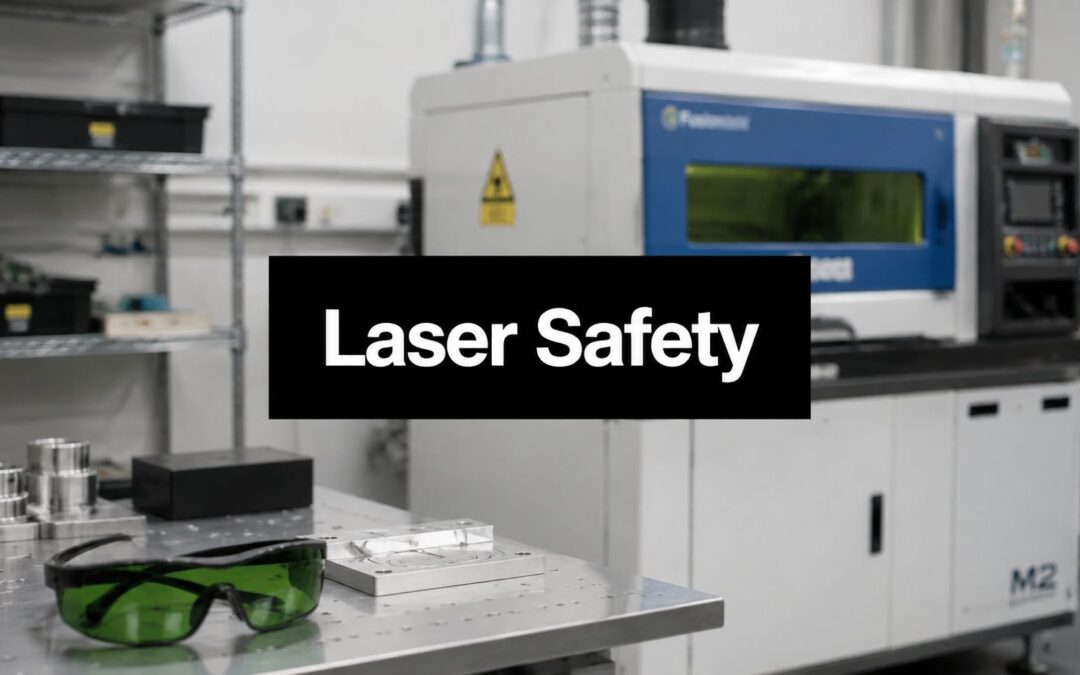
You've got the audit coming, the machine is humming, and the labels on the laser gear are either missing, faded, or buried behind a guard where nobody can read them without leaning into the hazard area. That's the moment most Australian sites realise laser safety standards aren't a paperwork exercise, they're an operational system that has to survive real shifts, real cleaning cycles, and real inspectors.
A compliant site doesn't rely on memory or on the operator “knowing the machine.” It uses classification, labels, signage, access control, and records that can be checked at the gate, on the floor, and in the filing system. That's the difference between a plant that can answer questions quickly and one that spends the day looking for missing paperwork.
Why Laser Safety Standards Matter in Australian Workplaces
The most uncomfortable audit moment is rarely the beam itself. It's the pause that follows the question, “Show me the classification label and the supporting record,” when the folder is incomplete and the equipment tag doesn't match the asset register. That's the point where a laser safety problem stops being technical and starts becoming a management problem.
Australian practice is built around IEC 60825, adopted through the familiar class structure from Class 1 to Class 4. The value of that framework is simple, it ties hazard control to measurable emission limits rather than to guesswork about the machine type Australian laser practice and IEC 60825 adoption. In other words, the question is not “What brand is this?”, it's “What class is this, and what controls follow from that class?”
A lot of facilities fail because they treat classification as a procurement note instead of an operating control. The machine arrives, someone unwraps it, and the label is either missing, obscured, or not copied into the site register. When that happens, the rest of the system weakens too, because signage, training, eyewear selection, and access restrictions all depend on the original classification.
Practical rule: if a laser product can't be tied back to a visible class label and a current asset record, the site is already behind.
That weakness matters in manufacturing, construction, and healthcare, where the highest-risk systems demand stricter controls and more disciplined documentation. It also explains why a general policy document helps, but doesn't solve the problem on its own. A useful starting point is a guide to policy health and safety, but laser work still needs site-specific procedures, sign-off, and field verification.
Inspectors usually look for the basics first, then they test whether the site can prove its own story. If the asset list, signage, and control measures don't line up, the site looks unmanaged even if staff believe they're being careful. That's where work interruptions, insurance questions, and liability exposure begin, because the organisation can't show that its controls are systematic rather than informal.
For practical signage infrastructure, sites often pair the compliance process with a dedicated workplace safety signage system so warnings, access notes, and asset identifiers stay consistent across the floor. That consistency matters because the standard only works when the labels survive daily use.
Understanding the IEC 60825 Framework and Australian Adoption

Think of IEC 60825 as the rulebook that tells you how risky a laser is by measuring what it emits, not by trusting the sales brochure. That matters because a compact unit can be more dangerous than a larger one if its accessible emission is higher under the test conditions that the standard uses AS/NZS IEC 60825.1 framework and classification limits. The Australian and New Zealand adoption, AS/NZS IEC 60825.1, applies that logic across the 180 nm to 1 mm wavelength range.
How the framework actually works
The classification boundary is built around accessible emission limits, measurement conditions, wavelength, pulse format, and beam geometry. That means hazard class isn't a marketing statement, and it isn't settled by nameplate wattage alone. A procurement team can't reliably choose controls from a brochure if the beam is pulsed, enclosed, or delivered through a different optical path than the vendor's headline spec suggests.
The practical sequence is straightforward.
- Classify the product correctly. That tells you whether it sits in the low-risk end of the scale or whether it moves into controlled-use territory.
- Match the control to the class. Labeling, enclosure design, interlocks, and eyewear all flow from the class decision.
- Document the basis. If the class changes after servicing or configuration changes, the record has to change too.
That's why Australian workplaces don't get far by relying on operator judgment alone. The standard gives everyone the same hazard language, which is useful when maintenance, production, nursing, and contractors all touch the same equipment.
The standard is doing two jobs at once. It helps you compare products, and it tells you which controls are legally and practically reasonable for the workplace.
The link between classification and deployment is especially important when sites buy specialist equipment such as a laser etching machine Australia suppliers offer for industrial marking. The machine may be sold as a production tool, but once it's installed on a floor, the class, enclosure, and access controls become part of the site's safety system.
For readers who prefer a worked example, a laser etching machine Australia overview can be useful because it shows how the same machine category can trigger very different site controls depending on whether it's enclosed, interlocked, or operated in a shared area.
A short video walkthrough
The standard is easier to interpret when you've seen it mapped visually against workplace controls.
The important takeaway is not that the standard is technical. It's that the technical parts are what make the controls reliable. If the class is correct, the rest of the compliance chain becomes much easier to defend.
Laser Hazard Classes Explained with Real Equipment Examples
The cleanest way to understand laser safety standards is to tie each class to equipment people see on the floor, in clinics, and in service areas. The classes are not abstract labels. They change what the site must do with enclosures, access, training, and PPE.
Class 1 and Class 2 in everyday use
Class 1 is the lowest practical concern because the accessible emission is within the exempt range under intended use. You'll often find it in fully enclosed office equipment, barcode readers, or protected systems where the laser source is not exposed during normal operation. The control emphasis is on maintaining the enclosure and avoiding modifications that defeat the design.
Class 2 typically appears in visible-beam alignment tools and some pointer-style devices. The hazard profile is still limited compared with higher classes, but it depends on the visible light aversion response and on users not defeating the intended use conditions. In a busy workplace, the control issue is less about exotic engineering and more about preventing casual misuse, substitution, and off-label deployment.
Class 3 and the jump that changes the whole site
Class 3B is where many sites start to underestimate the risk. That's the class that demands serious attention to controlled access, hazard communication, and equipment-specific procedures. In practice, a Class 3B system needs more than a sign on the wall, because the beam can become a genuine exposure problem if someone bypasses the intended work zone.
Class 4 is the hard line. These lasers are eye- and skin-hazardous from direct and diffuse exposure, and they also create fire and burn risk. That's why engineering controls matter more than administrative reminders, and why laser eyewear has to be chosen by optical density (OD) with the Nominal Hazard Zone (NHZ) worked out from beam power, divergence, wavelength, and viewing conditions laser safety control requirements, OD, and NHZ. A barricade that looks tidy but doesn't bound the beam path is not a control.
What each class usually means on site
| Class | Hazard Level | Example Equipment | Required Controls |
|---|---|---|---|
| Class 1 | Low under intended use | Fully enclosed office or production devices | Maintain enclosure, keep labels visible, preserve original configuration |
| Class 2 | Limited visible-beam risk | Alignment tools, some pointer-style devices | Prevent casual misuse, train users, keep the device in approved use only |
| Class 3B | Significant exposure risk | Open-beam marking or service-access systems | Restricted access, procedural controls, verified eyewear, warning signage |
| Class 4 | Highest risk, eye, skin, and fire hazard | High-power industrial marking, cutting, or specialised healthcare systems | Interlocks, enclosure integrity, beam stops, controlled area, OD-rated eyewear, NHZ controls |
The control gap usually appears when a Class 3B or Class 4 system is installed but treated like a desktop appliance. The machine is in the room, so staff assume the room is the control. It isn't. The room only works if the beam path, access points, and maintenance mode are all controlled.
A useful procurement habit is to read the class as a design instruction, not a rating sticker. A system with the same nominal purpose can need very different controls depending on whether the beam is enclosed, what wavelength it uses, and how the accessible emission is measured. That's why the class line between 3B and 4 matters so much on industrial floors and in health facilities.
If you're comparing equipment for industrial marking, the industrial laser engraver for metal example is helpful because it forces the question of enclosure, beam stopping, and operator separation instead of leaving safety as an afterthought.
Your Practical Compliance Checklist for Industrial and Healthcare Settings

The fastest way to fail an audit is to have controls in place but no proof that they're active, current, and tied to the right machine. A good checklist closes that gap by forcing the site to verify what exists, what's missing, and who owns each fix.
Engineering controls
- Interlocks: verify that access panels, doors, and service covers stop hazardous operation when opened. Record the test date and the person who checked it.
- Enclosures: confirm that the beam path is contained under normal use. A label on the outside doesn't make an open system safe.
- Beam stops and beam paths: make sure the beam ends where the design says it ends, and that reflective surfaces aren't creating stray exposure points.
- Maintenance mode: confirm that service access has a separate control path and that staff can't override it casually.
Administrative controls
- SOPs: check that written procedures match the actual setup on the floor, not last year's layout.
- Access restrictions: verify who can enter the laser area, who can operate the machine, and who can authorise servicing.
- Training records: keep names, dates, and role-based sign-off together so an auditor can see who was trained for what.
- Signage: make sure warning signs are legible, correctly placed, and tied to the current class and room use.
PPE and documentation
- Eyewear OD verification: match the eyewear to the wavelength and hazard profile, and inspect lenses and frames for wear.
- Asset inventory: list every laser system, its class, location, and responsible manager.
- Classification records: keep the technical basis for the class on file so the label can be checked against the source.
- Maintenance logs: document repairs, alignment work, interlock testing, and any change that could alter the hazard profile.
If the eyewear cabinet is full but nobody can prove the OD rating for the installed system, the PPE program is incomplete.
Manufacturing sites usually struggle with version control because production teams move equipment without updating the register. Healthcare sites more often struggle with shared-use rooms and staff turnover, which makes training records drift out of date. In both environments, the fix is the same, one owner, one register, one routine check.
A laser safety audit should end with three questions. Is the class still correct, are the controls still present, and can the site prove it in minutes rather than hours? If the answer to any of those is no, the remediation should start with the label, the register, and the most exposed work area.
Signage and Engraving Solutions That Meet Durability Requirements

A sign that fades, peels, or washes off under routine cleaning is not a compliant control in any meaningful sense. In industrial and healthcare settings, the marking has to survive disinfectants, abrasion, heat, repeated contact, and the occasional mistake from a contractor who treats it like a temporary sticker.
Material choice matters more than people think
Metal tags, engraved plastics, and chemically resistant laminates each solve a different problem. Metal holds up well where impact, heat, and aggressive cleaning are part of the normal operating cycle. Engraved plastics can work for indoor panels, asset plates, and controlled rooms where legibility matters more than finish. Laminated options can suit temporary or low-wear applications, but they are usually the first to fail in harsh environments.
The issue is not appearance. It is whether the marking remains readable through inspection cycles, maintenance intervals, and the full life of the asset. If a warning placard loses contrast after routine cleaning, the site has to replace it, and the compliance record starts from that point again.
Why engraved asset tracking helps compliance
Laser safety signage does more than warn people away from a hazard. It also supports asset tracking, maintenance scheduling, and record keeping. A machine tag that survives for the life of the equipment gives the safety team a stable reference point when operators change, rooms are reconfigured, or service work is booked.
That is where precise engraving matters. It produces consistent markings quickly, which helps sites that need the same label format across multiple assets and busy project schedules. In practice, that consistency cuts rework because the same identifier, warning style, and room designation can be carried from the asset register to the physical plate without interpretation errors.
Evright Industrial's approach is built around nearly six decades of engraving experience, and that matters because durable signage is usually won or lost in the details, not in the headline design. If the material fails before the machine does, the site pays twice.
For facilities planning industrial markings, a metal laser engraving solution shows how the same process can produce safety labels, serial plates, and room signage with the consistency auditors expect.
The best result is a marking system that stays legible long after the installation team has moved on. That gives maintenance staff something they can trust, and it gives inspectors a clear, durable trail from the equipment to the paperwork. It also supports competency training for health agencies where shared equipment and changing staff make clear identification part of day-to-day control.
Beyond Beam Exposure Addressing Airborne Contaminants and Fire Risk
Most laser discussions stop at eye injury, which is too narrow for real workplaces. When lasers process plastics, coated surfaces, painted metals, or medical materials, the control conversation has to include airborne contaminants, plume extraction, housekeeping, and the way combustible debris behaves around hot work zones laser safety hazards beyond beam exposure.
That matters because the room doesn't only contain a beam. It contains residues, smoke, waste, cleaning supplies, packaging, and people who are trying to work efficiently. If extraction is poor, plume control becomes a visibility problem first and a health problem second. If housekeeping slips, the fire load grows steadily around a Class 4 setup.
What actually reduces residual risk
Ventilation has to match the material and the process. A general fan is not plume extraction, and a tidy floor is not a fire plan. Sites that handle mixed materials need controls for reflective surfaces, combustible offcuts, and routine waste removal, plus a clear response plan for a hot-spot or ignition event.
Reflective-surface control is especially important because stray reflections can defeat good beam discipline. So is keeping the work zone uncluttered. In practice, the facilities that perform best treat the laser area like a controlled process cell, not a convenient bench with warning tape.
Practical rule: if the extraction hood, fire precautions, and clean-up routine aren't written into the job method, they'll be forgotten the day the line gets busy.
Reactive compliance is expensive because it usually starts after somebody smells smoke, sees discoloration, or reports irritation. At that point, the site is already trying to explain why the hazard wasn't anticipated. Proactive programs are cheaper to run because they treat airborne contamination and ignition risk as part of the original hazard assessment, not as a post-incident add-on.
That's also why training matters in healthcare and industrial work alike. A good safety culture teaches staff to notice plume behaviour, debris build-up, and access problems before they turn into stoppages. For a parallel in role-based training design, the competency training for health agencies model is useful because it ties learning to actual responsibilities rather than generic awareness.
Building Training and Audit Programs That Work

A laser safety program works when the right person knows the right thing at the right time. Operators need to know the machine and its controls. Supervisors need to know the restrictions, escalation path, and documentation. Safety staff need the class basis, the inspection routine, and the failure history.
A program that passes inspection also leaves a clear trail on the floor and in the files. Inspectors look for labels that match the actual equipment, signage that is still readable, and records that show who was trained on which task. If the laser is in use across multiple shifts or departments, the site also needs asset tracking that keeps the control information tied to the right machine.
A workable structure
- Risk assessment first: confirm the class, the work area, the people involved, and the task changes that could affect exposure.
- Written program next: capture the SOP, access rules, eyewear requirements, signage locations, and emergency actions in one controlled document.
- Training by role: teach operators what they touch, supervisors what they approve, and maintenance staff what changes the hazard profile.
- Routine audits: check labels, records, interlocks, signage, and PPE on a regular schedule based on actual equipment usage.
Training falls apart when it's too generic. Staff remember a slide deck, then forget how the machine is configured on their shift. That's why equipment identification and asset labelling matter so much. If the hazard information is visible at the machine, the training stays anchored to reality.
The same logic applies to audit follow-up. A replacement part, a moved enclosure, or a new product line can alter the control picture, and that change needs to be captured before the next inspection. Sites that do this well keep the label set, the asset register, and the training matrix aligned, then verify that alignment during routine checks rather than waiting for a problem to surface.
The strongest sites treat laser safety as an operating discipline. They keep the labels current, the records clean, the training role-based, and the audits boring in the best possible way. That is what passes inspections and keeps production moving.
If your site needs durable laser safety labels, compliant asset plates, or signage that holds up in harsh industrial and healthcare environments, visit Evright Industrial and talk to a team that understands how real workplaces use these systems. They produce practical engraving and labelling solutions that support compliance, asset tracking, and long-term readability, so your controls do not fall apart when the equipment gets used.
Recent Comments