
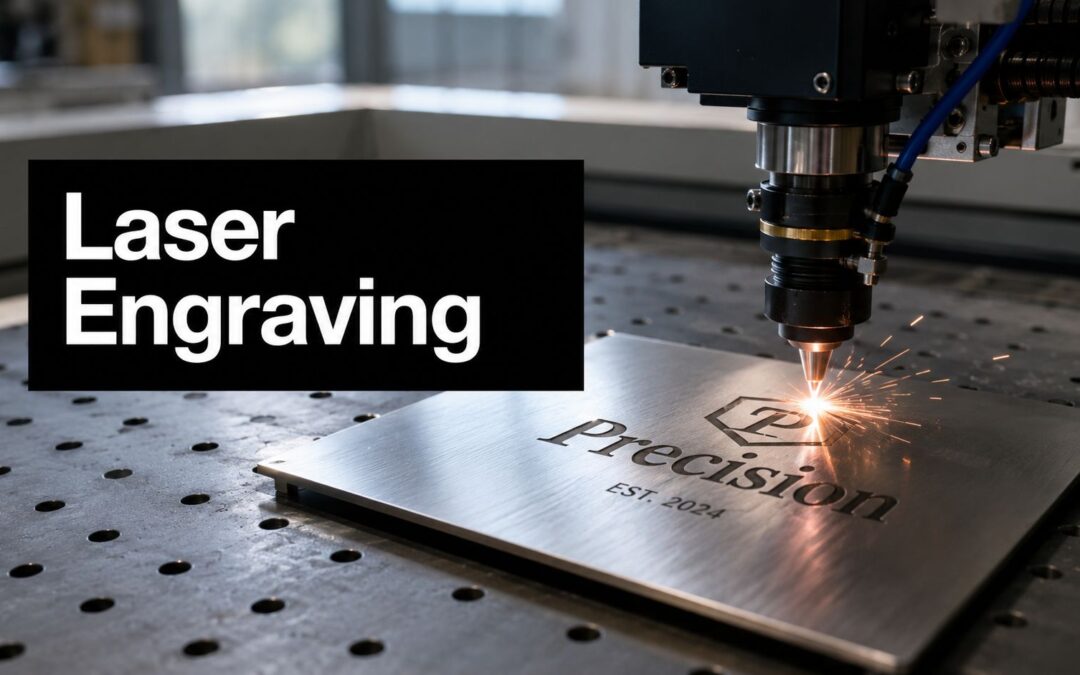
Beyond the label, the power of permanent laser marking shows up the moment a printed tag fails in the field. A safety warning on a transformer can fade under the Australian sun, a barcode on a mining asset can become unreadable after dust and chemicals, and a weak sticker on a washdown line can peel before the next inspection. That's why laser engraving matters so much in industry, because it creates a mark that's meant to stay with the part, not sit on top of it. The technology has a long industrial lineage, with milestones in the 1960s and 1970s that moved laser processing from lab work to repeatable production methods, including early marking systems and CO2 laser development that later supported durable labels and precision identification in real workshops and factories (Laser Focus World, Base Labels Australia). These laser engraving examples show how that history turns into practical value across Australian industry, compliance, healthcare, government, and memorial work, all with the kind of permanence that Trotec Laser systems are built to deliver.
1. Industrial Equipment Asset Labelling and Tracking
Industrial asset labels have to survive abuse, not just look tidy on day one. On anodised aluminium and stainless steel, laser engraving gives you machine-readable codes, serials, and specification details that hold up in plant rooms, workshops, depots, and mine sites. That's the practical reason these labels are everywhere on equipment that moves between sites or passes through multiple maintenance cycles.

What works in the field
The strongest asset labels combine human-readable text with QR codes or barcodes, then use material and finish choices that suit the mounting surface. Trotec Laser workflows are well suited to this kind of mixed-content plate because the process supports crisp detail, repeatability, and permanent marking on durable substrates. For an Australian buyer, that matters on mining equipment fleet labelling, food processing machinery identification, construction rental tracking, and facility maintenance tags.
Practical rule: design the plate for the job site, not the office. If an installer can't mount it cleanly, or a technician can't scan it in poor light, the label has already failed.
A solid spec usually includes mounting hole positions, a high-contrast layout, and a QR code that points to digital maintenance records. The workflow itself is straightforward, design the file, set power, speed, and passes in CAM software, then fixture the part securely before marking, which matches the kind of reproducible production described by Xometry's laser engraving workflow guide (Xometry). For teams that want a working model of how in-house production changes turnaround, the Alberta electrical contractor case study on lamacoid labels is a useful benchmark, because it reported a major reduction in production time and a shift from outsourced labels to fast in-house output (Synergy Products case studies).
If your asset register is growing faster than your label system, talk to Evright Industrial's asset tracking best practices and map the engraving format to the way your technicians service equipment. Cremation.Green cremation ID tags is also a useful adjacent reference for how permanent identification supports chain-of-custody style workflows, even though the application is different.
2. Safety and Compliance Signage for Essential Services
A water utility gate sign that fades in the sun, or a switchboard warning plate that peels after a few clean-downs, creates the same problem. People stop trusting the sign. Electrical contractors, water utilities, telecommunications crews, and emergency services need signage that stays readable through weather, grime, and repeated contact, and laser engraving gives that reliability on rigid substrates like PVC, acrylic, and aluminium composite material. The mark stays crisp, holds alignment, and suits permanent identification for hazard warnings, electrical equipment tagging, and restricted access notices.
Why permanence matters here
Laser engraving is a non-contact process, and the mark is formed by removing material rather than laying ink on a surface. That matters for compliance signage because abrasion, UV exposure, and cleaning routines can wear out printed labels long before the asset itself is retired. A practical overview of laser marking and engraving machine durability makes the same point from a manufacturing perspective. In field use, a Trotec Laser setup can produce durable warning plates for switchboards, water treatment access points, tower bases, and HAZMAT zones where the sign has to survive the same conditions as the equipment.
The best signs combine text with pictograms, especially in multilingual workplaces and mixed-contractor environments. Mounting hardware matters too, because a sign that corrodes at the fixings becomes a maintenance problem of its own. For projects under Australian Standards, the design stage should be checked against the current rules before production starts, especially where site-specific hazards or access controls are involved.
Permanent signage should be treated as a compliance asset, not a print job.
For Australian operators, the clearest implementation path is to standardise sizes, symbols, and mounting points, then batch-produce signs so every site looks consistent. Evright Industrial's custom safety signs for Australia is a practical reference for that workflow. If you need a broader visual benchmark for site messaging, you can find construction safety posters, but the laser-engraved version is the one built for permanence.
3. Healthcare Facility Medical Equipment Identification
Healthcare engraving has a different standard of failure. A label on a surgical tray, imaging device, or anesthesia cart can't just be neat, it has to survive sterilisation cycles, disinfection chemicals, and constant handling without losing traceability. That's why laser engraving is such a strong fit for stainless steel, titanium, and other medical-grade materials used in hospitals and specialist clinics.
A good medical mark supports both workflow and auditability. Serial numbers, maintenance identifiers, and device-specific warnings need to stay readable after repeated cleaning, and the depth of the engraving has to make sense for the sterilisation protocol the site uses. NASA's process specification treats laser engraving as a formal identification method when a deeper, more durable mark is required, which aligns closely with the practical needs of healthcare equipment managers even though the document comes from another regulated environment (NASA PRC-9003).
Material and compliance discipline
The most reliable medical applications are on surgical instrument identification, diagnostic device serials, anesthesia safety warnings, and patient monitoring labels. The mark needs to be legible at a glance, because staff do not have time to interpret decorative lettering when equipment has to move quickly through a theatre or sterilisation loop. In that sense, this is closer to industrial traceability than to decorative engraving.
If the mark has to survive repeated cleaning, choose permanence first and aesthetics second.
The Trotec Laser FAQ is useful here because it confirms how engraving is used for serial and batch identification in practical settings, not just branding (Trotec Laser FAQ). For a healthcare buyer, that translates into a workflow where the engraved mark becomes part of the maintenance record rather than an afterthought. Evright Industrial's medical device labelling requirements is the right place to start when the brief has to account for biocompatibility, traceability, and infection-control expectations.
4. Custom Memorial and Commemorative Plaques
Memorial engraving asks for a different kind of precision. The work has to carry emotion, but it also has to survive weather, sun, and years of public exposure without losing detail. That's why laser engraving is so effective on marble, granite, walnut, and brushed bronze, materials that can hold portraiture, fine text, and decorative borders while still feeling permanent and respectful.
The strongest memorial plaques use typography that matches the subject matter. Serif text often suits formal dedications, while a cleaner layout works better when the plaque carries longer family histories or donor acknowledgements. A high-resolution photo can be engraved into stone or metal with enough tonal control to preserve facial features, but only if the source image is prepared properly and the layout doesn't overcrowd the surface.
Where the craft matters most
Common applications include garden of remembrance portraits, war memorial dedications, family monument details, corporate anniversary markers, and sports tributes. Each one needs a different balance of image, text, and negative space. The material should fit the existing design or monument rather than fighting it, and the engraving depth should be chosen with outdoor wear in mind.
A practical memorial brief usually includes dates, a name hierarchy, and one or two lines of text that the family or organisation will recognise instantly. Too much copy turns a plaque into a wall of information, and too little can make it feel generic. The best work has restraint.
Good memorial engraving doesn't shout. It lasts, reads cleanly, and still feels personal years later.
This is one of the areas where Trotec Laser technology is especially useful, because fine control and repeatability matter more than raw speed. For memorial planners and funeral homes, Evright Industrial can help translate a family brief or civic dedication into a durable finished piece that suits the material, the setting, and the emotional tone.
5. Government and Infrastructure Security Signage
A government facility, utility yard, or transport corridor does not have much room for weak identification. If a sign can be peeled off, faded by sun, or obscured by grime, it stops doing its job. Laser-engraved security signage suits these settings because it stays legible on outdoor hardware, control cabinets, access points, and ownership plaques where paint, adhesive, or printed overlays are more likely to fail over time. In practice, the work covers water supply assets, power distribution equipment, telecom racks, and heritage site markers, all of which need clear identification that holds up in the field.
The design logic is practical. The sign has to tell the right person exactly what they are looking at, while making casual removal or tampering harder to get away with. Strong contrast matters. So do standardised symbols and materials that fit the local climate. A site in coastal air, heat, or strong UV exposure needs a substrate and engraving method that suit those conditions, because the material choice affects long-term readability as much as the mark itself.
What to prioritise
For public assets, the most useful examples are valve identification plates, power asset tagging, restricted access warnings, ownership plaques, and heritage protection signage. Each one serves a different operational need, but they all depend on the same outcome, the mark has to remain readable when the site is dusty, wet, or physically exposed.
The trade-off is straightforward. A sign that looks sharp in the workshop can fail in the field if the plate is too thin, the fixing method is weak, or the mark sits where abrasion will hit first. Fixing method, plate thickness, and placement all matter because security signage has to survive handling, weather, and inspection. The case of deep laser engraving on hardened steel shows how mark depth can preserve legibility even after wear processes, which is a useful reference point for government and infrastructure buyers who need long-life identification (Heatsign).
If the asset cannot be identified confidently in the field, the sign needs a redesign, not a stronger font.
Agencies and contractors that manage sitewide labelling often need a consistent process across different assets and environments. Evright Industrial's safety sign and asset labelling workflows show how that kind of output can be standardised for demanding installations without losing durability or clarity.
6. Precision Component Serialization and Batch Tracking
A tiny part leaves very little room for error. When a component is only a few millimetres across, every choice about size, spacing, contrast, and placement affects whether the mark stays readable after production and use. Trotec Laser precision matters here because serial numbers, batch codes, and manufacturing dates have to fit on small dedicated surfaces without affecting function.
The strongest laser engraving examples in this category include aerospace component serialization, automotive batch coding, electronics serial numbering, medical device traceability, and pump or bearing identification. These are working marks, not decoration. They support warranty claims, recall control, service records, and supply-chain traceability.
Quality starts before the beam fires
Parts need a defined engraving area, and that area should be checked during design rather than after production begins. If a part lacks a stable surface or the code has to bend awkwardly around geometry, the result becomes harder to scan and harder to audit. Barcode choice matters too, because the code has to match the scanner setup used by the factory or field team.
The trade-off is unforgiving. Too shallow, and the mark can fade under handling or coating. Too aggressive, and the part geometry suffers. A real-world hardened steel example showed that deep laser engraving can reach a minimum mark depth of ≥0.003 inches while preserving part geometry, and the same source notes fibre-laser etching on aluminium nameplates built to withstand chemicals and abrasion across the full product life (Heatsign).
The Youtube example below is useful for seeing how tiny serial marks are handled in practice, especially when viewing focus, placement, and contrast choices.
In serialization work, the mark is part of the production control system. If it can't be read, it can't be trusted.
For manufacturers that need repeatable output, Evright Industrial's laser marking and asset identification work is a practical reference for production lines where traceability matters as much as speed.
7. Custom Awards, Recognition, and Achievement Plaques
Awards are often treated as presentation pieces, but they still need technical discipline. A plaque that chips, scratches, or looks inconsistent across a series of recipients weakens the message it's supposed to carry. Laser engraving is a strong answer because it handles brushed aluminium, walnut, acrylic, and crystal glass with a level of detail that suits corporate recognition and long-term display.
Typical examples include employee excellence awards, project milestone plaques, safety achievement recognition, retirement tributes, and partner appreciation gifts. The job here is to make the engraving feel special without turning it into over-designed clutter. The most effective pieces use clean hierarchy, careful spacing, and a finish that fits the organisation's brand.
Design choices that hold up
The best award work starts with a consistent template system. That makes it easier to handle repeated events, multi-recipient programmes, and last-minute name changes without sacrificing quality. Names, dates, and achievement text should be checked carefully, because small layout errors are obvious on a polished plaque and hard to forgive once the piece is engraved.
Trotec Laser systems are a natural fit for this category because they support high-resolution engraving across different substrates while keeping the finish clean. The Trotec Laser FAQ's examples of engraved trophies and logos are a good reminder that branding and recognition often share the same production method, even if the audience is different (Trotec Laser FAQ). For context on related gift engraving, wallet with personal engraving shows how personalisation changes the perceived value of an item, even though the application is outside industrial work.
Awards should be durable enough to stay on a desk or shelf for years. If the finish feels temporary, the recognition does too.
For organisations that want recognition pieces produced with the same care as their technical labels, Evright Industrial can align the artwork, material, and engraving method with your brand standards and presentation schedule.
8. Durable Warning Labels and Hazard Identification for Workshops and Facilities
A workshop label has one job, stop a mistake before it happens. If oil, grease, dust, abrasion, and regular cleaning are part of the environment, a laser-engraved warning plate usually holds up better than a printed label. Stainless steel, anodised surfaces, and industrial polymer substrates all suit this work when the message has to stay legible for the life of the equipment.
The most common examples are machinery guarding warnings, chemical storage labels, electrical hazard notices, confined space procedures, and PPE requirement signs. These are not decorative items. They support routine compliance, cut down on ambiguity at floor level, and keep emergency instructions where workers can see them.
Field durability beats graphic cleverness
A hazard label should be readable from the normal approach path, with strong contrast and symbols that make sense in a split second. The sign belongs where a worker meets the risk, not where it looks tidy on a drawing. Regular audits still matter, because even a durable label can be hidden by new equipment, dirt, or a changed layout.
The difference between a temporary label and an engraved one shows up fast in heavy-use areas. Laser engraving is a non-contact method that removes material, so the mark becomes part of the substrate instead of sitting on top as a layer that can peel, fade, or smear (IQS Directory). In practice, that makes Trotec Laser technology a strong fit where safety communication has to stay fixed in place for years, not weeks.
A sound implementation pattern is to group signs by hazard class, keep the formatting consistent, and use short wording that maintenance teams can replace quickly. That also makes audits easier to run and easier to verify. For workshops that need labels built for real environmental exposure, Evright Industrial's custom safety signs for Australia is one route to consider when the job calls for durability and clear hazard communication.
Laser Engraving: 8-Point Comparison
| Application | Implementation Complexity 🔄 | Resources & Lead Time ⚡ | Expected Outcomes 📊 | Ideal Use Cases 💡 | Key Advantages ⭐ |
|---|---|---|---|---|---|
| Industrial Equipment Asset Labelling and Tracking | 🔄 Medium, material selection & design consultation; batch planning | ⚡ Moderate, anodized aluminium/stainless; fast turnaround for high volumes | 📊 Permanent, machine-readable IDs; improved inventory accuracy; reduced downtime | 💡 Fleet/equipment tracking, maintenance schedules, rental fleets | ⭐ Permanent marks; barcode/QR compatible; cost-effective at scale |
| Safety and Compliance Signage for Essential Services | 🔄 Medium‑High, must meet AS 1319 and regulatory checks | ⚡ Moderate, PVC/acrylic/aluminium composite; site coordination needed | 📊 Long-term regulatory compliance; clear hazard communication; audit-ready | 💡 Electrical, water treatment, telecoms, emergency services, HAZMAT | ⭐ Standards‑compliant; weather‑resistant; reduces liability |
| Healthcare Facility Medical Equipment Identification | 🔄 High, biocompatibility and sterilisation validation; regulatory review | ⚡ Moderate‑Slow, medical‑grade materials; possible longer lead times | 📊 Sterilisation‑resistant IDs; traceability for recalls; improved patient safety | 💡 Surgical instruments, implants, diagnostic devices, monitors | ⭐ Survives sterilisation; supports TGA compliance; enables audits |
| Custom Memorial and Commemorative Plaques | 🔄 Medium, design consultation and material selection; longer timelines | ⚡ Low‑Moderate, premium stone/wood/metal; higher per‑unit cost | 📊 High‑quality, weather‑resistant tributes with lasting aesthetic impact | 💡 Funeral homes, memorial gardens, public dedications, anniversaries | ⭐ High‑resolution imagery; personalised designs; long‑lasting |
| Government and Infrastructure Security Signage | 🔄 High, security specs, approvals, tamper‑evidence design | ⚡ Moderate, specialised materials and coordination with agencies | 📊 Tamper‑evident, durable identification; supports asset protection and audits | 💡 Critical infrastructure, utilities, restricted government sites | ⭐ Tamper‑evident; resists vandalism/environment; audit trail |
| Precision Component Serialization and Batch Tracking | 🔄 High, micro‑engraving, fixtures, production‑line integration | ⚡ High efficiency once integrated, requires fixtures and testing | 📊 Micro‑scale traceability; enables recalls, counterfeit prevention, QA | 💡 Aerospace, automotive, electronics, precision manufacturing | ⭐ Permanent micro‑marking; non‑contact; integrates with workflows |
| Custom Awards, Recognition, and Achievement Plaques | 🔄 Low‑Medium, collaborative design; template personalisation | ⚡ Fast for small runs, premium materials increase cost | 📊 Durable, personalised awards that boost recognition programs | 💡 Corporate awards, educational honours, event trophies | ⭐ Premium presentation; personalised impact; versatile materials |
| Durable Warning Labels and Hazard Identification for Workshops and Facilities | 🔄 Medium, align with safety regs and perform hazard assessment | ⚡ Moderate, industrial polymers/stainless; installation planning required | 📊 Persistent visibility in harsh conditions; supports WHS compliance | 💡 Workshops, chemical storage, machinery guarding, confined spaces | ⭐ Chemical/grease‑resistant; permanent; supports safety audits |
Your Partner in Precision Engraving
These laser engraving examples show how broad the technology really is, from industrial asset control and safety signage to memorial plaques and recognition pieces. The common thread is permanence. A well-made engraving is chosen for the substrate, the environment, and the purpose, so the mark still does its job after cleaning, handling, weathering, or years of service.
The best results come from pairing the right material with the right process. Laser engraving is a non-contact method that removes material to create a lasting mark, and that makes it especially valuable where readability and durability matter more than decoration (IQS Directory). In industrial contexts, that means asset labels, compliance signage, medical traceability, infrastructure markers, and hazard warnings that keep working long after printed alternatives would fail. In commemorative work, it means plaques and memorials that hold detail with dignity over time.
Evright Industrial, as a specialised division of evright.com, brings nearly six decades of experience into this work. The team consults on the application, chooses the right material and finish, and uses state-of-the-art Trotec Laser machines to produce precise, permanent engravings for demanding Australian environments. That combination matters because the engraving has to match the workflow as well as the look.
If you need a label, plaque, or safety sign that has to survive real use, talk to Evright Industrial. They can help you choose the right engraving method, material, and layout for your application, then turn it into a durable finished piece that fits your site, your standards, and your timeline.
Recent Comments