
Your factory labels are curling, the switchboard tags are illegible, and someone has asked for a quote by lunchtime. That's when most Australian buyers start looking at engraving equipment for sale, and it's also when the wrong purchase gets made. The cheap listing looks tempting until you price in downtime, rework, and the first compliance problem that lands on your desk.
The better move is to buy for the job in front of you, not the brochure photo. In Australian industrial settings, that means treating engraving as a durability and traceability decision, not a cosmetic one. For metal asset tags, safety signage, healthcare identifiers, and memorial plaques, Trotec Laser systems are the reference point I'd use against any other quote, with the team at Evright Industrial helping buyers scope the right configuration through Evright Industrial.
Why the Right Engraving Equipment Changes Everything
A procurement manager walks into a factory office with a stack of faded labels and a maintenance manager who's had enough. The complaint is simple, the labels on switchboards and machines are failing, and the floor team needs replacements that won't peel, rub off, or disappear after cleaning. That's the moment where engraving equipment for sale stops being a line item and starts being a risk decision.
The mistake I see most often is buying for sticker price instead of outcome. A bargain machine can look fine on paper, then struggle with repeatability, substrate fit, or support when the first urgent job lands. If the label on a machine tag fails, the cost isn't the label, it's the lost time, the rework, and the pressure it puts on compliance.
Practical rule: If the mark has to survive cleaning, handling, heat, or weather, buy the machine that can make a permanent mark cleanly the first time.
That logic matters across more than one site type. In manufacturing, the machine has to keep serial numbers readable. In healthcare, identifiers need to survive repeated cleaning. In memorial work, the engraving needs to stay legible outdoors, not fade after a couple of seasons.
That's why I keep coming back to Trotec Laser systems as the benchmark. They sit in the category of equipment built for real industrial marking, not hobby work, and that's the standard buyers should use when they compare vendors. If a quote can't be judged against that level of durability and consistency, it's not a serious proposal.
The Main Types of Engraving Equipment You Will See for Sale

Start with the substrate, not the machine name. CO2 laser engravers are the right fit for wood, acrylic, leather, laminates, and many signage jobs. Fiber laser markers are built for metals and hard plastics, especially where you need permanent serial numbers, QR codes, and logos. Mechanical CNC engraving physically cuts material with a tool bit, which still matters for deep relief and some thick substrates.
Read the machine family against the job
If your work is industrial identification, a fiber system is usually the first shortlist item. For metal marking and serialisation, technical examples list 1064 nm operation, 2 to 500 ns pulse widths, 0.01 mm minimum line width, and ±0.001 mm repeatability, with output power stability below 5% helping batch consistency (stylecnc.com). That's the kind of control you want when the mark has to stay legible on nameplates and machine tags.
If your workload is signage, room plates, acrylic panels, or memorial plaques, CO2 is often the more practical family. It handles non-metals cleanly and gives you the visual finish expected in display work. For buyers who want a broader engraving platform, Trotec Laser is the name I'd use as the reference image, because the brand sits firmly in the industrial laser category rather than the generic hobby market.
Mechanical CNC still has a place. A typical 600 mm x 900 mm class unit is listed with 0.01 mm resolution, 1.5 to 2.2 kW spindle power, and 0 to 24,000 rpm spindle speed, while smaller-format industrial units can be listed at 10 m/min max speed with ball-screw motion (hisupplier.com). That's a useful option where physical cutting is the point, but it's not the first choice for permanent, high-clarity compliance marking.
For buyers comparing public-sector procurement paths, public sector Surgical Laser tenders are worth a look because they show how seriously laser capability gets treated when the application is sensitive and the audit trail matters. If you want a practical starting point for metal-marking systems, the configuration notes on laser etching machine options in Australia are a better guide than generic marketplace listings.
What a vendor should explain in plain language
- What material it marks best. Metals, plastics, acrylic, or wood.
- Whether the mark is permanent. If it isn't, it's the wrong machine for industrial ID.
- How it handles fine text and codes. Small marks are where poor equipment shows up first.
- What support comes with it. A machine without local help is a gamble, not a purchase.
If a vendor can't answer those points clearly, move on.
Key Specifications That Actually Matter on the Data Sheet
A spec sheet can hide a weak machine behind a lot of jargon. Strip it back to what affects the mark. For fiber systems, wavelength tells you what the beam interacts with, pulse width tells you how energy lands, and repeatability tells you whether the second hundred tags look like the first hundred.
The numbers worth asking for
The benchmark I'd use on metal-marking gear is clear. Trotec Laser class industrial performance should sit around 0.01 mm minimum line width, repeatability within a few microns, and output power stability under 5%. That combination matters because barcode readability, QR legibility, and fine text all depend on the machine making consistent, narrow marks rather than spraying energy around the target.
For CO2 work, the useful question is whether the machine is really set up for signage and organics rather than generic light-duty craft work. Buyers should ask how it handles acrylic edge quality, laminate contrast, and repeated production without drift. If the supplier dodges those questions, the unit probably isn't built for sustained business use.
Working envelope matters too. If you're labelling long switchboards, larger instrument panels, or wider memorial plaques, bed size decides whether you can do the job in one pass or keep repositioning material. Repositioning adds risk, especially where alignment must stay exact from one item to the next. For that reason, a broader-bed Trotec Laser platform often makes more sense than a small machine bought only because the invoice was lower.
Mechanical systems need a different lens. Spindle power and motion quality matter more than beam parameters there. Higher spindle power and faster feed help on plastics, aluminium, and coated plates, but ball-screw motion and high resolution are what keep dimensions accurate on labels and signs. In plain terms, speed is useful, but repeatability is what saves you money.
For buyers comparing substrate behaviour, titanium composition analysis methods are a useful reminder that material identification matters before you choose the marking process. I'd apply the same discipline to engravers. Know the substrate, then spec the machine.
A good spec sheet answers one question, can this machine make the mark I need, at the quality I need, every time.
If you want those numbers in a cleaner buying format, industrial laser engraver options for metal are easier to compare than the usual marketplace blurbs.
Matching Equipment to Manufacturing, Electrical, Healthcare, and Memorials

The right system changes with the job, and Australian buyers usually need one machine family to cover a specific operating reality. Manufacturing wants durable asset IDs. Electrical contractors need switchboard labels and records that don't disappear. Healthcare needs clean, traceable signage and device identifiers. Memorial work wants long-life visibility outdoors.
Manufacturing and electrical work need permanence
On a factory floor, I'd prioritise a fiber-marking Trotec Laser setup for machine-readable tags, serial plates, and QR codes. Those marks need to survive oils, abrasion, and handling, which is why permanent laser marking wins over stickers almost every time. If the label is part of the equipment history, not just the look of it, fiber is the sensible starting point.
Electrical work is even less forgiving. Switchboards, control gear, and recorded work need identifiers that stay readable across the equipment life. A CO2 unit can handle non-metal panel faces and engraved tags where the job calls for it, but for metal plates and durable equipment IDs, a fiber source is the safer fit. That's where industrial-grade Trotec Laser systems make the most sense.
Healthcare and memorials need clarity, not compromise
Healthcare facilities care about traceability, room IDs, and signage that keeps its form under repeated cleaning. That's why permanent engraving beats adhesives in a lot of clinical settings. A CO2 system is often the better match for room signage, directional plates, and acrylic or laminate items, while a fibre source is the right choice when the identifier is on metal hardware or device parts.
Memorial plaques sit in a different category again. Outdoor plaques need material and finish choices that survive weathering, UV exposure, and corrosion over time (Australian heritage and conservation guidance). A CO2 platform with the right setup can do excellent commemorative work, especially on signage materials and selected plaque substrates.
The budget mistake is trying to use one generic engraver for all four environments. It usually fails somewhere, either on metal, on durability, on plate size, or on finish quality. A proper Trotec Laser configuration gives you a clearer path because you can choose the source and bed size around the actual workload rather than the cheapest model in the catalogue.
If you need a sector fit check, Evright Industrial's laser marking and engraving service uses Trotec Laser machinery and is built around industrial asset labelling rather than hobby production.
Australian Safety and Compliance Drivers Built Into the Spec
Australian buyers do not get to treat engraving as a nice-to-have. The Work Health and Safety laws place a primary duty of care on PCBUs to protect workers and others so far as is reasonably practicable (Safe Work Australia). That duty reaches the label spec. If identification fails, the safety system gets weaker fast.
Durability is a compliance feature
The NSW WHS Regulation requires a record of electrical work, and some records must be kept for at least 5 years (NSW electrical safety guidance). Queensland's electrical safety framework also requires certain information to remain available for inspection and maintenance (Energy Safe Victoria)]. Those obligations point straight at permanent, legible equipment identification. If your labels wear off, you are not just replacing plastic, you are weakening the record.
Healthcare adds another layer. The TGA framework for medical devices requires traceability, labelling, and post-market information controls under the Australian system. Adhesive labels can fail under cleaning chemicals, sterilisation, or repeated handling, which is why permanent engraving is often the cleaner choice for device housings, trays, and support equipment. That is a compliance argument, not a design preference.
Memorial and public-facing work brings its own standard. If the plaque has to stay readable outdoors, the material and mark quality have to stand up to weathering, UV exposure, and corrosion over time. Buyers who ignore that end up replacing signs sooner than they planned.
Over-spec for the failure point, not the brochure
Trotec Laser platforms earn their place in the conversation because they give you a cleaner compliance trail and less risk of a mark failing before the asset does. Buyers often under-spec because they look at the immediate job only. That is a mistake.
A hospital room ID, a switchboard tag, and a memorial plaque all fail in different ways. The right machine choice has to match the worst-case condition, whether that is cleaning chemicals, electrical inspection, or outdoor exposure. For these applications, industrial-grade Trotec Laser systems are the stronger fit.
If the label has to survive the life of the asset, the machine has to be chosen for the life of the asset.
Keep the paperwork trail with the machine too. A proper project file should capture the substrate, the source type, and the intended use case so the conformance story is easy to follow later. That is the level of discipline a serious supplier should bring to the install, and it is the same approach buyers should demand whether they are fitting out a factory line or arranging financing for veterinary equipment.
Total Cost of Ownership Beyond the Price Tag
A cheap machine can cost more, and I'd rather tell you that directly than watch you discover it six months later. The first invoice is only one part of the decision. The actual cost sits in consumables, maintenance, downtime, and training.

The numbers on the comparison chart are useful because they expose the trap. A lower acquisition price doesn't automatically produce a lower five-year bill once consumables, maintenance, and downtime are counted. Even the training line matters, because a machine that's easy to use and properly commissioned saves you costly trial-and-error in the first weeks of operation.
Where hidden costs usually hide
Replacement lenses and other consumables are the obvious drain when a cheap import isn't well supported. Software licences can surprise buyers too, especially when the machine relies on a locked ecosystem or separate add-ons. Then there's the technician callout you didn't budget for, and the cost of a failed audit if a barcode on a switchboard rubs off and has to be reworked.
A better reference point is a properly supported Trotec Laser platform, because the service model is part of the value, not an afterthought. Buyers should ask about maintenance intervals, consumable lifetimes, warranty coverage, and local support response before they sign. If a supplier can't speak clearly on those topics, they're selling price, not ownership.
For buyers who need to stretch capital, financing for veterinary equipment is a useful reminder that equipment finance is common in asset-heavy sectors. The same logic applies here. If the machine is a compliance tool and a production tool, the purchase should be judged on lifecycle value, not just cash outlay.
Use a one-page worksheet before you buy
- Acquisition price. The invoice today.
- Consumables. Lenses, filters, and any routine replacements.
- Maintenance. Scheduled servicing and likely callouts.
- Downtime. Lost production when the machine is down or underperforming.
- Training. Commissioning, operator onboarding, and software learning time.
Put every quote against that sheet. If the numbers don't make sense over five years, the machine doesn't fit the job.
How to Vet a Vendor and Pick the Right Partner
A good vendor proves the machine, then proves the support. Start with a live demo on your own material if possible. If that's not available, the supplier should at least show beam quality, repeatability, and mark consistency with a sample close to your real job.
The questions that expose weak sellers
Ask who installs the machine, who commissions it, and who answers the phone after the sale. Ask whether the company has Australia-based service support and spare parts onshore. Then ask for references in your sector, not just a list of logos from unrelated industries.
If a seller only talks about price and delivery date, that's not enough. You need training depth, support depth, and proof that the vendor understands the substrate and compliance burden you're carrying. That's especially true when the work involves electrical IDs, healthcare labels, or memorial plaques that can't fail later.
A reseller can move a box. A real partner can configure the machine around your work and support it after commissioning.
For buyers comparing local options, industrial engravers in Australia is a sensible place to narrow the field once you know the substrate and output you need. The key is to insist on the same standards every time, demo, support, training, and references. That's how you separate a machine seller from a long-term supplier.
My shortlist filter
- Beam quality and repeatability test. Demand proof on your own material.
- On-site commissioning. Don't accept a handover that leaves setup to your team.
- Training depth. Operation, maintenance, and software should all be covered.
- AU-based support. Local help matters when the machine is part of production.
- Reference customers. Same sector, same use case, same support expectations.
Evright Industrial can scope and configure Trotec Laser systems for industrial marking, then back the install with local support. That's the kind of path I'd trust for an Australian buyer who needs the machine to keep working long after the invoice is paid.
Your Next Step Toward the Right Engraving System
Stop comparing quotes line by line and compare them against a proper decision matrix. First, define the substrate. Second, define the durability requirement. Third, decide whether you need CO2, fibre, or a broader Trotec Laser platform with the right source for the job. Once those three points are clear, the rest of the buying process gets much easier.
Use this checklist before you speak to any vendor. Can the machine make the mark you need on your material. Can it keep doing it at the same quality in batch production. Can the seller commission it on site, train your operators, and support it in Australia. If any answer is vague, move on.
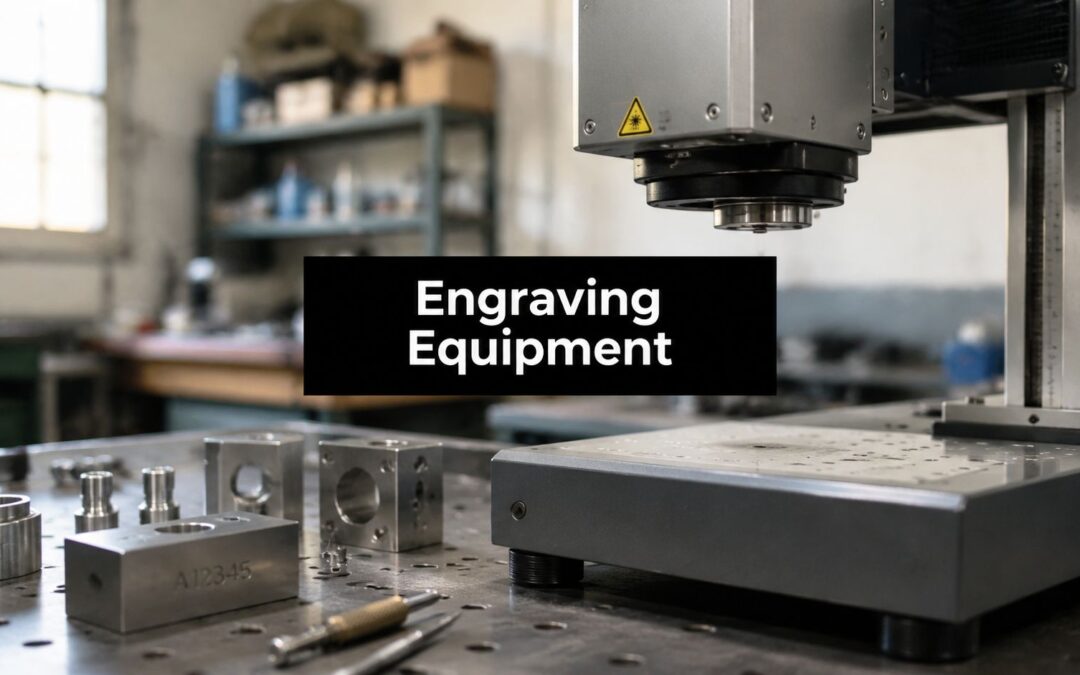
Trotec Laser systems stay useful in this guide because they give buyers a serious benchmark for spec, uptime, and ownership cost. The machine imagery matters too, because it helps you visualise the footprint, the setup, and the kind of install you're buying. That's a lot better than trying to decode a marketplace photo and hoping the machine is industrial-grade.
If you want the cleanest next move, speak with a supplier who can scope the application rather than push stock. Evright Industrial can help you map the right configuration, check compliance fit, and quote against the full lifecycle picture instead of just the sticker price.
If you're ready to buy with the right spec and the right support, talk to Evright Industrial about a Trotec Laser setup sized to your job. They can help you compare industrial engraving options for manufacturing, electrical, healthcare, and memorial work, then turn that brief into a practical install plan. Visit Evright Industrial and start with a proper conversation, not a rushed checkout.
Recent Comments