

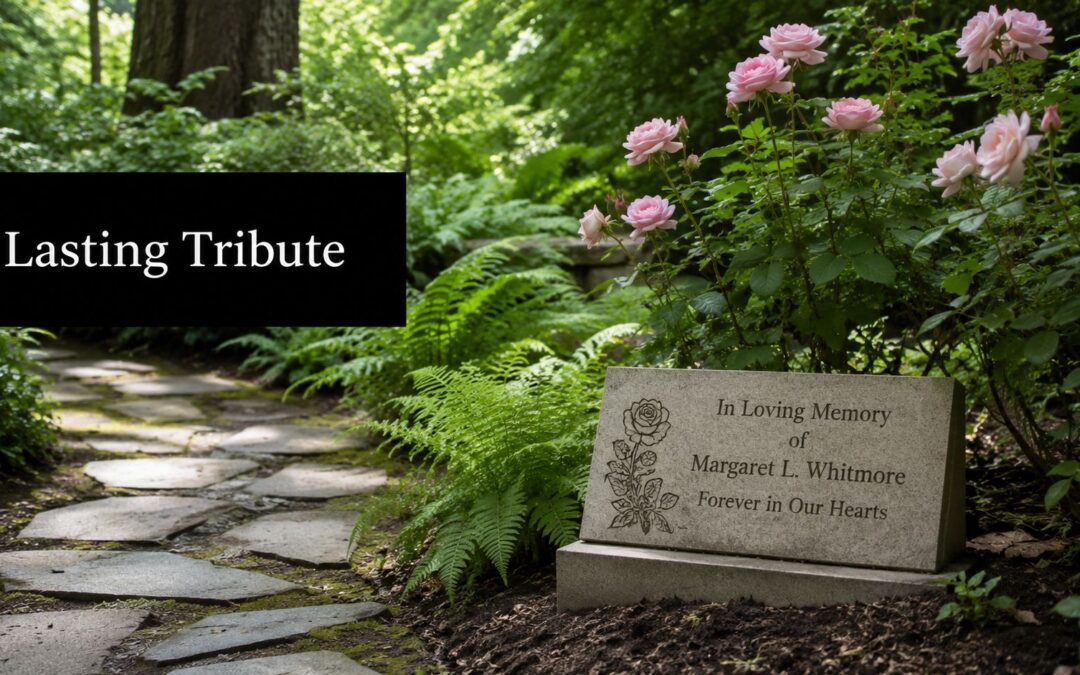
A garden memorial often begins with a simple need. You want one quiet place that feels steady. Somewhere you can sit with a cup of tea, touch a leaf, read a name, and feel that memory has a physical home.
That's why personalized memorial garden signs matter. They aren't just markers. They help turn a corner of the yard, a tree bed, a rose border, or a courtyard wall into a place of remembrance that feels personal, not formal for the sake of it. The right sign holds up outdoors, reads clearly, and reflects the person it honours without feeling overdesigned.
The work is emotional, but the decisions don't have to feel overwhelming. A lasting result usually comes down to a few practical choices made carefully: material, wording, size, placement, and engraving method. Get those right, and the tribute feels settled from the day it's installed.
Creating a Space for Remembrance in Your Garden
Many families start with the space before they start with the plaque. They know the favourite tree, the bench by the fence, or the garden bed that catches the morning light. What they need next is a marker that belongs there and carries the right tone.
In Australia, the move toward personal memorials is clearly established. Industry surveys indicate that 28% of families choose outdoor memorial markers such as garden plaques or tree signs, translating to over 30,000 personalized garden memorial signs commissioned in 2024 alone. That gives useful context to what many people are already feeling instinctively: remembrance doesn't have to stay confined to a cemetery setting.
A good starting point is to decide what the garden memorial needs to do day to day. For some people, it's a quiet visual anchor seen from indoors. For others, it's something to visit closely, read by hand, and tend as part of the garden itself.
Start with the place, not the object
Before choosing fonts or finishes, look at the site and ask a few grounded questions:
- Where do you naturally pause: A memorial sign works best where people already stop, not where they have to force a ritual.
- What mood suits the person: Formal, understated, rustic, or clean and modern all lead to different material choices.
- How exposed is the area: Full sun, irrigation overspray, coastal air, and leaf litter all affect what will last well.
- What surrounds it: Stone edging, timber sleepers, native planting, and paved courtyards each call for a different visual weight.
Some families find it helpful to test layout ideas first with a simple sketch or even a planning tool such as landscape design ai, especially when deciding whether the sign should sit within a broader remembrance corner rather than stand alone.
A memorial usually feels most natural when it looks like it was always meant to live in that part of the garden.
The most reassuring part is this: you don't need to solve everything at once. When the place is right, the rest of the decisions become clearer.
Choosing Materials for Beauty and Longevity
A memorial sign lives outdoors every day. Sun, rain, irrigation, soil splash, salt air, and leaf tannin all leave a mark, so the material choice does more than shape the look. It decides how the tribute will read in five or ten years, and how much care it will ask of the family.

At Evright, we usually guide families toward four material groups for outdoor memorials: stone, aluminium, stainless steel, and acrylic. All can work. The right choice depends on exposure, the feeling you want in the garden, and how the engraved details will age.
How different materials actually behave outdoors
| Material | Visual feel | Outdoor behaviour | Best suited to |
|---|---|---|---|
| Natural slate or stone | Timeless, textured, organic | Weathers well, softens naturally, holds a quiet presence | Planted borders, tree settings, traditional or natural gardens |
| Powder-coated aluminium | Clean, neat, adaptable | Resists weather well, lighter to mount, good for clear layouts | Modern gardens, fence or wall fixing, signs with more text |
| Stainless steel | Precise, restrained, contemporary | Strong corrosion resistance, especially useful in exposed sites | Coastal homes, minimalist spaces, long-term outdoor use |
| Clear acrylic | Light, decorative, less visually heavy | Better in protected positions, can mark or haze over time in harsh exposure | Sheltered courtyards, covered areas, softer visual treatment |
Stone tends to feel settled in a garden from the start. Metal reads more deliberate and architectural. Acrylic can look elegant in the right corner, but it is usually the material I rule out first for harsh Australian sun if the brief is longevity rather than novelty.
Laser engraving changes what each material can do
The same artwork will not produce the same result on every surface. On our Trotec laser systems, dark stone and granite usually give a calm, grounded finish with readable contrast. Aluminium produces sharper edges and very orderly text. Stainless steel suits fine detail and a controlled, contemporary look, but the finish needs to be chosen carefully so glare does not work against legibility.
That material response matters in memorial work because readability is part of respect.
Slate and darker stone often suit tributes where texture and warmth matter more than polish. Aluminium is often the easiest option for crisp lettering when there is more wording to fit. Stainless steel holds up well in coastal conditions and suits families who want restraint rather than ornament. Acrylic can be striking, but placement becomes much more important if the sign will face direct sun, windblown grit, or regular cleaning.
For families considering stone, granite plaque engraving for outdoor memorials is a strong option because granite carries lettering with real permanence and stands up well in exposed garden settings.
Trade-offs that are worth discussing early
Wood is often requested because it feels familiar and handmade. That instinct makes sense. In practice, timber outdoors usually means ongoing sealing, movement through seasonal changes, and a higher chance that fine text will lose clarity over time. For a memorial that should stay legible with minimal intervention, stone and metal are usually the safer choices.
Weight is another real factor. A thick stone plaque has presence, but it may need a more deliberate base or fixing method. Aluminium is easier to install on posts, fences, and masonry. Stainless steel costs more than some alternatives, yet in a coastal garden that extra spend can prevent replacement later.
A good rule is simple. Choose for the site first, then for the visual style. If the sign has to cope with western sun, sprinkler overspray, or sea air, let those conditions narrow the field before you decide what feels most beautiful.
Crafting a Message That Endures
The wording is where a memorial becomes unmistakably personal. Even the most beautifully made plaque feels incomplete if the text sounds borrowed, crowded, or unlike the person being remembered.
Some families want a formal inscription. Others want something as plain as a name and two dates, with one short line that sounds like their own voice. Both can work. The difference is whether the message fits the person and the setting.

Three approaches that usually read well
A garden sign doesn't need to say everything. It needs to say the right thing.
Classic and formal
This style suits traditional gardens and established memorial areas. It often uses a full name, dates, and a concise line of tribute.Plain and intimate
A short phrase can feel more affecting than a long verse. “Forever in our hearts” works because it's direct and easy to live with over time.Reflective and symbolic
Some signs use a small emblem, a botanical motif, or a photograph rather than more words. This often suits people who don't want the plaque to feel text-heavy.
How layout changes the feeling
Here's a common real-world difference. A broad serif font on stone can feel settled and traditional. A cleaner sans serif on brushed metal can feel calm and modern. Neither is better on its own. The right choice depends on whether the memorial belongs beside old roses and sandstone edging, or in a paved courtyard with structured planting.
Spacing matters just as much as wording. Too much text reduces legibility. Tiny lines that look acceptable on a screen often disappear once placed outdoors among foliage, dappled light, and changing weather.
Consider these layout choices:
- Name-first layouts place emotional focus immediately on the person.
- Centre-aligned text tends to suit formal tributes and symmetrical plaque shapes.
- Left-aligned text can feel more contemporary and is often easier to read in longer inscriptions.
- Symbols used sparingly usually age better than decorative borders everywhere.
If you're struggling with wording, start with the one phrase your family already says about that person. That usually sounds more honest than a line chosen because it seems expected.
Photographs can also be engraved when the material allows for it, especially where a more visual remembrance feels right. For families who want ideas before finalising a layout, these memorial plaque wording examples are a practical reference point.
Practical Considerations for Sizing and Placement
A family often knows the wording they want long before they know where the sign should sit. Then the practical questions start. Will it be read from a bench, from the path, or only when someone steps into the garden bed? The answer should set the size before the artwork is finalised, because a memorial that reads clearly in the workshop can disappear once it is surrounded by foliage, shadow, and reflected light.
In our production work at Evright, sizing decisions are usually tied to two things. Reading distance and the amount of text. A short name and date can sit comfortably on a modest plaque. A longer inscription, a photo, or a decorative border needs more room if you want the piece to stay calm and legible rather than crowded. This matters just as much on laser engraved memorial plaques as it does on larger garden markers.
Match the size to the viewing distance
A plaque beside a seat can stay relatively compact because people approach it with intention. A memorial fixed to a wall across a courtyard needs stronger visual weight, wider spacing, and usually fewer design elements competing for attention.
A simple way to assess it is to stand where the sign will be seen most often.
- At close range: smaller formats work well, especially for a name, dates, and a brief phrase.
- At mid-range: increase letter height, simplify the layout, and choose a finish with good contrast.
- From farther away: use a larger plaque or place it in a cleaner visual setting so planting does not swallow it.
Pick the mounting style to suit the garden
The right mounting method should look settled, not added as an afterthought. Stake-mounted signs work well under roses, near memorial trees, or at the front of a planting bed, but they need stable ground and enough height to stay clear of seasonal growth. Wall-mounted plaques suit courtyards, retaining walls, and sheltered areas where the inscription can be read without bending down. Freestanding plaques on stone or low plinths often feel more permanent, though they need a deliberate location so they do not interrupt mowing, edging, or foot traffic.
Tree-adjacent memorials need extra care. Fixing directly to a tree can create problems over time as the trunk expands, and a sign placed too close to the base can be lost among mulch, roots, and fallen bark. In many gardens, a nearby stake or small stone mount gives a cleaner result and is easier to maintain.
Check the site before you approve the design
Site conditions affect both appearance and lifespan. Bright sun can create glare on some metal finishes. Constant irrigation leaves mineral marks and can shorten the life of fixings. Dense planting may suit the mood of the space, but if leaves cover the text for half the year, the memorial stops doing its job.
Review these points before production starts:
- Sun and shade: check how the face reads in morning and afternoon light.
- Water exposure: avoid sprinkler heads and places where water pools after rain.
- Access: leave enough room for cleaning and for reading the inscription comfortably.
- Maintenance around it: allow for pruning, mowing, and seasonal plant growth.
- Site rules: cemeteries, managed gardens, and shared memorial spaces may have set requirements for size, materials, or fixing methods.
The calmest memorials usually come from careful decisions made on site, before the file goes to the laser.
How Your Vision Becomes a Reality with Laser Engraving
A memorial plaque usually starts with a simple brief. A name, a date, a few words that matter, perhaps a tree, a bird, or a photograph. The challenge is turning that into a mark that still reads cleanly outdoors and still feels dignified years from now. That is the point where production decisions carry emotional weight as well as technical weight.

Why Trotec Laser matters for memorial work
A Trotec Laser system gives close control over line quality, spacing, and repeatability across memorial materials. That matters because small details often carry the meaning. Fine serif lettering, a botanical motif, or a photo-based tribute can look clear in the artwork file but fail on the finished plaque if the process is not matched to the material.
The machine is only part of the result. Material reaction matters just as much. Coated aluminium tends to give strong contrast and crisp text. Stainless steel is durable but needs the artwork set up carefully so detail does not look flat in changing light. Stone has its own character, and the engraving has to respect the surface rather than fight it.
A short production video helps make that process easier to visualise.
What the process usually looks like
The workflow is straightforward, but each decision affects how the memorial feels in the hand and in the garden.
Artwork is prepared digitally
Text, borders, symbols, and photo elements are arranged for the final plaque size, with attention to spacing, readability, and visual balance.Material is matched to the design
Surface behaviour becomes critical at this stage. A layout that looks refined on coated aluminium may need heavier lines or more open spacing on stainless steel or stone.The laser engraves the piece
A Trotec system allows controlled, consistent marking, which helps preserve fine detail without the roughness that can come from less precise methods.The plaque is finished and checked
Edge quality, mounting points, contrast, and overall readability are reviewed before dispatch or installation.
At Evright Industrial, that production discipline is applied to laser engraved memorial plaques intended for long-term commemorative use. The benefit for clients is practical. You can approve a design knowing the engraving method, substrate, and final application have been considered together.
Fine memorial engraving is about clarity, balance, and restraint. The inscription has to read well in real light, on a real surface, in a place people return to over time.
Good memorial work depends on judgement as much as equipment. The laser makes the mark. The craft lies in choosing how deep, how dark, how fine, and on what material that mark should be made so the tribute remains calm, legible, and lasting.
Installing and Caring for Your Memorial Sign
A memorial sign should feel settled from the moment it's placed. If it leans, shifts in soft ground, or sits where sprinklers constantly hit it, even a well-made plaque will look neglected too soon.

Install it so it stays put
Focus on stability first.
- Choose firm ground: Soft mulch alone rarely gives a stake enough support.
- Use the right fixing method: Wall plaques need appropriate screws and anchors for the substrate, not a one-size-fits-all hardware choice.
- Check the level by eye and by tool: A slight lean is very noticeable on a memorial plaque.
Care for the material you chose
Cleaning should be gentle. Mild soap and water are usually enough for routine care. Avoid abrasive pads on metal finishes, and don't use harsh chemicals that can dull coatings or affect contrast.
For long-term durability, stainless steel remains a strong option outdoors. Many Australian engravers provide stainless steel memorial plaques with a lifetime warranty for outdoor exposure, confirming that high-quality metal garden signs are engineered to last for decades, as noted by Planet Engraving's stainless steel plaque information.
A few habits make a real difference:
- Wipe off soil and leaf tannins: They can stain surfaces if left in place.
- Inspect fastenings occasionally: Garden movement and weather can loosen fittings over time.
- Trim surrounding growth: Plants should soften the setting, not block the inscription.
Gentle maintenance preserves dignity. Overcleaning often does more harm than weather.
Partnering with Experts for a Lasting Tribute
A good memorial sign balances emotion with workmanship. The place has to feel right. The material has to suit the climate and the garden. The wording needs restraint, clarity, and a tone that still feels true years later.
That's why families, funeral homes, and memorial planners usually benefit from working with people who understand both fabrication and memorial context. The technical side matters more than it first appears. Material selection, engraving method, mounting detail, and readability in outdoor light all shape whether the tribute feels enduring or temporary.
Evright's broader engraving background through nearly six decades of expertise is relevant here because memorial signs demand the same things as industrial identification done properly: consistent execution, appropriate materials, and marks that remain clear in demanding environments. In memorial work, those technical standards support something much more personal.
If you're planning personalized memorial garden signs, take your time with the decisions that can't easily be changed later. Keep the wording honest. Choose a material that suits the site. Make sure the sign is proportioned to be read where it will live. The most lasting tributes are usually the ones that feel calm, clear, and well made from the beginning.
If you're ready to discuss a memorial plaque or garden sign, Evright Industrial can help with material selection, engraving options, and practical guidance on creating a durable tribute that suits its setting.
Recent Comments