

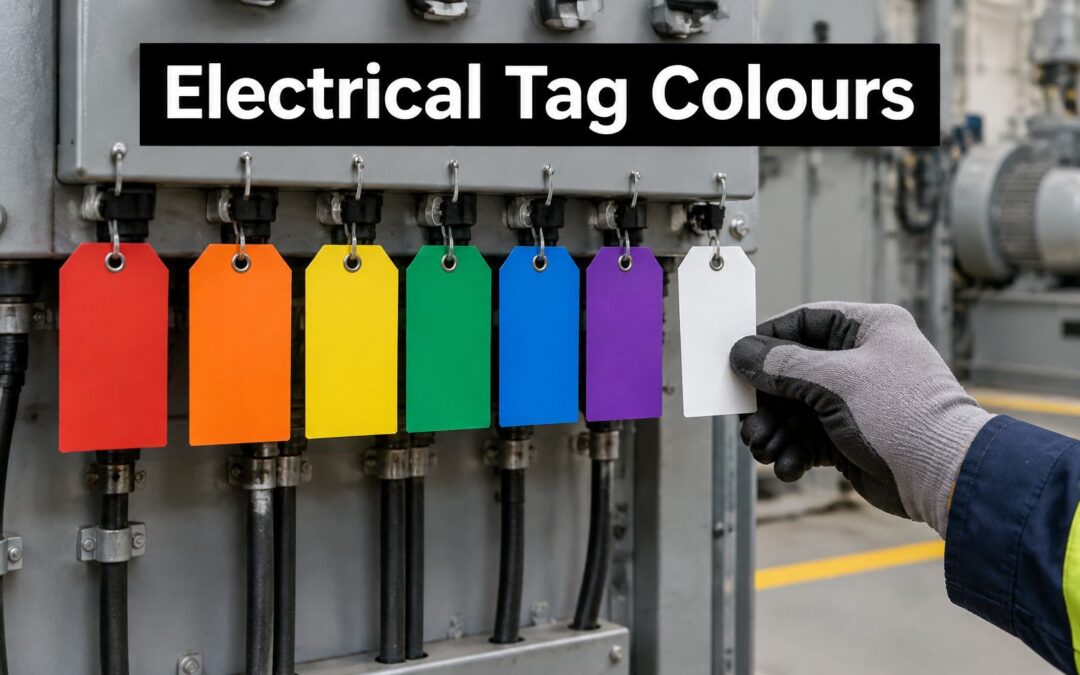
You're walking the factory floor before a shift change. A technician scans the tags on drills, extension leads and portable appliances, picking out equipment that needs attention without stopping at every bench. Colour makes that first check fast. But a faded date, an unreadable asset number or a misunderstood red tag can undo the benefit.
Australian electrical tagging colours sit across different systems: safety-sign conventions associated with AS 1319, inspection-and-testing practice under AS/NZS 3760, and site-specific procedures. They aren't a universal colour-only approval system. South Australian government guidance describes inspection colours as a visual reminder of the inspection period, not a substitute for the inspection itself.
Green, red, yellow, blue, lockout/danger tags, rotating test colours and white/grey identification tags all have useful roles. Read the wording before deciding what the colour means. Whether the marking is printed or laser-engraved, it must survive the heat, chemicals, handling and weather it will face.
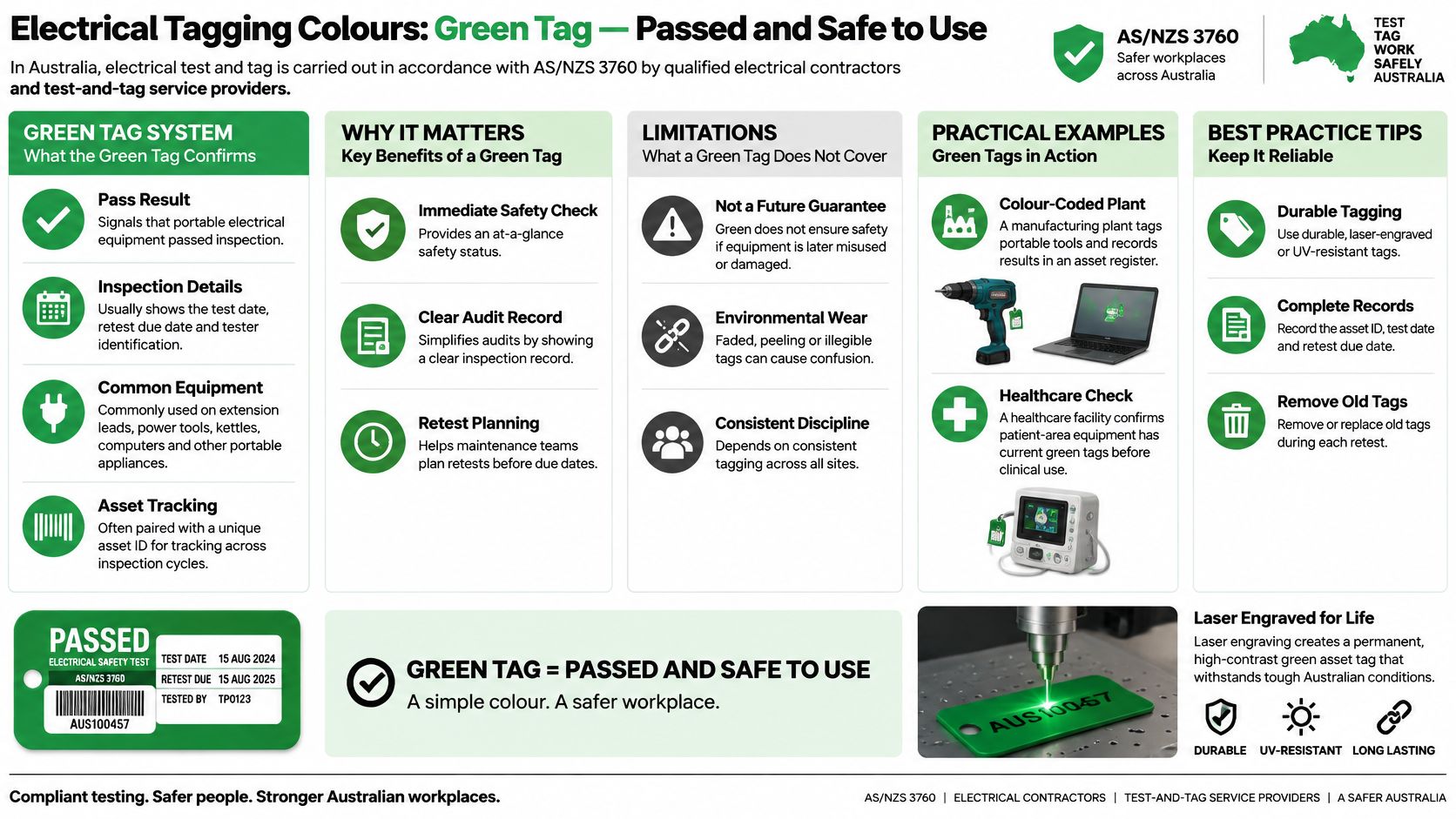
1. Green Tag Passed and Safe to Use
A green tag marked passed can identify equipment that was assessed as safe when inspected and tested. It doesn't guarantee that the appliance remains safe after damage, misuse or exposure to water, and green can also identify a testing period rather than a result.
The important evidence is the recorded assessment. WorkSafe Queensland's testing-and-tagging guidance requires equipment that passes to carry a durable tag showing the testing date and next scheduled inspection and test date, with testing performed by a competent person.
Make the Result Readable at the Point of Use
Say a manufacturing plant returns portable tools to a shared tool store. Workers need to match each tag to the actual tool, not just spot a green loop attached to its lead.
- Identify the asset: Match the engraved asset ID to the inspection register.
- Show the assessment: Keep the result, test date, next due date and tester details readable.
- Control old tags: Remove superseded inspection tags during retesting without removing permanent asset identification.
A permanent laser-engraved identifier and a replaceable inspection tag often work better than trying to make one label serve both purposes. Choose attachment points that won't snag, damage the cord or hide the information.
The colour comparison below is a visual aid, not permission to skip the dates and wording.
2. Red Tag Failed or Dangerous, Do Not Use
A failed or unsafe item must come out of service. Where a site uses red failure tags, the warning should state the defect and prohibited use plainly. Red alone isn't enough, because red also appears in rotating inspection calendars.
A cracked drill casing on a construction site needs more than a tag tied beside the damage. Disconnect it safely, prevent further use and move it into controlled storage so another worker can't collect it with the serviceable tools.
Practical rule: A current inspection tag never overrides an unsafe-equipment warning.
Make the Fault Hard to Miss
Use prominent wording such as unsafe equipment and a specific fault description. A durable engraved warning can provide permanent text, while the responsible person adds the fault details using a suitable, legible marking method.
Tamper-resistant attachments can discourage casual removal, but they don't replace quarantine or control of access. Keep the asset number visible so repair and retest records stay connected to the correct appliance.
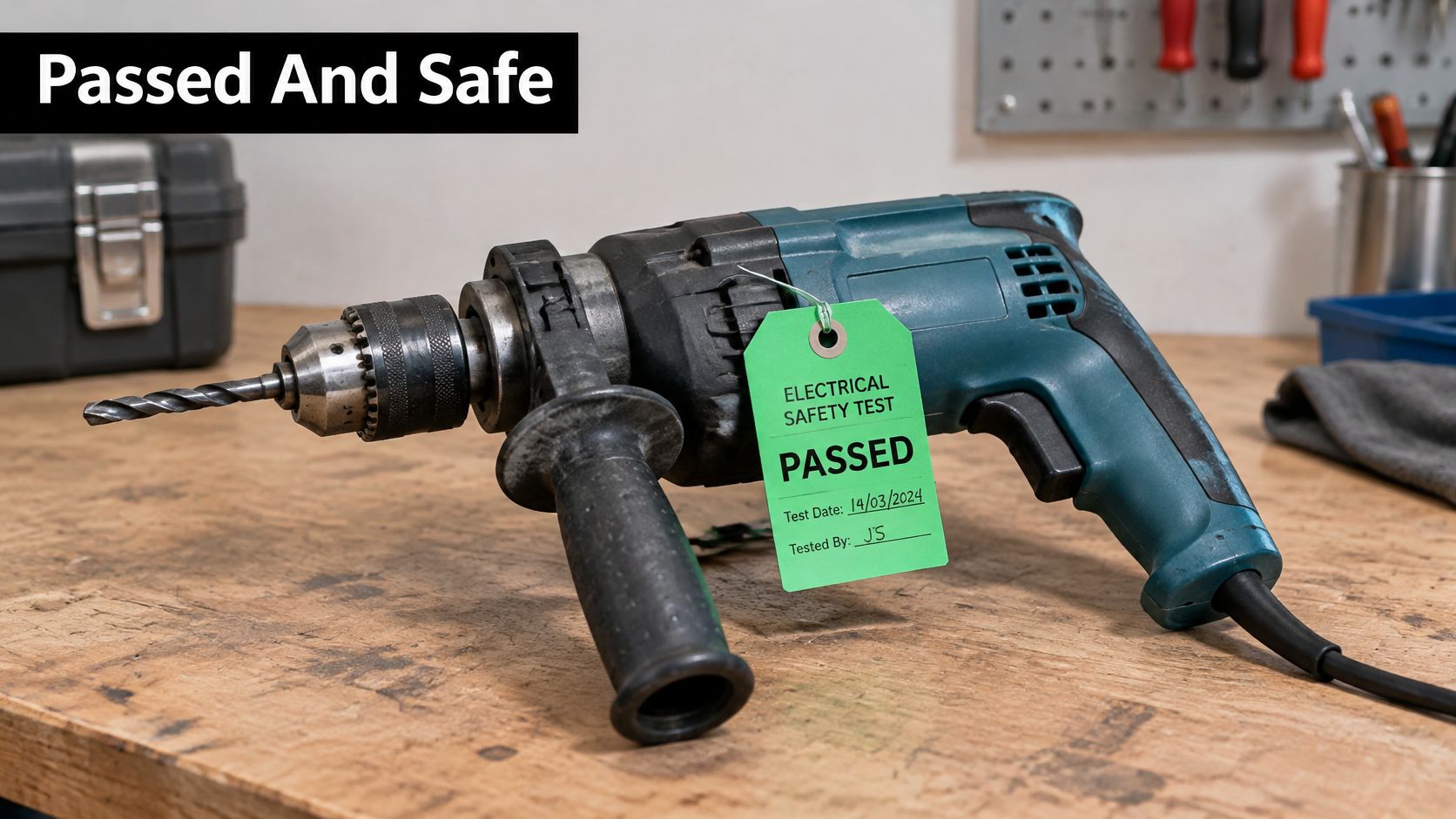
A drill displaying a passed tag, as shown below, still needs a condition check before use.
An electrical troubleshooting service may help investigate faults, but repair isn't the same as authorisation to return equipment to service. Follow the applicable competent-person assessment, testing and release procedure before replacing the warning with a current inspection tag.
3. Yellow Tag Caution, Limited Use or Under Repair
A yellow tag needs clear wording because caution, restricted operation and out of service aren't interchangeable. Never use yellow to justify operating electrically unsafe equipment.
A lead with a worn or damaged sheath doesn't become acceptable because someone writes low-load use on a tag. Withdraw suspect equipment for competent assessment rather than inventing an operating restriction.
Queensland's electrical-risk code of practice describes durable, securely attached, prominent out-of-service or caution tags that identify the defect or reason equipment is unsafe.
Separate Maintenance Notes From Safety Decisions
A facilities team might use yellow to identify an appliance awaiting a supplier part. The tag must still say whether the appliance is out of service or whether an authorised assessment permits a clearly defined restriction.
- Name the condition: Describe the fault or maintenance issue, not merely pending.
- Assign responsibility: Identify who controls assessment and release.
- Set a review point: Keep unresolved maintenance tags from becoming permanent background clutter.
For laser-engraved tags, leave enough space for variable information. A beautifully engraved caution heading is little help if workers can't read the handwritten restriction beneath it.
The damaged lead below illustrates equipment that needs withdrawal and assessment, not conditional use.

4. Blue Tag Mandatory Action or Required Procedure
Write the action, not just the category. A blue procedural tag should tell a worker exactly what must happen before operation or maintenance. Its site-defined meaning must remain separate from blue inspection-period tags.
At a plant-room control panel, a procedural marker might direct an authorised technician to verify the permit and follow the isolation procedure. It isn't evidence that isolation has already occurred, and it mustn't substitute for locks, danger tags or testing.
Put the Instruction Where the Decision Happens
Mount a laser-engraved procedural label beside the relevant control or access point, where it can be read before the worker acts. Keep the main instruction prominent and put lengthy supporting detail in the controlled procedure.
Our guide to Australian electrical safety standards provides context for distinguishing equipment identification, testing and safe-work requirements. Staff induction should explain the site's tag meanings rather than assuming every contractor uses the same convention.
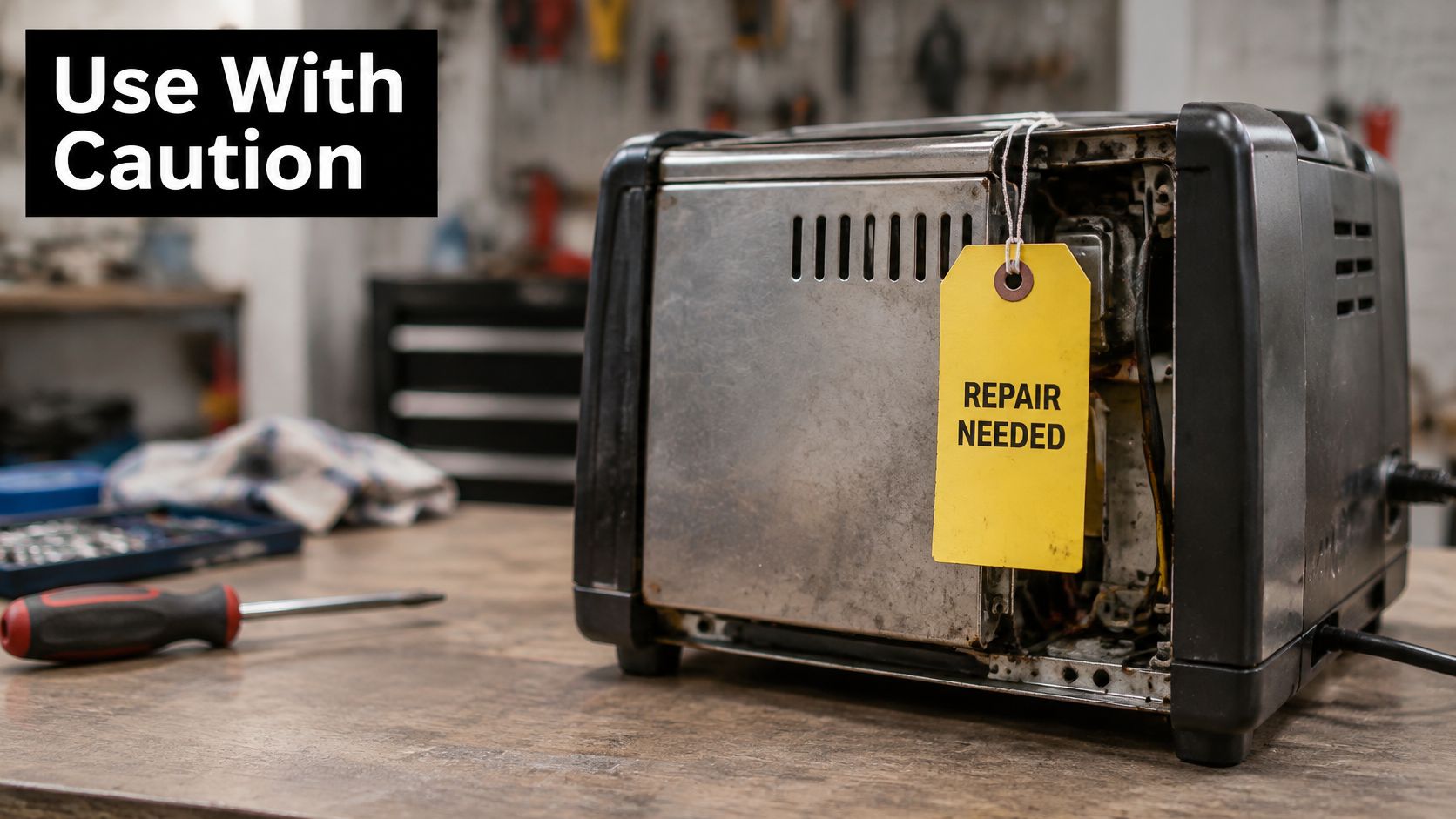
A repair-status tag, such as the yellow tag below, serves a different purpose from a mandatory-action marker.
For durable procedural labels, prioritise contrast, readable lettering and a cleanable surface. Check a marked sample under actual plant-room lighting, including glare from task lights.
A procedural label tells someone what to do. It doesn't prove that they've done it.
5. Lockout and Isolation Tags (Danger Tags)
Danger tags communicate an active isolation instruction, not an appliance's routine test result. They're attached at the relevant isolation device so someone approaching the switch or breaker understands that restoring supply could endanger a worker.
Queensland's guide for installations with alternate supplies describes danger tags using red and black lettering or design on a white background, securely attached, dated and signed by the worker or responsible supervisor.
Preserve Both the Warning and the Responsibility
Consider a maintenance crew replacing a motor contactor. The responsible workers must follow the site's isolation procedure, identify relevant supplies, secure the isolation and verify the equipment's condition before work starts.
A tag isn't a physical restraint. Use appropriate lockout devices and personal locks under the applicable procedure, with controlled arrangements for their removal.
- Identify the person: Keep names, signatures and contact details legible.
- Identify the hazard: Include relevant information about alternate or multiple supplies.
- Protect the marking: Select a tag body and attachment that withstand the actual outdoor or workshop exposure.
Laser engraving suits durable fixed warnings, but personal details still need a reliable writable or replaceable area. Don't select a glossy finish that makes those details difficult to write or read.
Use any video demonstration as supporting training, not as a substitute for the site's authorised isolation procedure.
6. Periodic Colour-Coded Test Tags (Rotating Colour Systems)
A tag colour can look current while its details are faded, dirty or unreadable. Rotating colours help supervisors spot equipment for closer checking, but the colour identifies a period, not the actual assessment or due date.
The MapTrack test-and-tag guide gives the familiar Australian sequence as red for December–February, green for March–May, blue for June–August and yellow for September–November, alongside inspection-and-testing practice under AS/NZS 3760:2022. Use a tag material and marking method that stay legible in the equipment's working conditions.
Publish the Calendar, Then Read the Date
A manufacturing site might display its colour calendar at tool stores and contractor entry points. Supervisors can scan for unexpected colours, then check the date, asset identity and tag condition before deciding what action is needed.
A recurring colour does not identify the year or prove the equipment is within its required interval. Inspection frequency depends on the equipment, environment and applicable requirements, not the colour chart alone.
- Use a controlled calendar: Make the current site convention available to workers and contractors.
- Retire superseded results: Remove old inspection tags during the authorised retest process.
- Keep identity permanent: Separate the engraved asset number from changing inspection information.
Link the physical tag to the wider inspection process, including the relevant dates and records. For harsh environments, use a durable asset marker beneath the administrative system; disposable inspection tags are not a substitute for lasting traceability. Guidance on tagging electrical equipment can help readers understand the broader process.
Colour is the screening tool. Dates, records and condition determine the next decision.
7. White and Grey Tags Information and Asset Identification
A white or grey tag can carry asset numbers, circuit references and maintenance identifiers. These neutral colours have no single universal meaning, so the site's own labelling convention should define what each represents. Workers should not mistake an identification tag for a pass label, isolation warning or permission to operate.
Keep Identity Stable When Status Changes
A hospital might use a grey engraved asset tag to identify a portable appliance in its maintenance database. The identifier stays constant as inspection tags, locations and service records change.
At a substation, the identification plate must match approved circuit documentation. An abbreviated or inconsistent identifier can cause confusion, even when the label itself is neatly made.
- Match the register: Check every character before production.
- Separate functions: Keep permanent identification distinct from temporary safety status.
- Plan placement: Leave room for inspection tags without covering ratings, controls or ventilation.
Durable electrical equipment labels keep asset identification legible alongside operational markings. Laser engraving can suit labels exposed to repeated cleaning or handling, where surface marking may wear away.
Choose contrast for the conditions. Fine lettering on brushed metal may look clear at a desk, then become difficult to read under glare, grime or oblique factory-floor lighting. Check the material, finish and viewing angle before approving the marking. A tag only identifies an asset reliably when its text remains readable in its working environment.
Electrical Tagging Colours at a Glance
| Tag | Colour Meaning | Typical Use Case | Governing Standard or Practice |
|---|---|---|---|
| Green Tag: Passed and Safe to Use | Passed inspection or test; safe to use at the time of testing | Portable electrical equipment with a current test record | Australian test-and-tag practice under AS/NZS 3760 |
| Red Tag: Failed or Dangerous, Do Not Use | Failed, damaged or hazardous; do not use | Quarantining equipment pending repair, replacement or disposal | AS 1319 prohibition colour convention; workplace safety procedures |
| Yellow Tag: Caution, Limited Use or Under Repair | Caution; use only under stated conditions or pending assessment | Equipment with a minor defect or a use restriction | AS 1319 caution colour convention; workplace procedures |
| Blue Tag: Mandatory Action or Required Procedure | A required action or procedure must be followed | Equipment requiring verification, isolation checks or a specified operating step | AS 1319 mandatory action colour convention; workplace procedures |
| Lockout and Isolation Tags (Danger Tags) | Danger: energy isolation is in place; do not restore energy | Identifying isolation points during maintenance or repair, alongside physical locks | AS 4836 and workplace lockout/tagout procedures |
| Periodic Colour-Coded Test Tags (Rotating Colour Systems) | Colour indicates the scheduled test period and helps flag overdue equipment | Visual tracking of periodic retesting across a site | Local test-and-tag colour calendar; commonly used alongside AS/NZS 3760 programs |
| White and Grey Tags: Information and Asset Identification | Neutral identification or administrative information; not a hazard status | Asset numbers, circuit identifiers, locations or maintenance references | Asset management and labelling practices; no single universal colour standard |
Build a Tagging System That Lasts as Long as Your Tags
A colour system fails when a tag fades, comes loose or becomes hard to read. A clear colour alone cannot make an illegible date or ambiguous warning reliable. Specify the marking so it remains legible in the conditions where the tag will be used.
Set the colour calendar and explain how inspection tags differ from isolation tags. Remove superseded inspection tags during each authorised test cycle. Keep those functions distinct: a test result does not show that equipment has been isolated.
Specify for the Exposure, Not the Catalogue Photograph
Heat, cleaning chemicals, sunlight and abrasion can affect the tag material, finish and attachment. Laser engraving can provide durable identification, but assess the whole assembly, including its fixing, contrast and any handwritten fields.
- Trial the finish: Check legibility after representative cleaning and handling.
- Check the attachment: Ensure the tag stays secure without snagging or damaging equipment.
- Keep records aligned: Match each physical identifier to the relevant inspection, repair and asset records.
Evright Industrial provides asset labels, safety signage, switchboard and panel marking, and identifying markers for electrical, essential services, manufacturing, mining, construction and health applications. Its focus includes laser engraving for asset labelling and industrial engraving. The right material and finish depend on the intended use and exposure, so discuss the marking and mounting requirements before settling the specification.
Evright Industrial offers a sampling service so customers can test materials and marking finishes. Customers can also be invited onsite to see the production facility. Bring the required wording, exposure conditions and proposed mounting location to that discussion. For a quote, call 08 8231 2746 or email sales@evright.com.
Review existing tags for faded colours, unreadable text and unclear status. Replace markings that may not remain legible through the inspection cycle, and ensure each identifier clearly communicates its intended purpose.
A tag only does its job when its marking stays readable and its meaning stays clear.
Evright Industrial offers laser-engraved asset identification and electrical safety markings. Visit Evright Industrial to discuss wording, materials and sampling options, then specify a marking system suited to the conditions it must withstand.
Recent Comments