

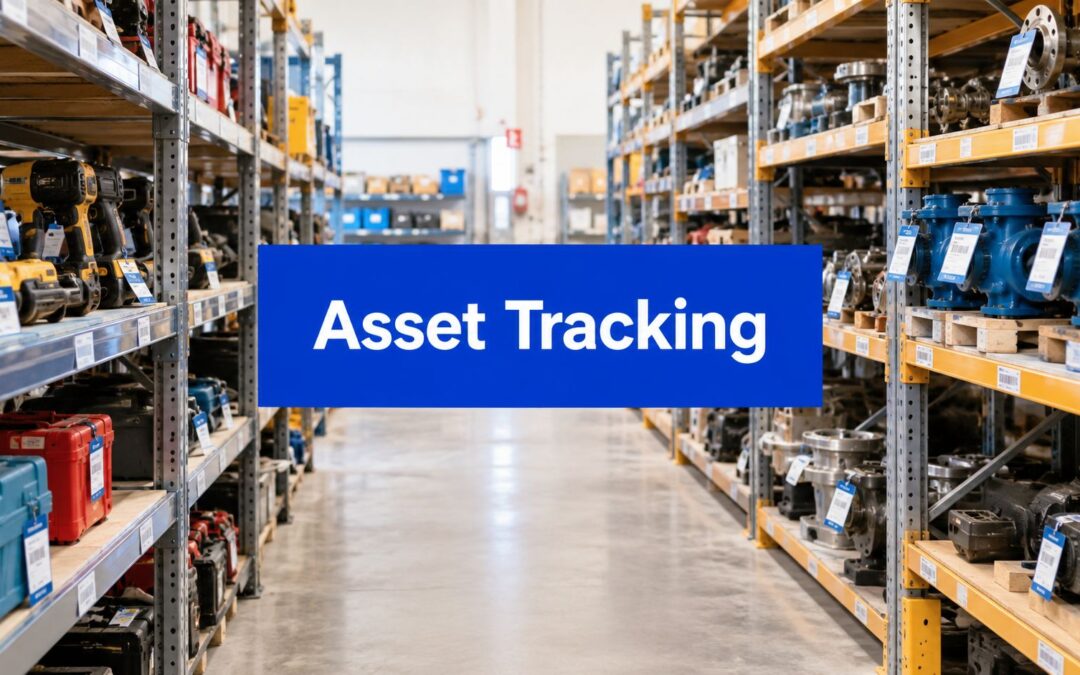
A technician arrives at a mining site looking for a tool that should be available for the morning job. The register says it exists, the crew remembers seeing it, and nobody can say where it went. On another site, a faded label forces someone to compare serial numbers manually before an inspection can be closed. The problem isn't a lack of software. It's the failure of the physical identification system that software depends on.
A reliable asset tagging and tracking system joins three things: a unique asset ID, a durable label that remains readable, and a digital record that captures custody, location, maintenance and audit events. In Australian industrial conditions, the label deserves as much attention as the platform. A code that falls off, fades under UV or becomes unreadable under oil has already broken the chain.
Why Asset Tagging and Tracking Matters on Australian Worksites
A missing item creates more than an inconvenience. On a construction project, a crew may delay work while someone searches vehicles, storage cages and the previous work area. In a hospital, staff may move between wards looking for a mobile pump or other shared equipment. In manufacturing, an unidentified component can hold up maintenance because the technician can't confirm its service history.
Australian healthcare gives the operational problem a clear shape. One Australian source estimates that about 15% of a typical hospital's mobile assets may be lost or stolen during their useful life, while staff can spend up to 60 minutes per shift searching for assets. The figures are reported in Australian RFID asset management guidance, which positions identification and location visibility as a response to both loss and wasted staff time. For a facility with 1,000 mobile assets, the stated exposure would equate to roughly 150 assets across their lifecycle.

What the system must deliver
A functioning system should let a worker answer four questions without guesswork:
- What is this item? The physical tag carries a unique ID, barcode, QR code or RFID identifier.
- Where is it now? Scans at commissioning, transfer and audit events create a location history.
- Who handled it? Custody records connect movements to a person, team or department.
- What has happened to it? Maintenance, inspection and disposal activity stays attached to the asset record.
That makes the label part of a compliance process, not decoration on a machine. The physical tag and the register must agree. If the register says an asset is in a workshop but the label can't be read in the field, the digital record offers false confidence.
Before choosing hardware, operators should also review broader key asset protection tactics covering site controls, custody and loss prevention. Those measures complement identification, but they don't replace it. A locked cage may protect equipment, while a durable tag proves which equipment entered or left the cage.
Evright Industrial's asset tracking best practices follow the same practical principle. Start with a clean register, assign one ID to each asset, mark that ID permanently, and record every meaningful event against it. The technology can vary by site, but the identity must remain consistent.
Planning Your Asset Register and Identification Strategy
Buy tags after you understand the assets, not before. A rushed order often produces labels that are too small, use inconsistent numbering or rely on adhesive that doesn't suit the equipment surface. The expensive part isn't printing another batch. It's returning to a live site to identify, clean and retag equipment that should have been correct at commissioning.

Build the register before the label schedule
Begin with a physical audit. Walk the site with the existing register, confirm the asset's serial or model information, note its actual location and photograph difficult items. Record gaps rather than correcting them. An asset with no trustworthy owner, location or status needs a decision before it receives a permanent ID.
Group equipment by criticality, mobility, replacement difficulty and loss exposure. A mobile tool used across several crews may deserve earlier attention than a bolted cabinet. A hire asset that regularly leaves the site may be more important to tag than a low-risk item that never moves. Healthcare teams may prioritise shared clinical equipment, while a manufacturer may begin with production-critical tooling.
Define the ID structure in the CMMS or central asset register. Keep the identifier unique and stable. A prefix can indicate a site or asset class, but don't encode so much meaning into the number that a reorganisation makes old labels misleading. The detailed information belongs in the register, where authorised users can update ownership, location and status without changing the physical identity.
Decide which events matter
At minimum, design the workflow around:
- Commissioning, when the asset enters service.
- Transfer, when custody or location changes.
- Maintenance, when a technician performs work.
- Audit, when the physical item is checked against the register.
- Disposal, when the asset leaves service and its record is closed.
Each scan should write a time-stamped event. Define who can create, edit and approve those records, then make the mobile workflow simple enough for a technician wearing gloves or working in poor conditions.
For constrained budgets, tag the asset class where loss or downtime causes the most disruption. Australian reporting puts hardware asset losses at about AUD 430 million annually, as discussed by IT Brief Australia. That figure supports a staged programme, but it doesn't tell you which items to tag first. Your own audit should answer that question.
Use a pilot group with a clear owner, consistent IDs and a defined scan process. Capture the baseline condition of the tags and records, then review operational results before expanding to the next class. A register that nobody trusts won't become reliable just because more labels are attached.
Choosing Tags and Materials That Survive Harsh Conditions
The right tag is determined by the substrate and exposure, not by the feature list on the supplier's brochure. A QR code can hold useful information, but it's worthless if oil has stained the surface or abrasion has removed part of the pattern. RFID can support non-line-of-sight reads, but the tag still needs to remain attached and associated with the correct asset.
Australian sites commonly expose labels to heat, UV, solvents, oil, wash-downs and impact. Polyester suits many indoor and moderate outdoor applications. Metallised polyester adds a more durable face and can support durable printed codes. Anodised aluminium is a strong choice where long-term permanence and resistance to harsh exposure matter. An Australian supplier states that its anodised aluminium labels can withstand temperatures up to 350°C and carry a 20-year lifespan rating, as described in its industrial asset label specifications.

Compare the physical options
| Tag Option | Best For | Durability and Limits |
|---|---|---|
| Barcode | General inventory, maintenance and audit scanning | Cost-effective and easy to deploy, but needs a clear line of sight and a protected, readable print surface |
| QR code | Smartphone access to records, instructions or service information | Stores more information in a compact pattern, but the code still needs sufficient size, contrast and surface protection |
| Passive UHF RFID | High-movement environments where non-line-of-sight reads are useful | Supports automated reads without a battery, but performance depends on reader placement, tag design and the material surrounding the tag |
| Polyester | Indoor assets and moderate outdoor exposure | Flexible and weather resistant, but it needs suitable print protection and may not suit severe abrasion or extreme heat |
| Metallised polyester | Plant, tools and equipment needing a tougher label face | Better suited to demanding handling than basic labels, though attachment and surface preparation still determine retention |
| Anodised aluminium | Long-life machinery, plant and exposed industrial equipment | Permanent and highly resistant, but it may need mechanical fixing or carefully selected adhesive on rough, contaminated or hot surfaces |
Australian suppliers describe polyester, aluminium and metallised polyester as common industrial choices. One Australian asset-label supplier reports that its silver asset stickers showed no degradation after seven years of artificial weather testing. Treat supplier testing as a useful indicator, not a substitute for testing the exact label, adhesive and substrate at your site.
Four details decide whether a label survives
A heavy-duty label has four working parts:
- Face material: Choose the material for heat, UV, chemicals and abrasion.
- Protected marking: Use a print or engraving method that won't disappear during cleaning and handling.
- Attachment: Match industrial adhesive, rivets, screws or another mechanical fixing to the surface and exposure.
- Code size: Make the human-readable ID and machine-readable code large enough to scan after years of wear.
Low-tech permanence can beat high-tech capability. If a worker has to wipe the label repeatedly, trace wiring or compare a partial code with old paperwork, the identification method has failed in practice. Evright Industrial uses Trotec Laser equipment for precise, high-contrast engraving on suitable materials, and its industrial asset tracking labels connect physical identifiers with barcode, QR and asset-register workflows.
Integrating Hardware Software and Trotec Laser Engraving
Integration should follow the event, not the device. A scanner, phone or RFID reader is only useful when its read creates a reliable action in the CMMS or asset register. The workflow should be straightforward: scan the ID, select or confirm the event, capture location or custody details, and save the time-stamped record.

Connect the physical and digital identity
Set the unique ID in the register first. Encode that exact value onto the tag, then test the human-readable characters and the machine-readable code against the asset record before release. This prevents the common failure where a correctly engraved plate is attached to the wrong machine.
Barcode and QR workflows generally suit technicians carrying mobile devices. Fixed RFID readers can support controlled entry points or equipment movement, while handheld readers suit audits and transfers. Passive UHF RFID is useful where non-line-of-sight reads reduce the need to aim directly at every label, but reader placement and the surrounding material must be validated on site.
Trotec Laser systems are particularly useful when the mark needs consistent alignment, repeatable character depth and clean contrast across a batch. Laser engraving doesn't remove the need to select the right metal, plastic or attachment method. It gives you a controlled marking process, while the substrate and fixing determine whether that mark remains available to the technician.
A practical engraving workflow looks like this:
- Export an approved ID list from the register.
- Check the sequence and remove duplicates.
- Set the Trotec Laser file with the required code, text and layout.
- Engrave a sample and test it with the intended scanner.
- Produce the batch, inspect the marks and reconcile the finished list.
- Attach each label to the verified asset, then complete commissioning.
For dynamic destinations behind a QR code, review the LinkShip dynamic QR overview before deciding whether the encoded destination should remain fixed or be managed through a controlled redirect. The asset ID itself should remain stable even when linked instructions or service information changes.
The RFID asset tracking workflow is most effective when readers, tags and register events are designed together. Evright Industrial's wider laser engraving service supports custom marking work, including material selection, artwork preparation and production coordination. Use Trotec Laser machine imagery and the following video to visualise the engraving stage, while keeping the actual deployment tied to your register and scan events.
Rolling Out Testing and Keeping Tags Audit Ready
A rollout fails in the field when teams treat attachment and verification as minor finishing tasks. Test the complete chain on real equipment, in the places where technicians work, after the cleaning, handling and weather exposure that the tag is expected to survive.
Start with a controlled deployment
Choose one asset group and a small set of users. Train them to scan at commissioning, transfer, maintenance and audit events, then watch where the workflow slows down. If workers bypass a required field, the form may be too complex or the event may not be defined clearly enough.
Test the physical tag as aggressively as the software:
- Readability: Scan the code from the normal working distance and angle.
- Retention: Check that adhesive edges remain bonded and mechanical fixings stay tight.
- Surface resistance: Wipe, clean and handle the label using the site's normal process.
- Register alignment: Confirm that every physical tag has one matching register entry.
- Replacement control: Remove damaged or faded labels from service and issue replacements against the same approved identity.
Australian test-and-tag guidance emphasises the relationship between the physical label and the asset register. It also stresses replacing faded or damaged tags and selecting an attachment method that suits the substrate and exposure, as explained in this Australian safety-tag guide.
Practical rule: If a technician has to wipe, guess or trace wiring to identify an asset, the tag has already failed its purpose.
Make audit evidence easy to produce
An audit-ready system should show who checked the asset, when the check occurred, where it was found and whether the condition or status changed. Link inspection records to the same asset ID used for maintenance and custody, rather than creating separate identifiers for each department.
For electrical and transport-related operations, digital compliance tools can help organise records alongside physical identification. My Safety Manager's DOT compliance software is one example of a platform focused on structured compliance information. It doesn't remove the need for a durable label. The technician still needs to identify the correct asset before the record can be trusted.
Only expand after the pilot passes its field checks. Keep a replacement process, a controlled ID list and a named owner for register corrections. A damaged tag should trigger a managed replacement, not an improvised label with a new number.
Measuring Results and Scaling Your Tracking System
Measure the operating problem you meant to solve. A tracking programme should show whether people find equipment more reliably, whether audits reconcile physical assets with the register, and whether maintenance teams can identify the correct machine without manual searching.
Use a simple scorecard:
- Loss exposure: Record missing assets and the asset class involved.
- Search effort: Compare the time teams spend locating shared equipment before and after the rollout.
- Audit result: Track unmatched, duplicate and unreadable identifiers.
- Maintenance compliance: Review whether scheduled work is recorded against the correct asset.
- Replacement rate: Monitor damaged tags to identify poor materials, weak fixings or bad placement.
Keep the first review focused on the pilot group. Australian market research reports that the healthcare asset management market reached USD 550.3 million in 2025 and is projected to reach USD 1,277.6 million by 2034, with a 9.81% compound annual growth rate from 2026 to 2034, according to this Australian healthcare asset management market report. That projection signals a broader move towards integrated identification and tracking, but each operator still needs site-level evidence before committing to expansion.
Use the first 90 days of data to choose the next asset class, as advised in Australian market commentary on staged tracking rollouts. Start where losses, search time or downtime hurt most. A construction business may move from high-value tools to trailers or containers. A manufacturer may progress from mobile tooling to maintenance-critical plant. A health service may extend from shared equipment to other mobile clinical assets.
Scaling doesn't mean tagging everything at once. It means repeating a proven register structure, material specification, fixing method and scan workflow across the next risk group. Keep reviewing label condition and data quality, because a tracking system is only as dependable as the identity that technicians can read.
Evright Industrial produces durable asset labels and engraved identification plates for equipment, tools, plant and site assets, with barcode, QR and human-readable marking options matched to demanding Australian conditions. Visit Evright Industrial to discuss your materials, fixing requirements and asset-register workflow before you commit to a site-wide rollout.
Recent Comments