

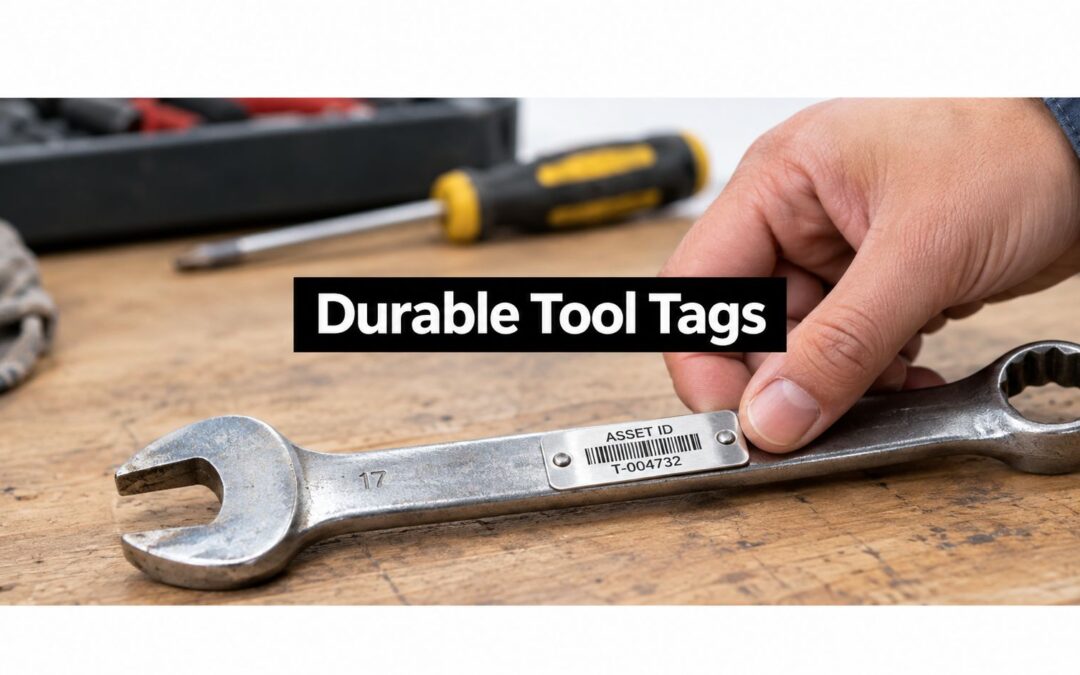
A tool disappears from a busy site, and everyone remembers seeing it, but nobody can say who last had it. Or an audit reaches the inspection register, only for the identifying label to be faded, half-peeled or impossible to scan. The equipment may still be serviceable, but the evidence trail has broken.
Asset tags for tools solve that problem only when the physical tag, identification scheme and digital record work together. A cheap sticker applied to a dirty surface isn't an asset management system. The durable approach connects each tool to ownership information, maintenance history, inspection status and compliance records, then keeps that connection usable throughout the tool's working life.
Why Tool Tagging Is a System, Not a Sticker
A tool tag has one job before it has any other benefit. It must give the person holding the tool a reliable way to identify it. That identifier might be a sequential number, barcode, QR code or RFID reference, but it must be unique and tied to an asset register.
Australian industrial identification guidance makes the same practical point. Tags should stay readable through handling, weather, abrasion, chemicals and washdown, while the unique identifier connects the physical item to tracking and maintenance records. The asset tagging best practices used by a site should therefore cover more than label selection.
What the tag needs to prove
Take a cordless drill moving between a workshop, service vehicle and construction site. The tag should let a supervisor confirm which drill it is, who owns it, where its record sits, and whether its maintenance or inspection status is current. The physical label doesn't need to carry every detail. It needs to carry a dependable key to the record that does.
That distinction matters during audits. A number that can't be read forces a person to search manually. A QR code that no longer scans creates the same problem, even if the code looked fine when it was printed. If the label peels away completely, staff may create a replacement identifier without knowing whether the old number still exists in the register.
A sound system links:
- The physical tool, including its location or responsible team.
- The unique identifier, printed, engraved or encoded on the tag.
- The asset register, where ownership and core details are stored.
- Maintenance records, including repairs, servicing and work orders.
- Inspection evidence, including dates, status and supporting notes.
- Compliance documentation, where the equipment category requires formal records.
Practical rule: If a worker can't identify the tool in the field and reach its record without guesswork, the tag hasn't done its job.
The same principle applies beyond hand tools. Australian guidance describes identification systems covering plant, machinery, switchboards, electrical equipment, ladders, scaffolding components and site equipment. A tool tag is the visible part of a much wider control system, so its material, placement and code should fit the way your organisation already records equipment.
Matching Tag Materials to Your Worksites
The right material depends on what the tool experiences, not what looks attractive in a catalogue. A label on a workshop torque wrench faces a different problem from a tag on equipment used near salt air, aggressive chemicals or repeated washdowns.
For frequently handled tools that aren't exposed to severe corrosion, laminated polycarbonate or polyester is usually the practical baseline. Australian supplier guidance positions these labels as thin enough for curved or compact surfaces while handling UV, fuel, oil, abrasion and washdown. Their industrial adhesive is intended for clean, dry steel, aluminium, powder-coated metal, hard plastic, fibreglass and painted surfaces. See the material guidance for outdoor asset labels before specifying a production run.
Compare exposure before price
Polymer labels suit drills, hand tools, test instruments and portable equipment where low profile and scanability matter. They sit neatly on a curved housing and are less likely to snag during daily handling. Their stated outdoor life is positioned at around 5 years, so they shouldn't be treated as a universal answer for permanent outdoor or high-corrosion applications. Australian asset tag supplier guidance describes the relevant material distinctions, including photo-anodised aluminium's documented 20-plus-year outdoor life.
Stainless steel is the safer choice when outdoor exposure, corrosion, impact or demanding asset-tracking conditions dominate. It tolerates abuse that can quickly damage a thin polymer label, particularly where a tool is dragged, struck or exposed to corrosive conditions. The trade-off is that metal tags can require more deliberate mounting and may not suit every small, curved surface.
Photo-anodised aluminium offers a durable metal option where long-term outdoor marking matters but the application benefits from a lighter material. It can be a strong fit for equipment identification, panels and tools that need a permanent, clearly marked surface without the weight or profile of heavier metal constructions.
| Tag Material | Best Environment | Outdoor Life | Typical Tool Use |
|---|---|---|---|
| Laminated polycarbonate or polyester | Frequent handling, UV, fuel, oil, abrasion and washdown without severe corrosion | Around 5 years | Hand tools, drills, test instruments and compact portable equipment |
| Stainless steel | Outdoor, high-corrosion, high-abrasion and demanding industrial exposure | Select for long-term harsh service rather than a generic life assumption | Lifting gear, heavy tools, plant accessories and exposed site equipment |
| Photo-anodised aluminium | Permanent outdoor identification where durable metal marking is needed | Documented 20-plus-year outdoor life | Long-life equipment, infrastructure tools and fixed or semi-fixed assets |
Under-specification breaks the chain
The failure usually starts before the label reaches the site. A buyer compares unit prices, chooses polymer for every tool and discovers later that heat, chemicals, abrasion or marine exposure have made the identifier unreadable. Once the number disappears, the maintenance record may still exist, but workers can't confidently connect it to the physical asset.
Use laminated polymer where it fits the exposure. Move to stainless steel or photo-anodised aluminium when the environment demands it. Under-specifying durability doesn't save money if it destroys traceability.
Designing Your Numbering and QR Code Strategy
Order the identification scheme before ordering the tags. Changing a material is inconvenient. Changing duplicate numbers across several sites can create a permanent data-cleaning problem.
Australian industrial guidance recognises sequential numbers, barcodes, QR codes and RFID as asset-tagging options. It also describes applications across plant, machinery, switchboards, electrical equipment, ladders, scaffolding components and site equipment. For rail applications, the guidance recommends marking objects as early as manufacture using GTIN, GTIN with serial or lot identification, or GIAI. See the relevant Australian label printer guide when your fleet includes more than portable tools.
Build the identifier first
Start with one central register. Decide which fields are mandatory, who can issue a new number and how transfers between sites are recorded. A simple scheme might use a consistent asset prefix, a category reference and a unique sequence, provided the structure remains readable and doesn't create duplicate ranges.
Keep the physical code short enough to print clearly. Store fuller information in the register, including:
- Asset number, the permanent reference used by staff.
- Category or equipment type, where a glance helps route the tool.
- Ownership or site, if the organisation moves equipment between locations.
- QR or barcode value, mapped to the same record.
- Status fields, such as active, under repair, retired or awaiting inspection.
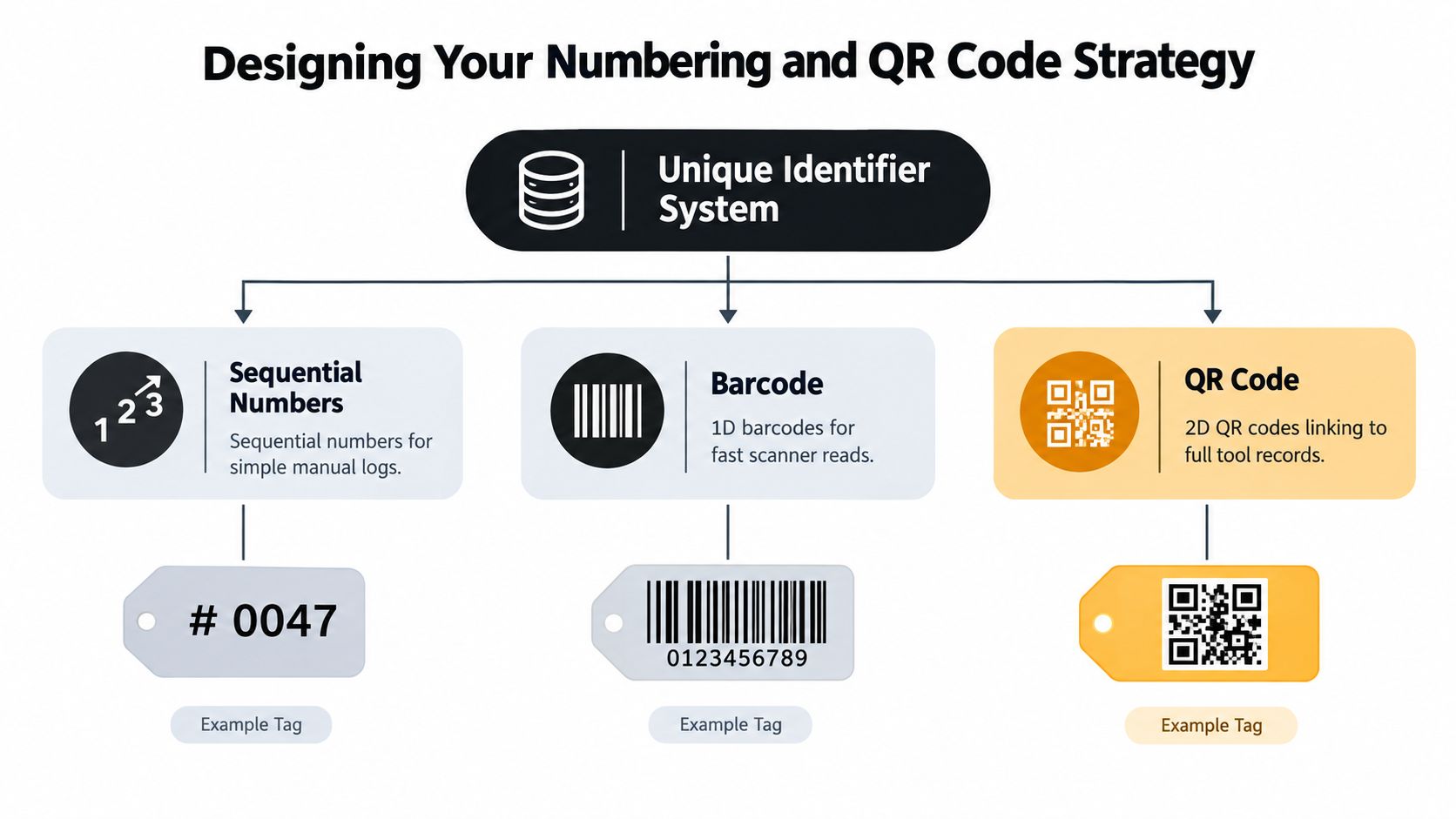
Sequential numbers work well for manual logs and simple systems. A 1D barcode supports fast scanner reads. A 2D QR code can connect a phone directly to a fuller cloud record, which makes it useful when a worker needs maintenance history or inspection status rather than just an identity number.
RFID or NFC may suit environments that need less direct scanning or more automated reading. Don't add a technology because it sounds advanced. Choose it because the workflow, hardware and register can support it. For teams comparing implementation options, this guide to dynamic QR codes for asset management provides useful context around QR records that can remain connected to changing asset information.
Use one numbering policy across mixed fleets, and reserve number ranges centrally rather than allowing each workshop to invent its own. A technician should be able to recognise the format, while the register remains the source of truth. For a practical implementation reference, see QR code asset tags.
Applying Asset Tags So They Actually Stay On
The adhesive usually gets blamed when a label lifts. In the workshop, poor preparation is the more common culprit. Oil, dust, moisture and surface texture prevent the adhesive from forming the bond it was designed to make.
Laminated polycarbonate or polyester QR labels are intended for clean, dry steel, aluminium, powder-coated metal, hard plastic, fibreglass and painted surfaces. They also suit tools exposed to UV, fuel, oil, abrasion and washdown, provided the label has been specified for that service. The equipment tagging procedure should be treated as a controlled task, not something done while equipment is being rushed out the gate.
Prepare the surface properly
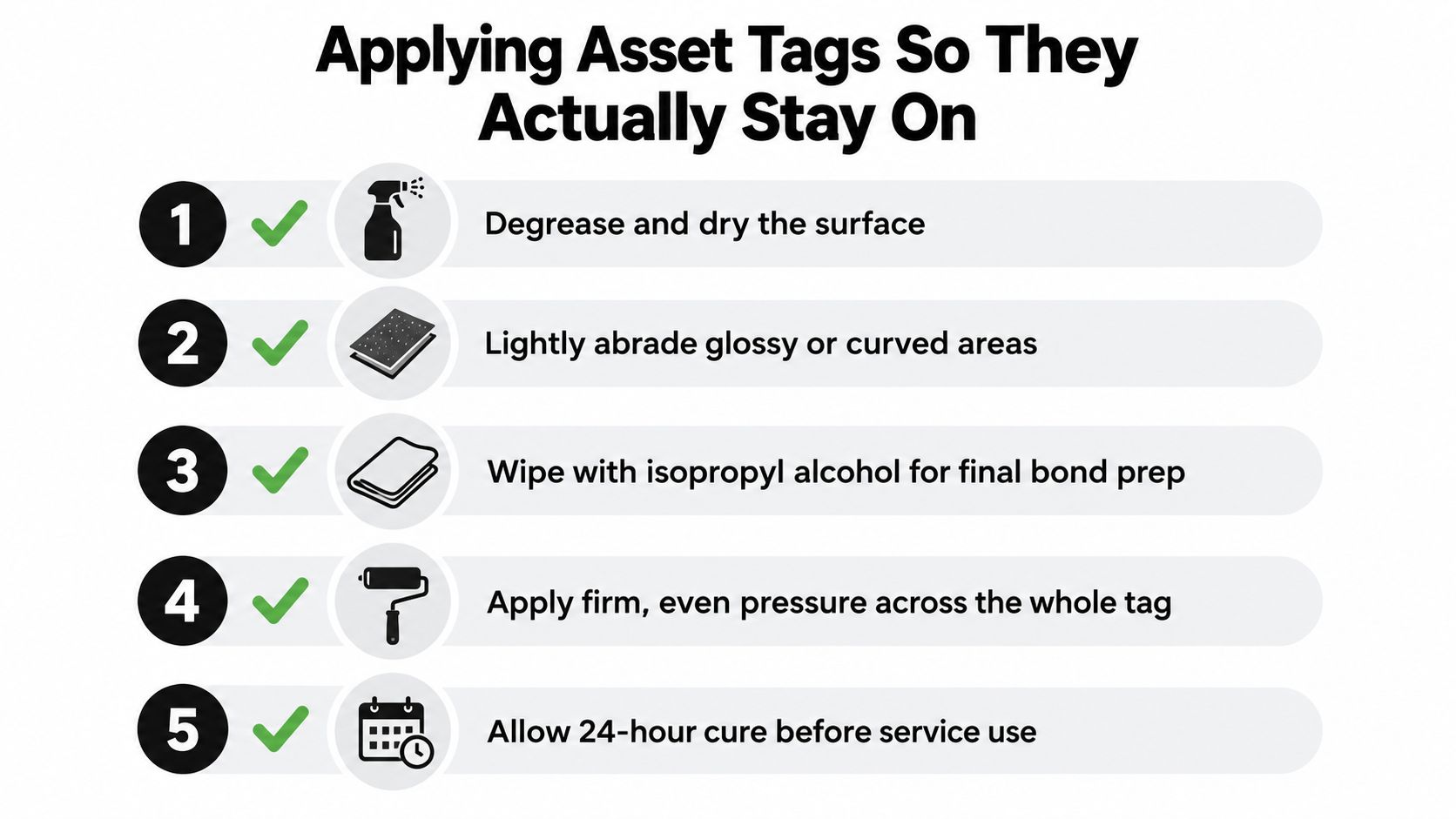
Remove grease and dirt, then let the surface dry completely. A final wipe with a suitable cleaning agent can help, but the surface must be compatible with both the tool finish and the adhesive. Glossy areas may need careful preparation, while heavily textured, oily, flexible or constantly moving surfaces may need a different attachment method altogether.
Choose the flattest high-visibility area available. Don't hide the tag beneath a handle, inside a guard or where a worker has to turn the tool upside down to scan it. Avoid a bend that forces the label to bridge a curve, because lifted edges quickly collect grit and water.
Apply the tag with firm, even pressure across the entire surface. Press the edges down carefully, then scan it immediately using the device your team will use in the field. A code that works only under perfect workshop lighting isn't ready for service.
Surface preparation is not optional. Adhesive performance depends on a clean, dry substrate.
Verify after real handling
Immediate readability isn't enough. Check the tag again after the tool has been handled, transported or exposed to a washdown. Look for lifting corners, creases, abrasion across the code and any residue that could obscure the print or engraving.
Where a tool has no suitable smooth area, consider a mechanically attached metal tag, such as a riveted or wired option, subject to the tool's safe-use requirements. Don't force a flexible adhesive label onto a surface that flexes, sheds oil or has deep texture. The attachment method must match the surface as closely as the material matches the environment.
Application records are useful for larger rollouts. Record the asset number, tag type, placement and verification result, particularly when several teams are applying labels across different sites. That small discipline makes replacement easier and exposes recurring failures, such as a particular coating, curve or cleaning method.
Why the Cheapest Tag Rarely Costs the Least
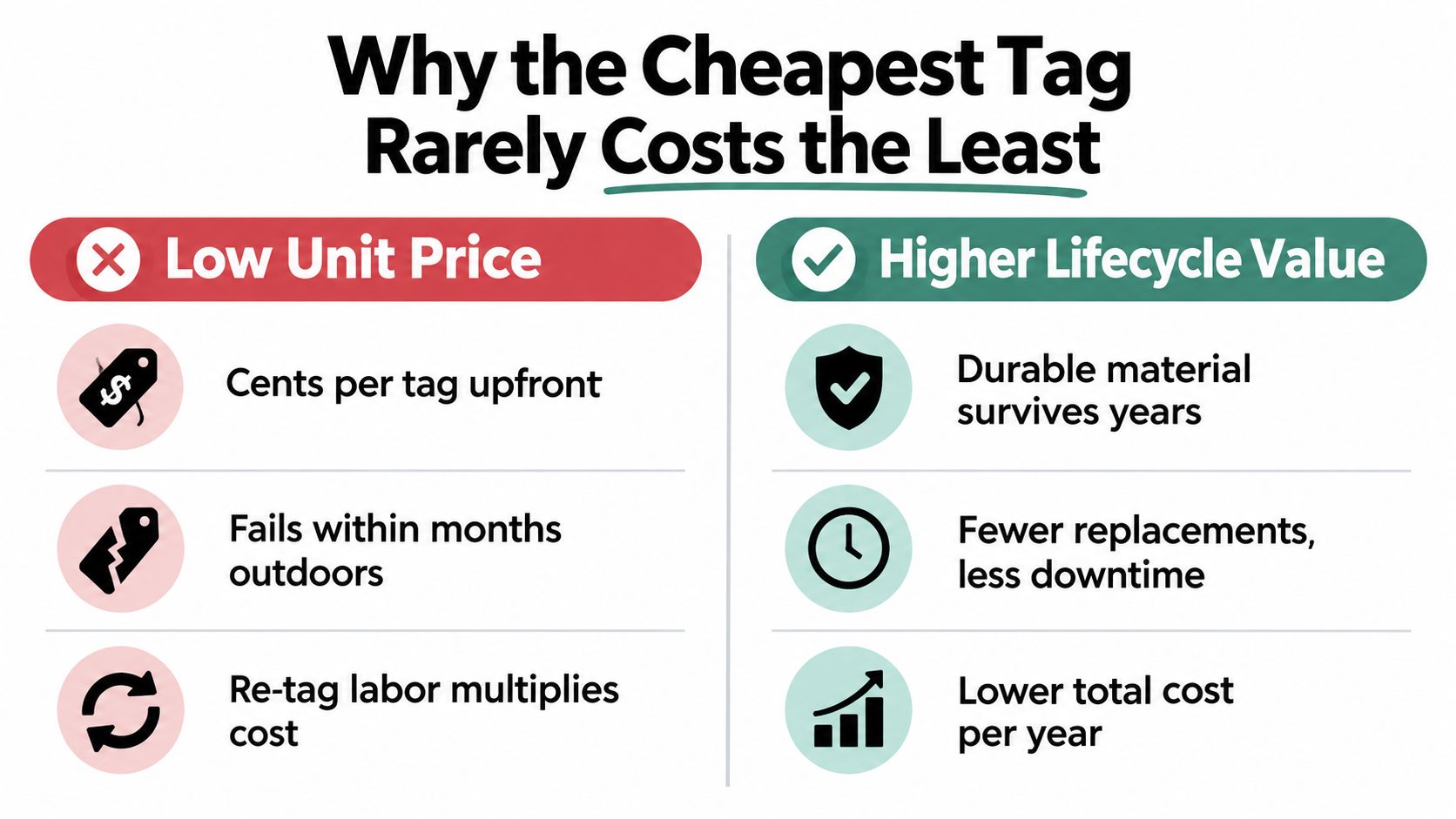
A tag's purchase price is only one part of the decision. The actual cost appears when a worker can't scan it, a supervisor has to search manually, someone relabels the tool, and the register loses confidence in the identity chain.
Australian software-and-tag offerings increasingly combine scanning with maintenance data rather than treating tags as standalone products. That shift supports a more useful purchasing question: what will this identifier cost across its working life? The Australian identification product range reflects that broader relationship between physical tags and operational records.
Price the failure, not just the label
Start with the unit price, then list what happens when the tag fails:
- Scanning failure: The worker retries, changes position or enters the number manually.
- Manual lookup: Someone searches the register using incomplete information.
- Relabelling labour: A replacement has to be designed, produced, applied and checked.
- Record risk: Staff may attach the wrong replacement to the wrong tool.
- Compliance exposure: An unreadable identifier can interrupt the evidence trail before an inspection or audit.
A higher-spec metal tag can make sense when replacement access is difficult, downtime is disruptive or the exposure is clearly harsh. Polymer may remain the sensible choice for compact tools that are handled constantly and kept away from severe corrosion. The correct comparison is not polymer against metal in the abstract. It's the expected life and failure pattern of each option in the actual worksite.
The same logic applies to software. A QR code that opens a current cloud record can reduce manual lookup, but only if the register is maintained and the workflow is simple enough for workers to use. For a broader example of thinking in terms of total operating cost rather than an isolated purchase, see this software cost analysis for HVAC. The category differs, but the discipline is relevant: count the labour and disruption that the headline price leaves out.
Maintaining Tags and Keeping Inspections Compliant
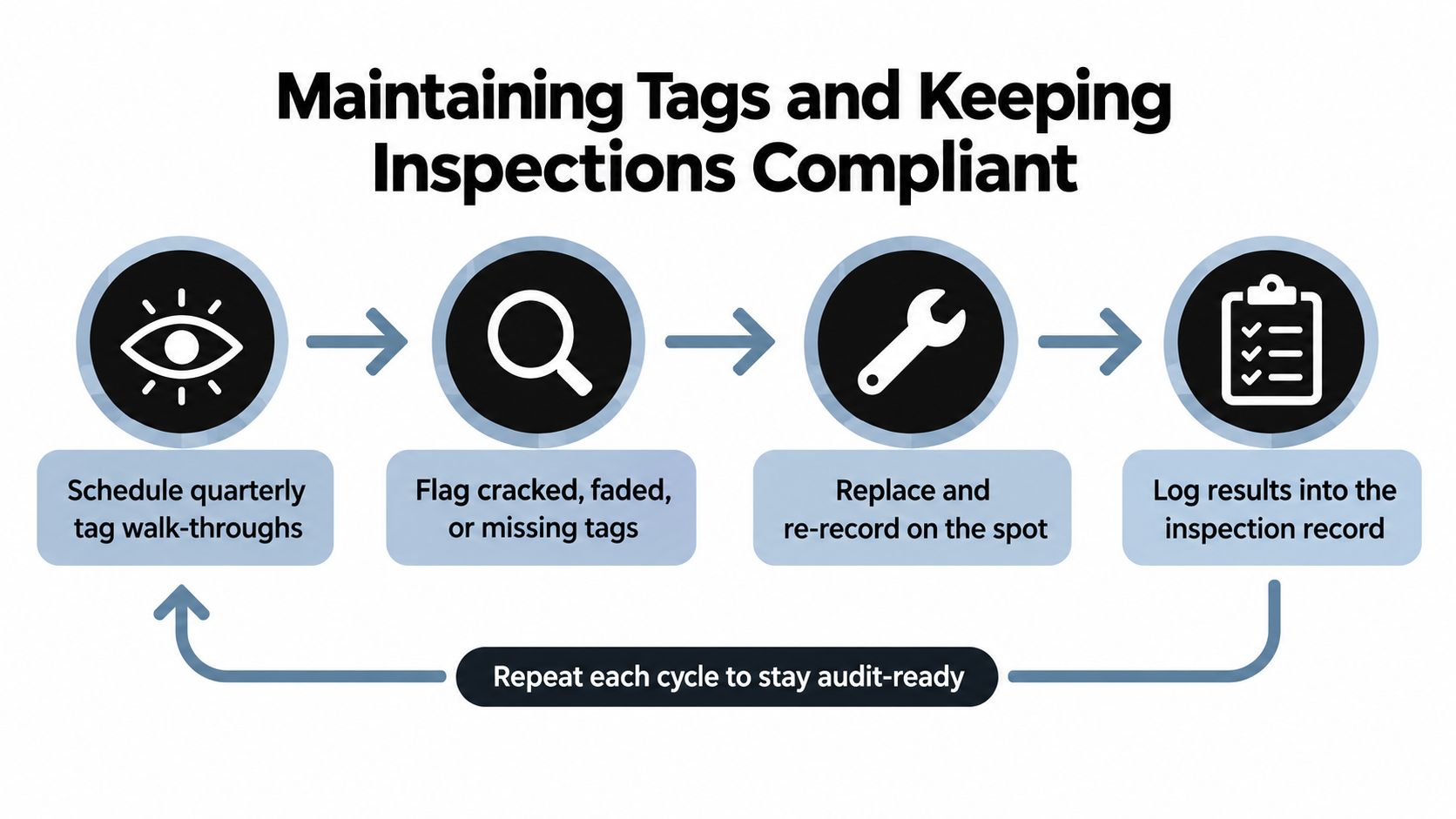
Tags aren't set-and-forget equipment. A label can be perfectly applied and still become unreadable after repeated handling, chemical contact, impact or washdown. Inspection routines should check the identifier at the same time as the tool, not after a failed scan exposes the gap.
Build the check into existing maintenance and inspection work. The person inspecting a power tool should confirm that its asset number or QR code is present and readable. The person checking lifting gear should verify the inspection tag, its status and the corresponding register entry. If a label is faded, lifting, cracked or missing, replace it before the tool returns to normal service.
Connect inspections to the register
Australian safety and test-and-tag practice uses standardised identification systems. Electrical test-and-tag procedures use AS/NZS 3760:2022, while scaffold inspection tags use AS/NZS 1576.1. The tag system needs to communicate ownership, inspection status and record history throughout the equipment lifecycle, rather than displaying an isolated date with no supporting record. See the Australian safety tags guide for the relevant identification context.
Lifting equipment requires particular discipline. Chain slings, lifting hooks, beam clamps and lifting magnets must be inspection-tagged at documented intervals, typically every 6 or 12 months under the AS 2550 series and AS 4991. The interval doesn't replace the need for pre-use checks or site-specific requirements. It gives the organisation a documented schedule that must be reflected in the register and inspection records.
Respond to harsh events
A washdown, chemical spill or heavy impact is a reason to recheck the tag, even if the next planned inspection isn't due. Scan the code, inspect the edges and compare the physical identifier with the register. If the code fails, quarantine the uncertainty, confirm the asset through other records and issue a replacement without creating a duplicate identity.
Use a consistent record for every replacement. Capture the old identifier where it remains available, the new tag details, the reason for replacement and the person who verified the record. This keeps the history intact and prevents a simple label failure from becoming an unexplained change in asset identity.
A practical maintenance rhythm includes a scheduled tag walk-through, immediate replacement of visibly damaged labels, scan verification after harsh exposure and register updates at the point of work. Whether your organisation uses a formal calendar or integrates checks into planned maintenance, the outcome should be the same: inspect the tool, inspect the tag and update the record.
Getting Tags Made and Where Laser Engraving Fits
Once the material and identifier are settled, production needs to preserve both. Artwork should leave enough clear space for the number or code to scan, remain legible at the tag's actual size and suit the mounting surface. A crowded tag can contain more information while making the information harder to use.
Laser engraving is useful where the marking needs to be consistent and resistant to the conditions already identified in the material decision. Evright Industrial uses advanced Trotec Laser machines for intricate, repeatable marking on selected industrial materials. The process can support asset numbers, serials, company identification, barcodes and QR codes without relying on a surface print that may be vulnerable to wear.
Give the manufacturer a controlled brief
Supply the asset register or approved numbering scheme, not a loose spreadsheet with ambiguous duplicates. Confirm the material, dimensions, attachment method, code format, placement and any required proofing process before production begins.
A practical production workflow is straightforward:
- Register review: Confirm the identifiers, quantities and required data fields.
- Artwork preparation: Set the layout, code size, contrast and readable text.
- Proof approval: Check a sample against the tool surface and scanning workflow.
- Laser production: Mark the approved design consistently across the required batch.
- Dispatch and application: Apply, scan and record each tag at the worksite.
The Evright.com process can be explored through its laser engraving services, including how supplied information is prepared for production and how engraved identification is made for demanding applications. If your requirement is temporary or presentation-focused rather than permanent industrial identification, Custom Swing Tag Printing is a useful comparison for a different type of tag application.
The finished system rests on four decisions. Choose the material for the exposure. Choose the identifier for the workflow. Apply the tag to a prepared, visible surface. Maintain the tag as part of every relevant inspection. That is what turns asset tags for tools into dependable lifecycle control instead of a box of labels waiting to fail.
Evright Industrial can help you specify durable asset tags for tools and portable equipment, including permanent engraved numbers, barcodes and QR codes produced with Trotec Laser machinery. Visit Evright Industrial with your asset register, material requirements and worksite conditions to discuss a practical tagging system.
Recent Comments