

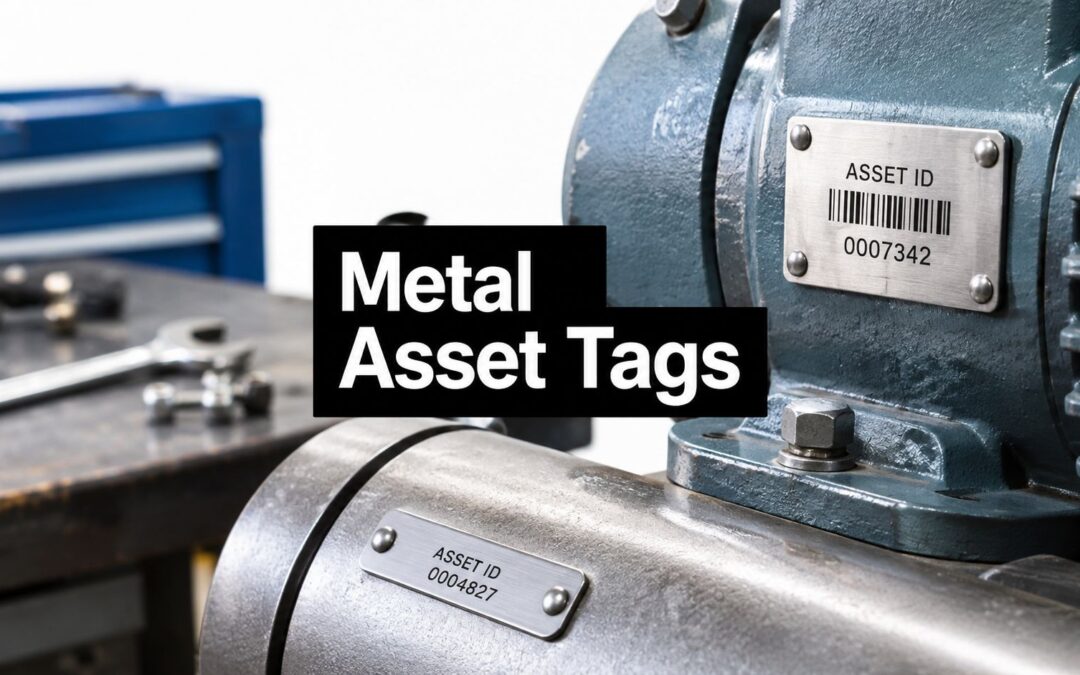
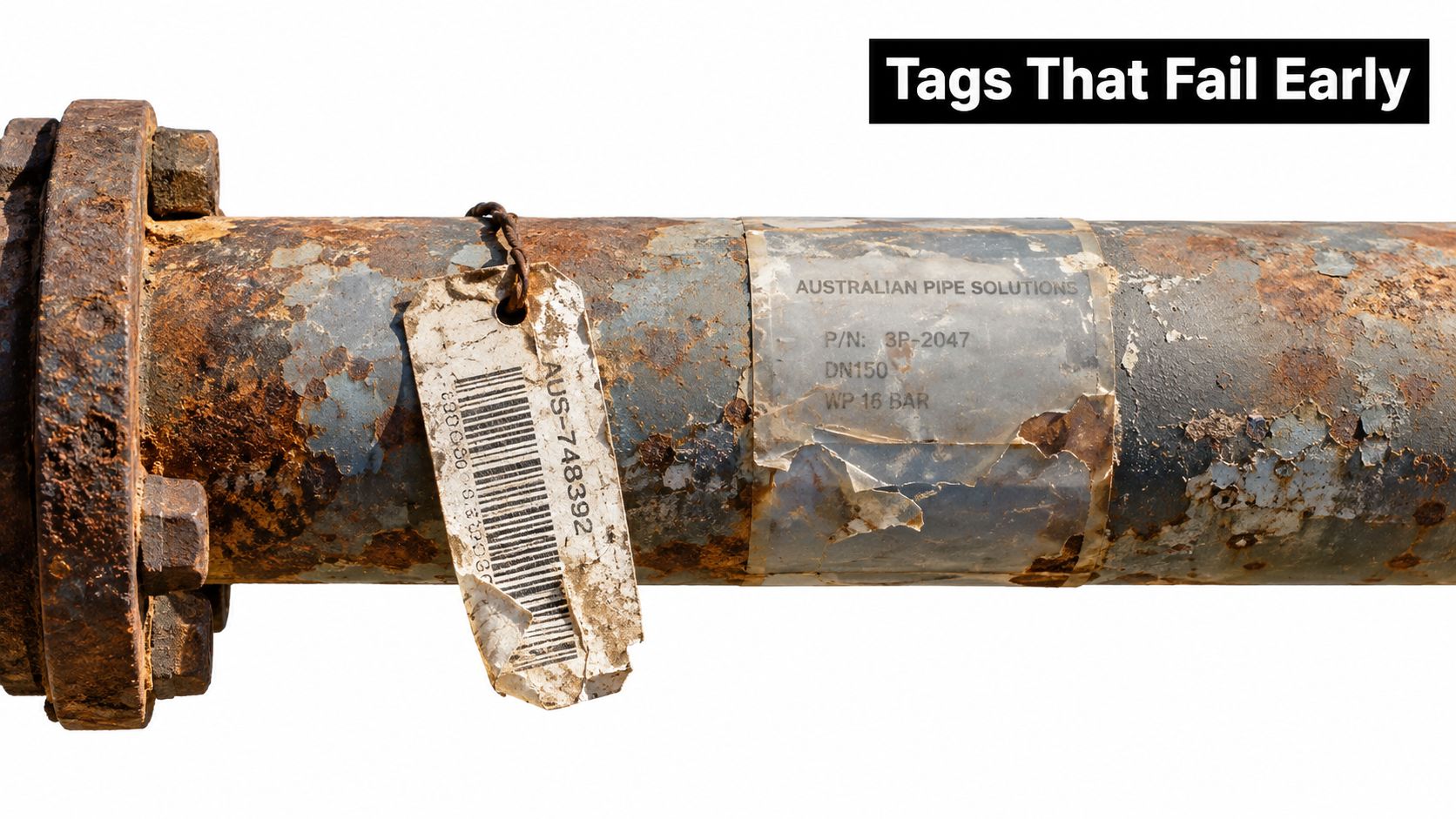
You've probably seen it already, a tag that looked fine on day one and turned ugly after one washdown, one summer, or one vibration-heavy shift. The number's still there, but the barcode is lifting, the plate is pitted, or the adhesive has given up. That isn't bad luck, it's a mismatch between the tag and the site.
Metal asset tags Australia buyers make the same mistake when they start with the supplier's catalogue instead of the site's conditions. The smarter approach is to audit the environment first, then choose the substrate, marking method, and fixing method to suit the job. That's how you get a tag that still reads cleanly when the asset needs service, audit, or replacement.
Equipment tagging procedure guidance is worth keeping beside the purchase spec, because the tag is only useful when it matches the register and stays readable in the field.
Why Metal Asset Tags Fail Before Their Time
Buyers of metal asset tags in Australia make the same mistake when a tag fails early. A light adhesive plate goes onto a vibrating motor, a printed label ends up in a washdown area, or a low-grade metal is fitted to a coastal pump station. The asset is still there, but the identification is gone, and technicians are left guessing every time they open a cabinet or step into the plantroom.
The failure is usually specification drift
The problem is not indifference. It is treating the tag spec like stationery instead of equipment. Once a tag cannot handle cleaning chemicals, UV, salt, heat, or abrasion, the site is back in the retagging cycle, and the cheapest purchase becomes the most expensive one.
Practical rule: if the asset would be hard to identify during a fault, the tag needs to be harder to destroy than the asset is to inspect.
Australian sites make that harder because conditions vary so much, from inland depots to coastal substations and chemically exposed plant. Per AS 4312:2019, atmospheric corrosivity is classified from C1 through CX, with expected mild-steel corrosion ranging from less than 1.3 micrometres per year in very low exposure to 200–700 micrometres per year in extreme exposure. Skip that assessment, and one tag style gets specified for sites that behave nothing alike.
Readability matters more than the purchase price
A tag that survives physically but cannot be read quickly has still failed. Maintenance teams need the human-readable ID, not just a plate that looks durable in a brochure. That is why the right starting point is simple, durable identification that stays tied to the record, not a decorative plate that only works indoors.
The harder question is whether the tag will still be visible, traceable, and legible from the normal inspection position after cleaning, weathering, or handling. Equipment tagging procedure guidance is a useful check against the purchase spec, because the tag only earns its place when it matches the register and stays readable in the field.
If the answer is shaky, the tag spec is wrong.
Choosing Between Stainless Steel and Aluminium
For metal asset tags Australia-wide, the material choice usually comes down to exposure, not appearance. Stainless steel belongs where corrosion, heat, or aggressive cleaning will punish softer finishes. Aluminium is the lighter, more economical option when the environment is controlled and the fixing method is sound. The mistake is treating every site like an office fit-out.
Match the alloy to the corrosivity zone
Site exposure should set the spec. Per AS 4312:2019 corrosivity classification, coastal, industrial, and chemically aggressive locations need a tag that suits the site, not one chosen by habit. A plate that holds up in a mild inland depot can break down much faster once salt, moisture, and contaminants are part of daily work.
For stainless steel, the practical split is between standard indoor service and harsher outdoor or washdown work. Grade 316 is the safer call where coastal air, disinfectants, or corrosive residues are part of the environment, because it gives more margin near process lines and exposed plant. Grade 304 still works in many sheltered settings, but it is the weaker choice as soon as the site starts moving toward the severe end.
For aluminium, an anodised finish gives clean contrast and a tidy look, but it does not suit every site. High abrasion, aggressive alkaline cleaning, or repeated scuffing will shorten its working life faster than many buyers expect. Aluminium performs best when the tag can be mounted securely, inspected easily, and kept away from the worst mechanical abuse. If you need a practical route for aluminium in a controlled site, Evright Industrial's aluminium laser engraving service is one way to turn a light substrate into a durable identifier.
Selection rule: if the site is harsh enough to require constant explanation, it is harsh enough to justify a tougher substrate.
| Environment | Recommended Substrate | Finish Type |
|---|---|---|
| Indoor plant floor | Anodised aluminium or stainless steel | Clear engraved or high-contrast marked finish |
| Outdoor substation | Stainless steel, often 316 for exposed sites | Deep engraving or durable permanent marking |
| Healthcare sterilisation corridor | Stainless steel or protected aluminium, depending on cleaning regime | Smooth, easy-to-clean, sealed marking |
The quote process should start with those three variables, environment, substrate, and finish, before anyone talks about size or branding. That is the part many suppliers skip, then wonder why the tag fails early.
Laser Engraving, Dot Peening, and the Hybrid Approach
A tag has to survive the job site, not the brochure. Laser engraving gives crisp detail and efficient batch production, dot peening leaves a deep mechanical mark, and a hybrid tag keeps human-readable ID in play even if the digital layer is unavailable. The right method depends on what the tag must endure, cleaning, impact, scanner failure, or all three.
Use the mark that matches the workflow
For flat tags, laser marking is hard to beat. Trotec Laser's Australian education and industrial-marking information lists the Speedy 100 flexx at 40 watts, a maximum speed of 2.8 metres per second, and a 610 × 305 mm work area, while the SpeedMarker 330 is described as a high-speed galvo system for permanent marking and engraving of metals or plastics, with Ethernet connectivity, a laser interlock, and a Class 2 safety system Trotec Laser specifications. Those details matter because consistent batch production keeps numbered tags aligned, scannable, and repeatable.
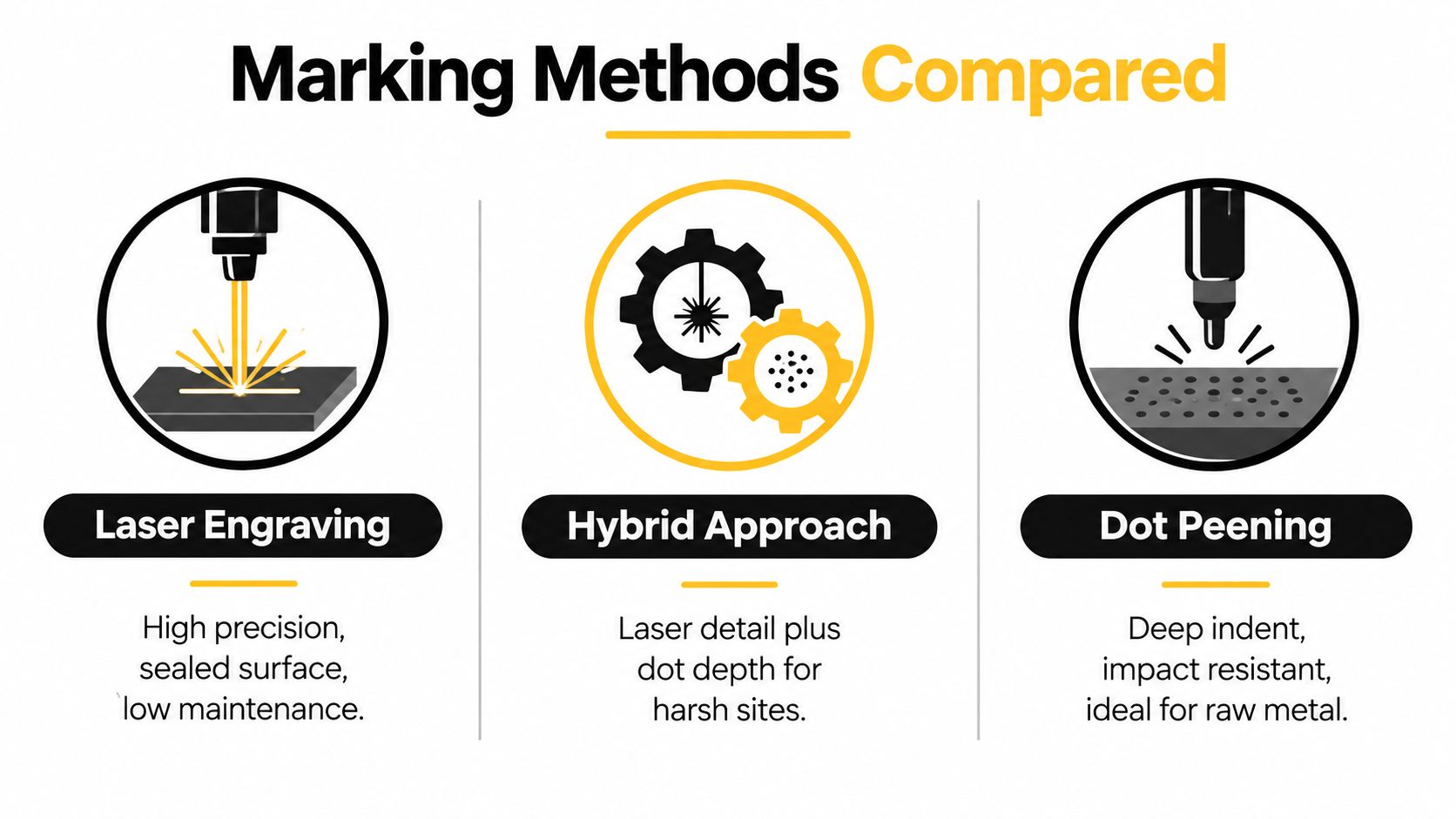
Dot peening still has a place. It works well on curved or awkward surfaces where laser focus is harder to hold, and it leaves a physical indentation that can stay visible after rough handling. It gives less visual finesse than a strong laser mark, so I reserve it for sites where impact resistance matters more than presentation.
Build the tag so it still works when systems fail
The smartest model is hybrid. Put a permanently legible human-readable ID on the metal tag, then add a barcode, QR code, or RFID layer where lifecycle data justify the extra infrastructure. The Australian RFID market is expanding across logistics, healthcare, security, and asset tracking, and it also brings privacy, secure storage, and ACMA-related compliance considerations Australian RFID market material. That makes RFID a useful layer, not a universal replacement.
A scanner is convenient. A readable metal ID is resilient.
A hybrid tag protects frontline work when the battery is flat, the database is offline, or the reader is unavailable. For the practical side of marking choices, Evright Industrial's guide to laser engraving techniques stays focused on what the asset must survive, not what looks modern in a sales deck.
Compliance Rules That Separate Traceability From Safety Signs
A tag can be durable and still be the wrong label for the job. On industrial sites, buyers often ask for a “compliant” metal tag when they really need an identifier for maintenance and audit. That is a different function from a safety sign, and the rules do not carry across.
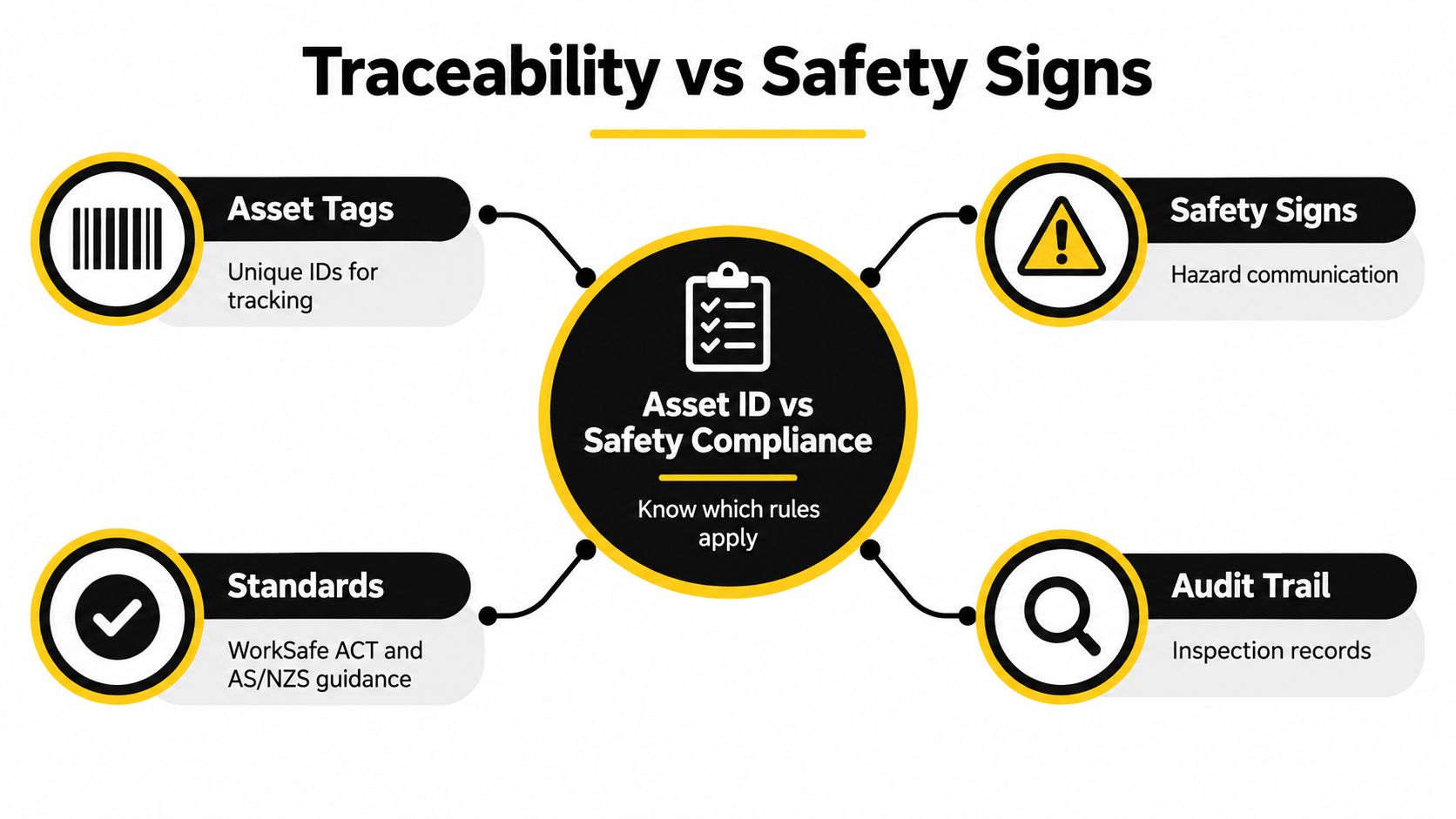
Asset ID and safety communication are not the same thing
WorkSafe ACT states that AS 1319-1994 governs the design and use of occupational safety signs, but it does not prescribe a specific material or nominal sign size. The material and format still have to suit the application WorkSafe ACT signage guidance. A stainless-steel or aluminium tag can survive harsh handling, yet it is not automatically an AS 1319-compliant safety sign.
That distinction matters in manufacturing, utilities, and healthcare. A serial plate or equipment ID points people to the right asset. A hazard sign warns about a risk. If those jobs get blurred, the spec gets sloppy, the tag lands in the wrong place, and audit conversations become harder than they need to be.
Use the right rule for the right label
RMIT's Australian safety guidance identifies AS 1345 for the contents of pipes, conduits, and ducts, which shows how quickly identification becomes sector-specific. The practical task is to decide whether the label is for traceability only, for hazard communication, or for a regulated identification scheme. Once a tag carries legal or safety significance, visibility, contrast, viewing distance, and placement all matter.
| Label type | Main purpose | What to check |
|---|---|---|
| Asset tag | Identify equipment and link to records | Code match, readability, fastening |
| Safety sign | Communicate hazard or emergency information | Standard, contrast, placement, visibility |
| Sector label | Meet industry-specific identification rules | Content, format, site application |
The cleanest compliance path is to keep the asset register accurate, then check whether any label on that asset also carries safety-sign obligations. Metal asset tags Australia buyers often overlook that boundary between traceability and safety signage, which is where avoidable rework starts.
Sizing, Fixing, and Applications Across Industry Sectors
Tag size should match the asset, not the other way around. Too small, and the code turns into a squint-and-guess exercise. Too large, and the plate is more likely to catch, bend, or sit badly on curved equipment.
Fixing method decides whether the tag stays on the asset
Choose the fixing method from the site conditions. Vibration, heat, washdown, and weather can defeat adhesives, so mechanical fixing is the safer choice on rough sites. SA Water's labelling specification separates plate labels fixed with screws or rivets from tag labels attached with wire, connectors, or cable ties, and uses those methods to support equipment identification during maintenance and operation SA Water asset-labelling specification. A tag that falls off is not a tag. It is debris.
On manufacturing floors, I favour a rigid plate with a clear human-readable ID and a fixing method that will not loosen under movement. On electrical substations, quick visibility and secure fastening come first, because inspection needs to be fast and unambiguous. In healthcare, smooth surfaces and easy cleaning matter as much as permanence, so the finish has to suit disinfecting routines.
Choose the attachment that suits the operating environment
Adhesives can work, but only when surface preparation is right and the environment is forgiving. Dust, oil, heat, and repeated moisture cycles all reduce the margin for error. If the asset is handled often or cleaned regularly, mechanical fastening is usually the safer long-term choice.
- Manufacturing equipment: Use a rigid plate with drilled holes, then secure it away from moving parts and hot spots.
- Healthcare assets: Keep the tag flush, smooth, and easy to sanitise, with the identifier readable at the normal access point.
- Government infrastructure: Prioritise tamper resistance, clear registry matching, and a fixing method that survives outdoor exposure.
- Electrical contractors: Place the code where technicians can read it without dismantling the asset or stepping into a hazard zone.
If the tag cannot be read without moving the equipment, it is in the wrong place.
As noted earlier, RFID can sit alongside the metal tag, but it does not replace the need for a permanently readable identifier. In healthcare sterilisation corridors, that means the RFID tag still has to fit within the cleaning path, avoid snag points, and stay readable on a compact plate that will not interfere with carts, doors, or wall-mounted equipment. The practical test is simple. If the scanner is unavailable, the asset still needs a clear metal ID that staff can read and log by hand.
Pricing Variables and How to Get a Realistic Quote
A quote gets messy fast when the brief is vague. Material grade, tag size, marking method, finish, batch size, and fixing detail all change the result. A small run of custom 316 stainless tags with drilled holes and deep permanent marking will cost more per unit than a larger batch of standard aluminium tags, because setup, handling, and finishing are different.
Quote the job from the job, not from the unit price
Start with the site conditions, then the data to be marked, then the mounting method. The clearer the brief, the less likely you are to pay for rework. Too many quotes are built on mild conditions, flat surfaces, and identifiers that never have to survive a dirty plant floor.
Evright Industrial can turn that brief into a production spec, using laser-marked metal tags, serial numbering, barcode and QR layouts, and mounting options suited to industrial use. That matters because the job is not just making a tag, it is matching the tag to the record and the environment.
What pushes lead times out
Custom formats take longer when they need unusual hole patterns, mixed materials, special finishes, or multiple data fields that must be checked line by line. Batch jobs move faster when the artwork is locked, the register is clean, and the asset IDs are final. If the register keeps changing, production slows because every change has to be checked against the physical plate.
A good quote should answer three things clearly. What material is being used, how the identifier is being marked, and how the tag is being fixed. Once those are agreed, the production path is straightforward.
If you're specifying tags for a plant, substation, clinic, or government site, send the asset list, the environment, and a photo of the mounting point to Evright Industrial. We'll help you choose a metal tag that suits the corrosivity zone, the compliance boundary, and the way your team services the asset.
Recent Comments