
You're probably here because the item matters more than the mark.
It might be a run of branded key holders for a client event, leather tags that need to stay readable in a working environment, or a commemorative piece that can't look home-made. In Brisbane, plenty of people discover the same thing at the same point in the project. Leather is forgiving in some ways, but it's unforgiving when the engraving is poor. A weak mark looks fuzzy, shallow work disappears into the grain, and the wrong process can leave a result that feels cheap before it even leaves the bench.
That's why leather engraving in Brisbane isn't just about putting text on a surface. It's about choosing a process that matches the finish you expect. Hobby gear can produce novelty pieces. Professional laser engraving produces consistent, sharp, durable work that suits branded merchandise, asset identification, presentation items, and keepsakes.
The difference usually shows up in the edges. Fine text stays legible. Logos keep their shape. Repeats across a batch match. That's where industrial-grade equipment, material knowledge, and careful setup earn their keep.
Your Guide to Custom Leather Engraving in Brisbane
A common starting point is simple. Someone needs a leather item personalised and assumes every engraving method is roughly the same. Then they compare a hobby-market sample with a professionally engraved piece and realise the gap is wider than expected.
A corporate team might want premium welcome gifts that don't feel generic. A workshop manager might need leather identification tags that remain clear after handling. A family might be organising a memorial item and want the wording to feel restrained and permanent, not decorative for the sake of it. Different purpose, same requirement. The mark has to look intentional.

Where expectations usually change
Leather engraving adds value when the finish suits the material. On a well-made key tag, notebook cover, wallet insert, or presentation piece, the engraving becomes part of the object rather than decoration sitting on top of it. That's what clients usually want, even if they don't phrase it that way at first.
For buyers comparing options, it helps to look at finished examples such as leather accessories with monogramming. Not to copy blindly, but to decide what kind of outcome fits the job. A subtle tonal monogram suits one piece. A strong, high-contrast logo suits another.
Practical rule: If the item needs to represent your brand, your business, or a personal milestone, treat the engraving process as part of the product selection, not as an afterthought.
What basic methods miss
DIY tools and entry-level systems can work for casual personal projects. They struggle when detail, repeatability, and clean execution matter. Leather isn't a flat, inert sheet. It has grain, coatings, density changes, and colour variation. Good results come from controlling those variables, not hoping they won't show.
That's where professional laser work stands apart. The finish is cleaner, the artwork translates more accurately, and the final item looks made rather than improvised.
Understanding Laser Engraving on Leather
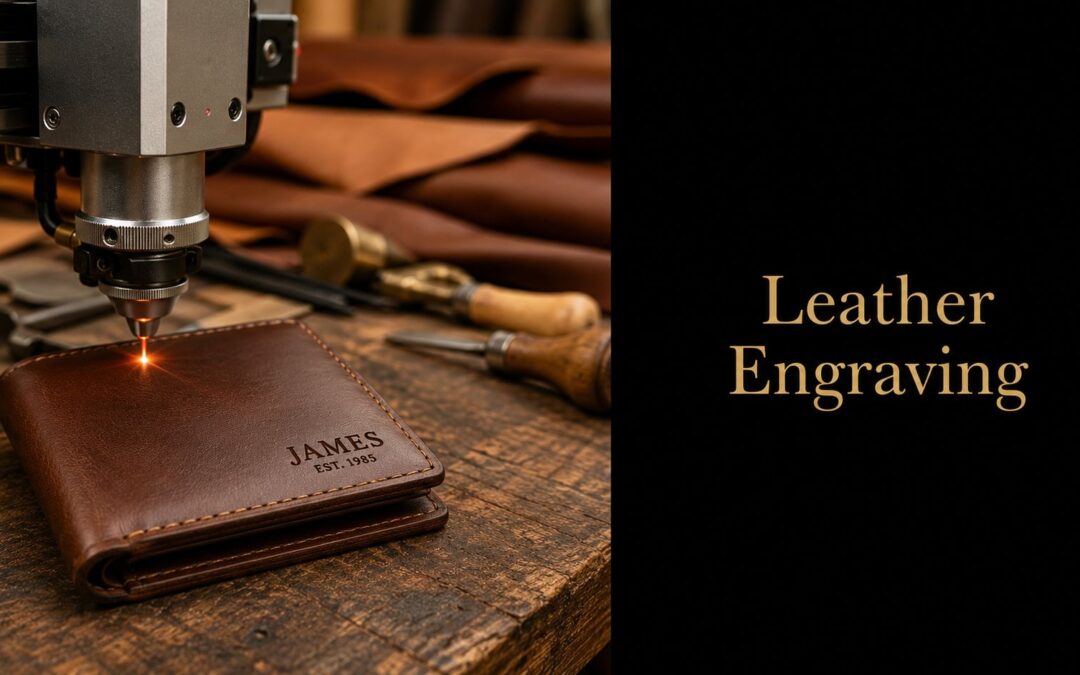
Laser engraving on leather works best when you think of the beam as a digitally controlled light chisel. It doesn't stamp into the surface with force. It removes a fine layer with controlled heat, following the artwork exactly. On quality equipment, that control is what creates crisp lettering, even fills, and logo detail that doesn't blur at the edges.
For this kind of work, Trotec Laser systems are the benchmark many professionals look to. They're known in the industry for precision, consistency, and reliable control over delicate materials, which matters a great deal on leather. Leather can mark beautifully, but it can also scorch, haze, or lose clarity if the settings are rough.

How the process works
The job starts with clean artwork. That usually means a vector logo, clear text, or a properly prepared graphic. Fine detail that looks good on screen still has to be suitable for the leather chosen, so artwork often needs practical adjustment before engraving starts.
Then the leather is positioned flat and securely in the machine. With laser work, small setup errors show quickly. If the piece isn't aligned properly, the engraving may still be sharp, but it won't be placed correctly.
Calibration comes next, with operators adjusting power, speed, frequency, and focus to suit the specific leather. A soft, pale piece behaves differently from a dark, coated one. Trotec Laser systems are valued because they allow that level of control without the roughness you often see from lower-grade machines.
Leather responds to precision. The machine matters, but the operator's judgement matters just as much.
The beam then engraves the design without physical contact. That's one reason laser beats mechanical methods for detailed leather work. There's no die pushing into the surface, no pressure distortion around tiny text, and no drag from a moving tool tip.
Why laser beats stamping for detailed work
Mechanical stamping and hot branding still have a place. They suit certain bold, traditional looks. They don't suit every brief. If you need tight lettering, complex linework, or repeated logos across multiple items, they become limiting fast.
Laser engraving handles:
- Fine text that would close up or distort under pressure
- Small logos with cleaner edge definition
- Consistent placement across batches
- Artwork revisions without remaking physical tooling
For clients wanting a plain-English overview of professional custom laser work, Evright's custom laser engraving process gives a useful snapshot of how digital artwork becomes a finished engraved product. The broader point is straightforward. A proper laser workflow turns design files into repeatable, production-ready results without the compromises that come with manual or contact-based methods.
What hobby machines get wrong
Entry-level machines often promise leather capability, but the result usually tells the story. You see uneven fill, overburnt edges, weak contrast, or artwork that looked sharper on the screen than it does on the product. That happens when the machine lacks refinement, the optics are less precise, or the setup is treated casually.
For professional leather engraving in Brisbane, the standard should be simple. Clean edges, controlled depth, legible detail, and a finish that suits the item rather than overpowering it.
Choosing the Right Leather for Engraving
The leather you choose determines half the result before the laser even starts. Clients often focus on the logo or wording first, but the material decides contrast, texture, edge definition, and how premium the finished piece feels in the hand.
Some leathers engrave with a dark, obvious mark. Others produce a softer tonal effect. Neither is automatically better. The right choice depends on whether you want bold branding, refined personalisation, or a hard-wearing identification piece.
What each leather type does under the laser
Full-grain leather usually gives the richest character. You keep the natural surface, so the engraving sits within visible grain rather than on a uniform, processed finish. That can look excellent on premium items, but it also means natural variation is part of the final look.
Top-grain leather is often easier to control visually. The surface is more consistent, which helps with cleaner-looking logos and more even presentation across a batch. For many branded products, that consistency is a practical advantage.
Genuine leather is a broad category, and quality varies a lot. Some pieces engrave acceptably. Others produce a flatter or less refined result. If the item needs to represent a premium brand, this is usually the category I'd assess carefully rather than assume it will perform well.
High-quality vegan and faux leathers can engrave very cleanly if they're made for laser work. Some produce striking contrast and sharp detail. Others react poorly, especially if coatings melt, gloss over, or discolour unpredictably.
| Leather Type | Engraving Result | Best For | Durability |
|---|---|---|---|
| Full-grain leather | Natural, character-rich mark with visible grain influence | Premium gifts, keepsakes, rugged branded pieces | Excellent |
| Top-grain leather | More even and polished appearance | Corporate merchandise, presentation items, fine logos | Very good |
| Genuine leather | Variable result depending on finish and quality | Budget-conscious projects where finish expectations are moderate | Moderate to good |
| High-quality vegan or faux leather | Can deliver strong contrast and neat detail if the material is laser suitable | Modern branded goods, promotional items, design-led accessories | Varies by product |
Matching the material to the job
If you need fine lettering on a commemorative item, smoother leather usually helps. If you want a rustic logo on a hard-wearing key fob, natural grain can add character. Light-coloured leathers often show darker contrast more readily, while darker dyed leathers tend to produce a more understated, tonal engraving.
That subtlety can be a strength. Not every job should shout.
For clients comparing formats and product styles, custom leather keychains are a useful reference point because they show how small format items rely heavily on both material choice and crisp engraving. On a compact piece, there's nowhere for poor definition to hide.
Choose the leather for the effect you want after engraving, not just for how it looks before engraving.
What to avoid
The biggest mistakes are usually material-related:
- Heavy surface coatings can create inconsistent marks or unpleasant residue.
- Very loose grain can soften fine detail.
- Cheap bonded materials may look acceptable unmarked but respond poorly to heat.
- Unverified faux leathers can behave unpredictably from sheet to sheet.
If the project matters, test the exact material. Leather categories are useful, but the specific batch still decides the final finish.
From Industrial Tags to Commemorative Gifts
Leather engraving isn't locked into one market. The same laser process can serve practical identification work in a demanding environment and then turn around to produce a polished gift item with a completely different feel.
That flexibility is one reason laser engraving stays relevant. The material is warm and tactile, but the mark itself can be disciplined and exact.

Industrial and commercial use
In industrial settings, engraved leather is often chosen for controlled identification rather than decoration. Think tagged cases, branded protective accessories, specialised equipment sleeves, or presentation-grade labels where a plastic look would feel wrong. The mark needs to stay readable, and the piece needs to hold up to handling.
Healthcare and essential services also need identification that looks organised and intentional. In those environments, clarity matters. So does consistency across multiple items.
A reliable Brisbane provider for this kind of work should be comfortable moving between one-off pieces and repeat commercial runs. Laser engraving services in Brisbane are most useful when they can support both precision and production discipline.
Corporate and commemorative use
The same process shines on gift work. A retiring executive might receive a leather folio with a discreet name mark. A client pack might include engraved key holders or luggage tags that carry a brand without looking overdone. Memorial items benefit from the same restraint. Clean type, correct spacing, and a measured depth create dignity. Heavy-handed engraving doesn't.
One of the reasons Trotec Laser systems suit this category so well is their control over detail. Delicate serif lettering, signature-style artwork, and compact logos all depend on a beam that stays precise.
Here's a closer look at professional laser engraving in action:
One process, two very different outcomes
The contrast between these jobs is useful. On one bench, the priority is function. On another, it's presentation. What links them is disciplined setup, suitable leather, and a machine capable of repeating the design cleanly.
That's the divide between hobbyist work and industrial-grade practice. Hobby engraving can make a leather item personal. Professional laser engraving makes it presentable, repeatable, and fit for purpose.
Ensuring Durability and Sustainable Choices
Laser engraving on leather is durable because the mark isn't printed on top. It's created by altering the surface itself. That's why it doesn't behave like a coating, sticker, or ink layer that can peel away from the material.
That permanence matters in two ways. First, the item keeps its identity through use. Second, the product remains worth keeping. Good leather with a clean engraved mark tends to age better than cheaper personalised items that start failing at the surface.
What durability really means in use
Durability doesn't mean every leather item becomes maintenance-free. Leather still needs sensible care. Keep it dry when possible, avoid harsh chemical cleaners, and store it away from prolonged direct sun if appearance matters. For everyday items, a soft wipe-down and occasional leather-appropriate conditioning usually does more good than aggressive cleaning ever will.
The engraving itself generally outlasts the initial finish expectations people have when they first order. What changes over time is the surrounding leather. It softens, develops patina, and picks up use. On a well-selected material, that usually improves the piece rather than degrading it.
A permanent mark only pays off if the base material is worth preserving.
Why sustainability starts with lifespan
The most practical sustainability argument in leather engraving is longevity. A product that lasts and remains usable is less disposable than one that has to be replaced because the branding rubbed off or the finish failed early.
Trotec Laser systems also support a more controlled production process. Laser engraving is precise, digitally driven, and generally cleaner than methods that rely on excess tooling, repeated physical impact, or additional surface treatments to create a visible mark. Less rework, fewer wasted blanks, and more accurate setup all push the process in a better direction.
Responsible sourcing matters too. If you're commissioning engraved leather for commercial use, ask where the material comes from and whether the supplier can speak clearly about the product they're using. Vague answers at the material stage usually lead to disappointment at the finishing stage.
How to Choose Your Brisbane Engraving Partner
Choosing a provider for leather engraving in Brisbane comes down to one question. Can they produce work that still looks right after the novelty of personalisation wears off?
A supplier may have a polished website and broad service list, but leather is one of those materials that exposes weak process control quickly. You want proof of judgement, not just access to a machine.
What to look for first
Start with the equipment. If a provider uses Trotec Laser systems, that's a good sign because it suggests they've invested in precision rather than a hobby-grade setup. The machine alone isn't enough, but it sets the floor higher.
Then check whether they understand material selection, artwork prep, and sample expectations. Good providers ask practical questions. They'll want to know the leather type, the desired finish, whether the item is decorative or functional, and how consistent the result needs to be across a batch.

A practical checklist
Use this when comparing suppliers:
- Portfolio quality: Ask to see leather work specifically, not only acrylic, metal, or timber.
- Artwork handling: They should be able to explain what file types work best and what design details may need adjustment.
- Material confidence: A capable engraver can tell you which leathers are likely to give bold contrast and which will stay subtle.
- Communication: Lead times, approval steps, and limitations should be explained plainly.
- Production fit: If your job includes repeat items, the supplier should talk about consistency, not just creativity.
If your project also connects to branded environments or event presentation, it can help to align the engraved items with the wider display plan. Teams working on exhibitions often use resources like Stand Builders Australia to think through how branded accessories, signage, and physical presentation fit together.
What usually separates good from average
Average providers talk mainly about what they can engrave. Good providers talk about what will and won't work well. That difference saves time, materials, and awkward outcomes.
Look for a process that feels controlled from start to finish. Clear quoting, discussion of leather suitability, design checks before production, and confidence with premium laser systems all point in the right direction. The closer the item is to your brand, your compliance needs, or a meaningful personal occasion, the less room there is for experimentation disguised as expertise.
If you need leather engraving that looks sharp, lasts well, and reflects the quality of the item itself, Evright Industrial is a strong place to start. Their team combines advanced laser capability with practical engraving experience, so you can discuss the material, artwork, and intended use before production begins.
Recent Comments