
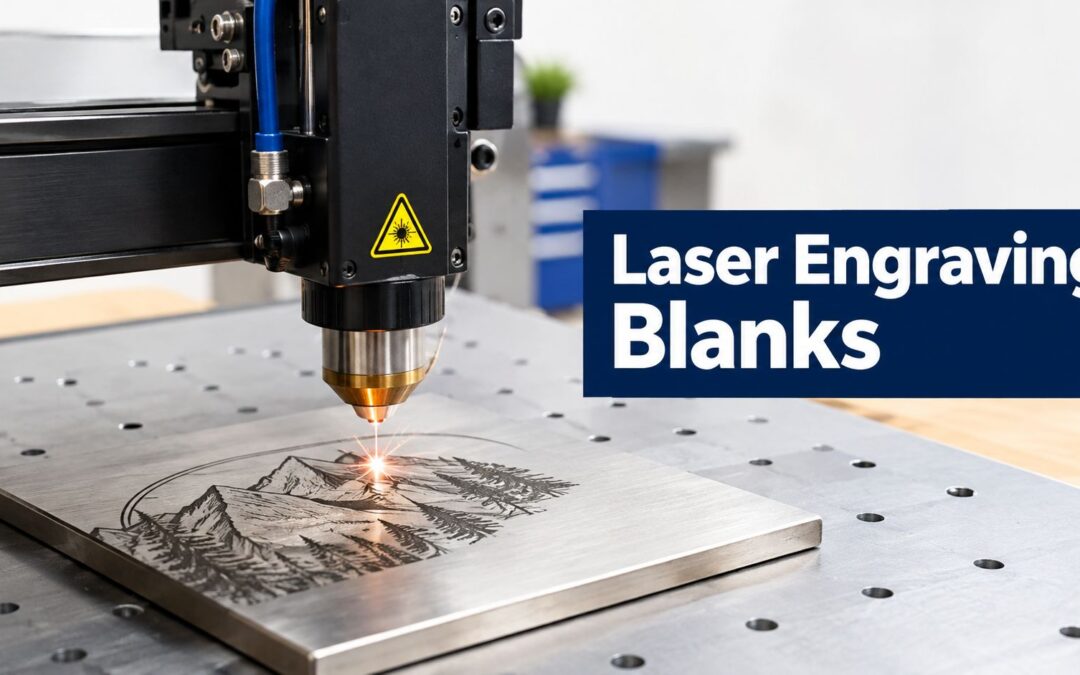
The popular advice is simple: choose an attractive acrylic blank, engrave the wording, and move on. That approach works for craft projects. It can fail badly on an Australian plant floor, electrical installation, healthcare facility, or outdoor asset register. Laser engraving blanks aren't interchangeable, and the cheapest or most visually appealing option may be the wrong component for heat, chemicals, UV exposure, washdown, inspection, or traceability.
For industrial procurement, the blank is part of the identification system. It must remain legible, stay attached, tolerate its environment, and support the requirements that apply to the asset or facility. The right choice depends on the substrate, marking method, attachment system, lettering, barcode readability, and end-of-life plan.
Why Most Laser Blanks Fail in Australian Industry
Craft-grade acrylic is highly visible in Australian search results because it suits personalised signs, small-business products, room plaques, and decorative work. Those blanks can be perfectly adequate indoors. They become a weak specification when a facility manager needs an asset tag to remain readable beside machinery, under repeated cleaning, or in an exposed service area.
The procurement mistake is treating the engraved surface as the whole product. Industrial buyers need to assess substrate durability, adhesive performance, heat resistance, chemical exposure, abrasion, and inspection readability. A blank that looks sharp on delivery can still fade, lift, crack, or become difficult to scan after its working environment takes over.
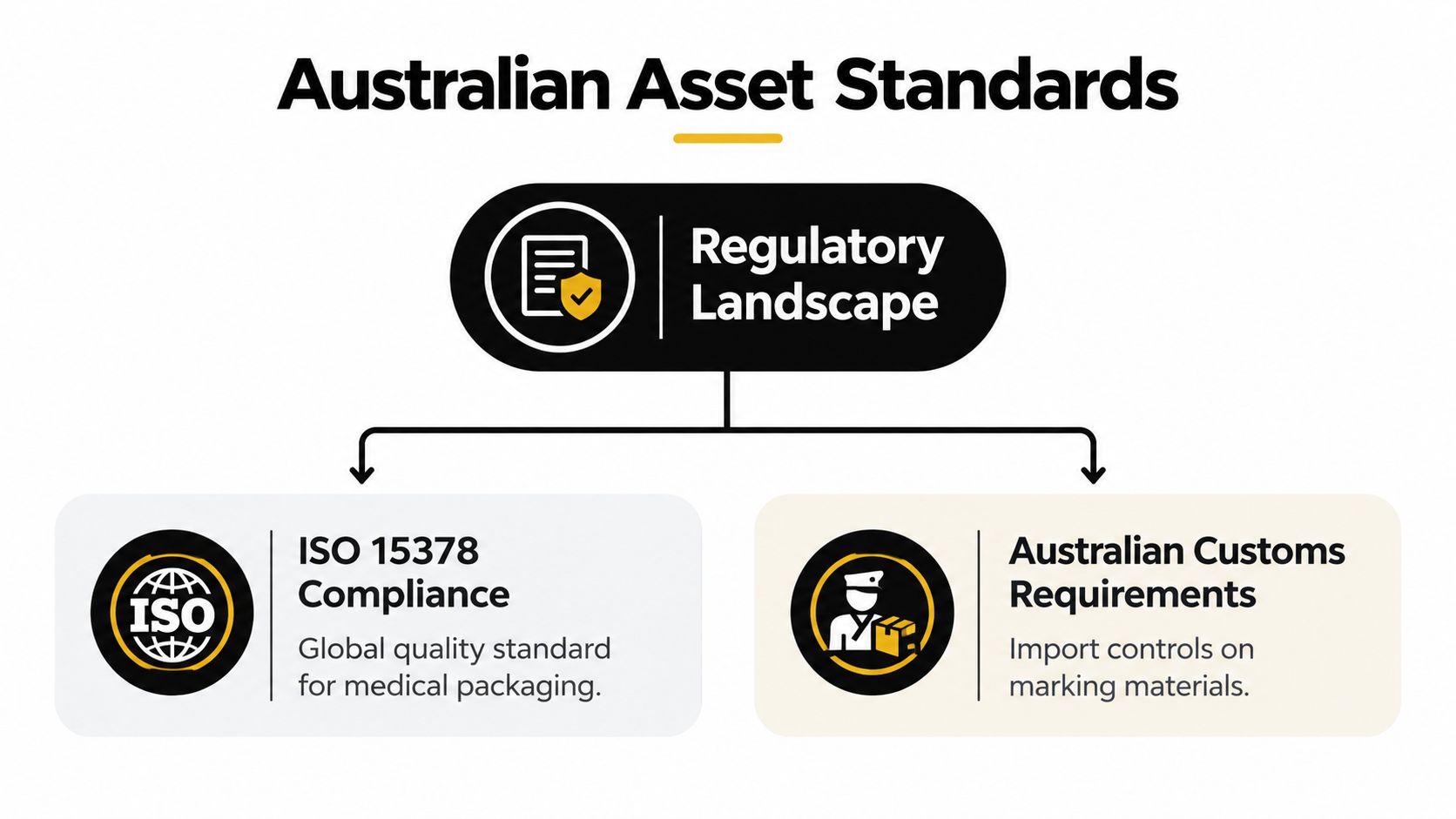
Australian asset-tag requirements are usually driven by sector rules rather than one universal label standard. Guidance for corporate laser engraving notes that AS/NZS 3000 affects permanence for electrical labels, while AS 1319 governs safety symbols and colours. That distinction matters because a material can be physically attractive without meeting the permanence or safety communication needs of an installation. See the Australian corporate laser engraving guidance before treating a general-purpose blank as a compliance solution.
Decorative appearance is not service life
A craft blank is normally judged by colour, shape, edge finish, and engraving contrast. An industrial blank is judged after months or years of handling, exposure, maintenance, and inspection. The questions change:
- Will the mark remain legible: Can an operator read the identifier at the required distance and under the site's lighting conditions?
- Will the label stay fixed: Does the adhesive, wire, connector, or cable tie suit the substrate and installation surface?
- Will the material tolerate the site: Is it exposed to sunlight, salt, solvent, heat, moisture, washdown, or abrasion?
- Can the identifier be verified: Will a barcode, serial number, or asset code remain readable during audits and maintenance?
Over-specifying metal for a clean indoor environment can waste budget and complicate processing. Under-specifying polymer for a coastal, chemical, or high-wear location creates replacement work, inconsistent records, and avoidable compliance risk.
Procurement rule: Specify the environment first, then the blank. Never choose the material solely from a catalogue photograph.
The Scale and Standards of Australian Asset Identification
Laser-ready blanks sit inside a broad Australian signage and marking economy, not a narrow hobby market. The Australian Sign & Graphic Association reports approximately 78,000 employees, around 10,000 businesses, and about A$15 billion in annual turnover in the signage and marking sector, with 56% of surveyed businesses using laser cutters. These figures are documented in the ASGA industry fact sheet.
That scale helps explain why blanks serve both short-run custom work and repeat production. Metal, plastic, and composite substrates move through fabrication, finishing, identification, and signage workflows across industrial sites. For a buyer, the practical implication is that local suppliers are accustomed to more than decorative engraving. They can support structured asset schedules, serialised data, repeat batches, and material specifications tied to operating conditions.
Standards determine the physical specification
South Australia's TS0133 Technical Standard, published on 21 December 2018, defines an Asset Location Label and an Asset Identification Label. It also requires tag labels to be attached using wire and connector or cable tie. That attachment requirement changes the blank specification. A label may need a hole, adequate edge strength, suitable thickness, and a shape that won't interfere with the attachment hardware.
Snowy Hydro's asset-identification annex gives an even clearer example of material-specific requirements. Indoor labels must use engraved plastic laminate with white and black layers. The black letters must be at least 4 mm high on a white background, while outdoor labels must use stainless steel with engraved letters at least 4 mm high and filled with black. These requirements are summarised in Australian asset-tag and equipment-ID guidance.
New South Wales facility nomenclature also separates asset tags, asset labels, and manufacturer labels. That separation prevents a common data-management error, treating the manufacturer's original plate as a substitute for the facility's own asset identity. A replacement label should support the organisation's register, location logic, maintenance process, and lifecycle traceability.
Traceability extends beyond the label
The physical tag is only one part of a controlled identification workflow. Facilities should define who owns the identifier, how changes are recorded, how obsolete labels are removed, and how sensitive information is handled during disposal. For organisations reviewing disposal and information-handling controls, NAID AAA audit questions to ask can help broaden the procurement conversation beyond the blank itself.
A good specification therefore connects the material to the standard, the attachment method to the asset, and the engraved information to the facility-management system. That is why a general acrylic blank page rarely answers the questions industrial buyers need resolved.
Comparing Polymer and Metal Substrates for Harsh Environments
Industrial laser engraving blanks are not interchangeable. A polymer tag may be the right choice for a protected tool, while a metal substrate is necessary beside heat, chemicals, washdown, or heavy abrasion. Material selection should follow the exposure and identification requirement, not the appearance of the blank.
The protection mechanism matters. Polymer labels depend on laminated construction, printed or engraved layers, overlamination, and adhesive performance. Anodised aluminium carries the graphic inside its anodic layer, helping resist salt, dirt, chemicals, and sunlight. Australian supplier guidance cites temperature tolerance up to 350°C and service-life ratings of about 20 years for anodised aluminium applications. Review the anodised aluminium durability guidance when specifying for severe exposure.
Industrial Blank Material Comparison
| Material Type | Best Environment | Durability Mechanism | Expected Outdoor Life |
|---|---|---|---|
| Laminated polycarbonate | General plant, tools, fleet, and outdoor assets | Hard laminate and adhesive protect the printed or marked face | Around 5+ years where supplier ratings apply, as described by Australian asset-tag supplier guidance |
| Laminated polyester | Damp or general environments with moderate wear | Overlamination and adhesive preserve the marking | Around 5+ years per manufacturer outdoor-life ratings |
| Anodised aluminium | Heat, UV, salt, chemicals, and demanding outdoor infrastructure | The graphic sits within the anodic layer | About 20 years where supplier ratings apply |
| Stainless steel | Outdoor infrastructure, washdown, corrosion-prone, and high-wear locations | Engraved metal surface with durable contrast fill | Specify against the project exposure and standard, rather than assuming a universal life |
Match the hazard, not the catalogue category
Polyester or Mylar-style blanks can perform well in damp and general environments, but their service life depends on the overlamination and adhesive. Repeated UV exposure, aggressive cleaning, abrasion, and chemical contact can damage those layers. For mining, heavy industry, and outdoor infrastructure, polymer is a poor choice when the mark must survive severe wear.
Anodised aluminium is usually the stronger option when a thin, lightweight metal tag suits the asset. Stainless steel is more appropriate when the specification demands high resistance to washdown, impact, and corrosion. The substrate alone does not guarantee performance. Test the complete identification system, including engraving contrast, mounting method, surface preparation, and barcode grade.
Marking requirements can also affect polymer selection. Review engraved plastic equipment tags when a plastic substrate may meet the exposure and readability requirements without the weight or cost of metal.
The practical procurement decision is often a mixed schedule. Use polymer for protected assets and metal where heat, chemicals, abrasion, or repeated cleaning justify the additional specification. Record the exposure assumptions and manufacturer rating for each material, so replacement purchasing does not quietly downgrade the identification system.
How Advanced Laser Systems Achieve Permanent Marks
A durable blank still needs a controlled marking process. The laser, lens, settings, focus, pass strategy, and material coating all influence contrast and readability. That's why industrial marking should be validated on the actual blank rather than inferred from a sample made on a different substrate.
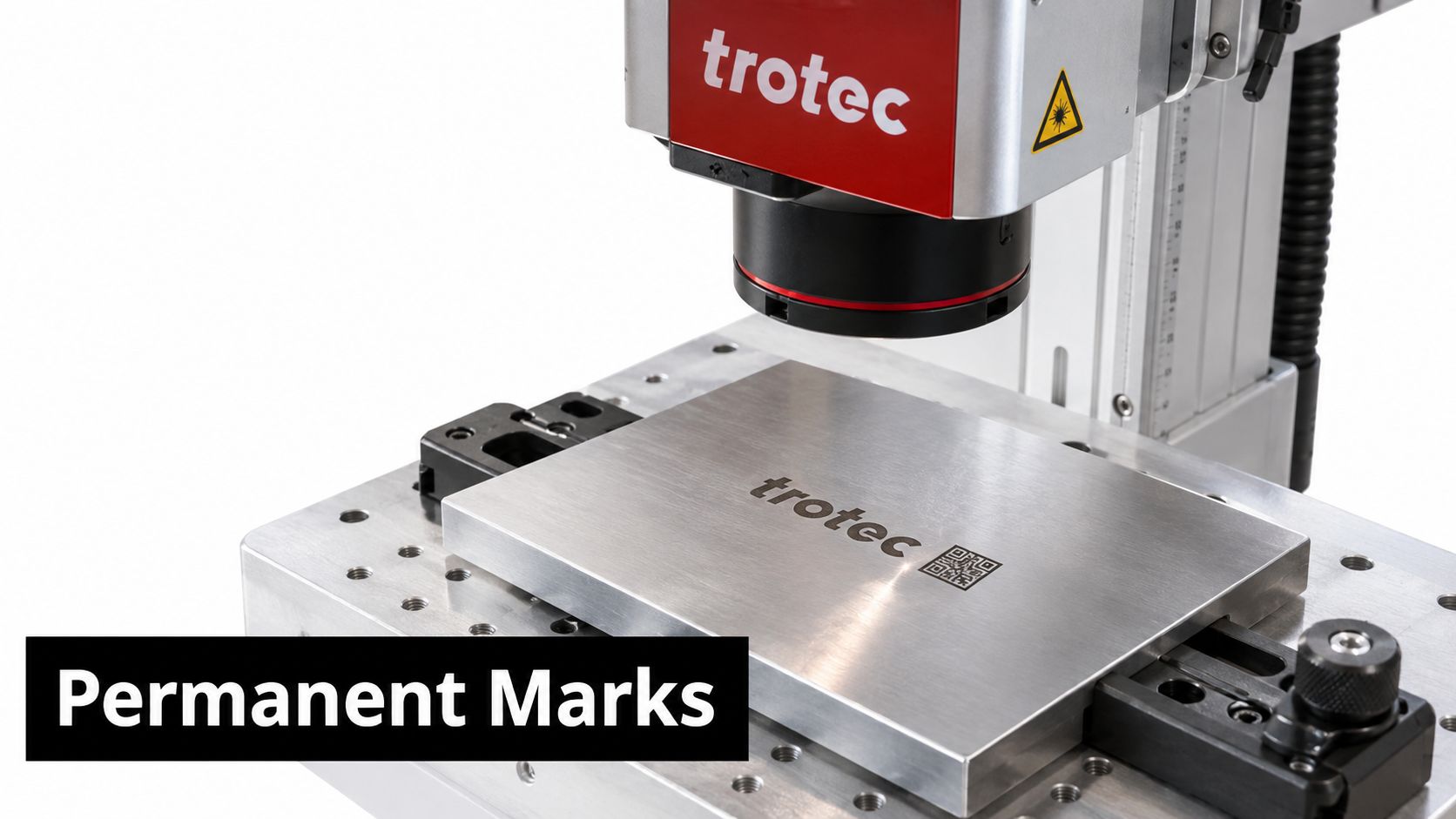
Trotec Laser systems are relevant to this Australian market because the equipment range supports controlled marking of industrial materials. Fibre laser processes are suited to many metal identification tasks, while CO2 laser systems are commonly used for compatible plastics and laminated materials. The correct selection depends on the blank's construction and the manufacturer's approved processing parameters.
A controlled marking workflow
Start with the data, not the artwork. Confirm the asset number, location code, serialisation logic, barcode content, warning wording, and any required letter height before preparing the layout. Then test the selected material for contrast, edge definition, barcode readability, heat effect, and distortion.
Trotec's SpeedMarker systems are engineered for stringent legibility and durability requirements and support regulated marking frameworks such as UID and UDI for industrial and healthcare identification. Those frameworks make the quality of the mark a traceability concern, not merely a branding decision. The SpeedMarker brochure provides the relevant system context.
Evright Industrial works through its specialist industrial division, using Trotec laser machinery for materials including stainless steel, plastics, alloys, glass, and heavy metal alloy. Its laser engraving techniques explain how different marking approaches are selected for industrial applications, while laser cutting troubleshooting tips are useful when teams need to investigate focus, alignment, edge quality, or repeatability issues.
A production check should include a physical sample, a cleaning or handling assessment that reflects the site, and verification of the finished identifier against the asset register. Don't approve a batch from a screen proof alone.
The video below shows the type of Trotec laser marking equipment buyers should expect to see in a professional process, rather than mechanical or improvised engraving equipment.
Sector-Specific Applications and Compliance Use Cases
A manufacturing plant rarely needs one universal blank specification. The maintenance team may require polymer labels for hand tools and mobile equipment, anodised aluminium for exposed plant, and stainless steel for assets subject to aggressive cleaning or heat. Each identifier should be assigned according to the asset's environment and the information that technicians must recover during inspection.
Manufacturing and essential services
Manufacturing labels often combine an asset number, location, barcode, and service reference. The blank must offer enough contrast for scanning and enough physical resilience for handling around machinery. A cable tie hole or wire attachment can be preferable to adhesive where oil, dust, textured paint, or routine equipment movement makes surface bonding unreliable.
Essential service providers face a similar choice, but exposure can be more severe. Outdoor electrical, water, transport, and utility assets may encounter sun, salt, moisture, chemical residue, and maintenance abrasion. A metal blank can be justified when the identification must remain legible after the surrounding equipment has been washed, repaired, or repainted.
Electrical contractors should check the permanence expectations arising from the relevant installation context rather than selecting a blank from a general signage range. The earlier distinction between AS/NZS 3000 and AS 1319 is important here. One concerns permanence in electrical labelling, while the other governs safety symbols and colours.
Healthcare and memorial work
Healthcare identification demands disciplined data handling and legibility. Equipment managers may need identifiers that support UDI-related workflows, tolerate cleaning routines, and remain readable through repeated handling. Trotec Laser Australia is recognised by GS1 Australia as barcode certified for Project i-TRACE, connecting its technology to compliance-focused identification and traceability workflows. The relationship is described in GS1 Australia information about Trotec's barcode certification.
Commemorative plaques have a different risk profile. They may prioritise visual finish, depth, contrast, and resistance to outdoor weather rather than barcode scanning. That doesn't make them purely decorative. A plaque installed outdoors still needs a substrate and finish that suit moisture, UV exposure, cleaning, and the expected method of mounting.
The useful lesson is to separate application purpose from appearance. A compliance plate, an equipment tag, a healthcare identifier, and a memorial plaque can all be laser engraved, but they shouldn't automatically share the same blank.
Sustainability and End-of-Life Material Recovery
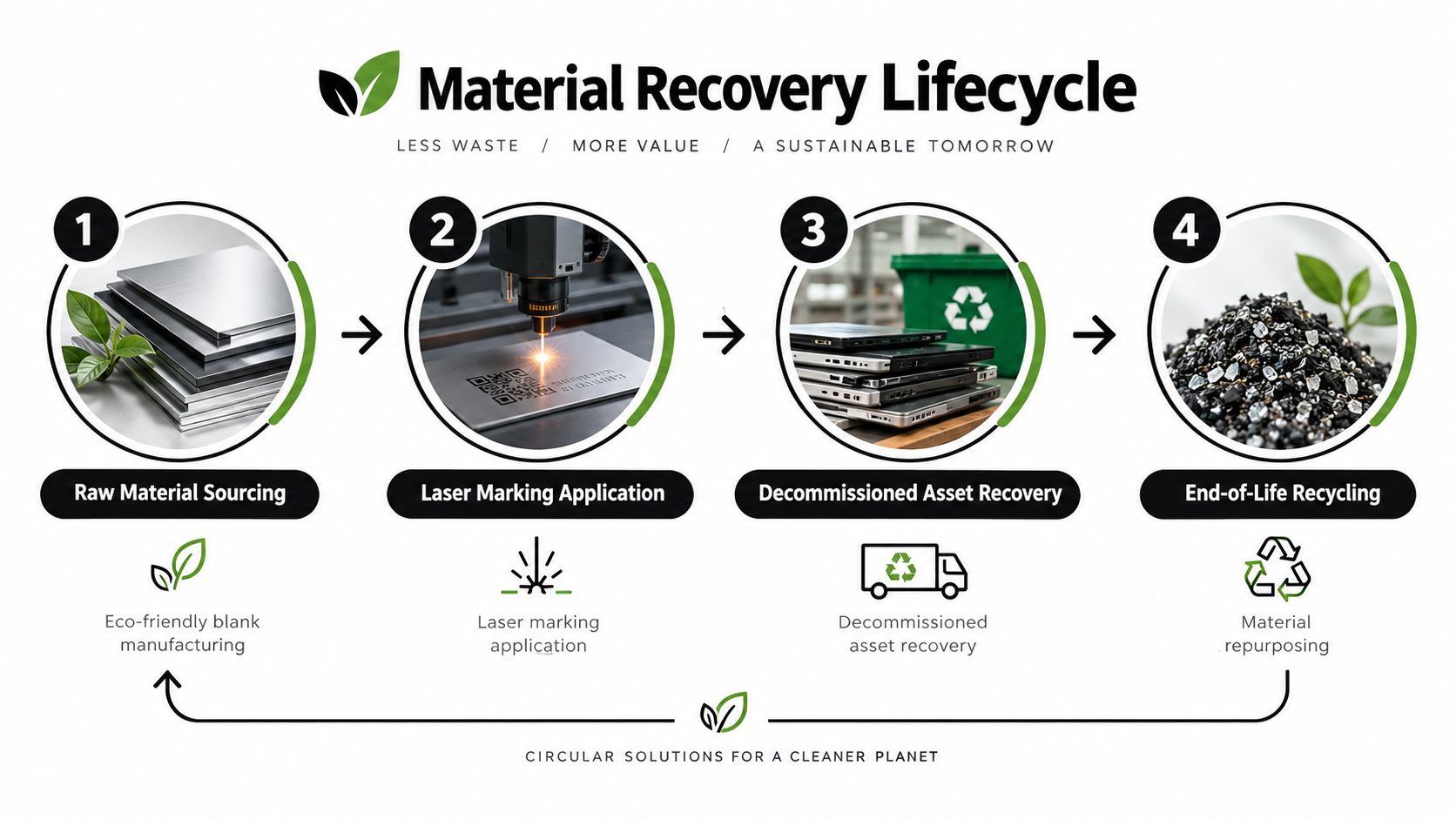
Sustainable procurement doesn't end when a label leaves the supplier. Industrial assets are replaced, relocated, upgraded, or decommissioned, and their attached tags can become mixed waste unless the removal process was considered at the start. A recyclable blank still needs a realistic path through collection, separation, processing, and material recovery.
Australian signage sources show a shift toward recyclable or PVC-free systems. Specialist programmes offer pathways for collecting and upcycling printed self-adhesive vinyl waste at end of life, while other providers describe approved-facility processing and removal logistics. The Visionary Green signage programme illustrates why local recovery arrangements matter.
Recyclability needs an operating plan
A procurement team should ask where the material goes after removal, not just whether it contains recycled content. A laminated label may combine face stock, adhesive, print, and backing layers that complicate separation. A metal tag may be easier to recover through an established scrap stream, but only if the organisation removes it and keeps it out of contaminated waste.
The recovery plan should align with the asset register. When an item is decommissioned, the responsible team can record the tag's removal, sort the material by type, and pass it to the nominated recovery route. That approach reduces the risk of old identifiers remaining attached to equipment that has changed ownership or function.
Material selection still comes first. Don't choose a lower-performing substrate solely because it appears greener. A label that fails early creates replacements, additional transport, extra production, and more waste. The practical objective is a blank that lasts for its intended service period and has a credible Australian recovery pathway afterwards. Evright Industrial's sustainable material sourcing information is relevant for teams building those considerations into their specification.
Your Specification and Ordering Checklist
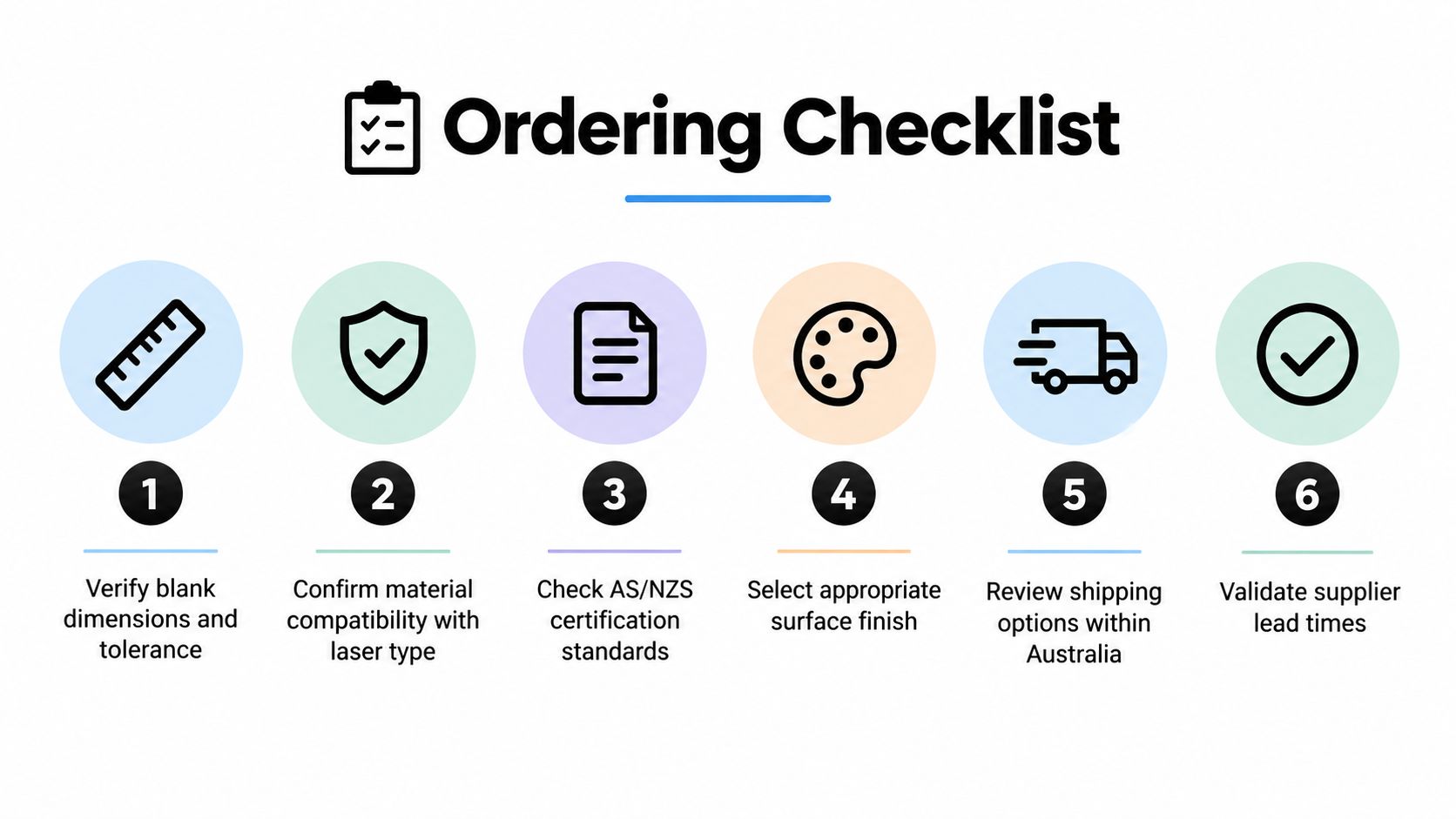
A reliable order begins with a written exposure profile. Give the supplier the asset location, expected handling, cleaning chemicals, temperature, sunlight, moisture, mounting surface, and required service period. If those details are missing, the supplier can only recommend a generic blank, and generic recommendations are where industrial mismatches begin.
Define the identification
Record the information that must appear on every blank, including asset number, location, barcode, warning text, logo, and any required manufacturer reference. Decide whether the identifier needs to be machine-readable, human-readable, or both. Keep the data structure consistent with the maintenance or facility-management system.
Select the substrate
Use laminated polycarbonate or polyester for suitable general environments where cost, flexibility, and scan readability matter. Move to anodised aluminium or stainless steel when heat, corrosion, abrasive wear, chemicals, or severe UV exposure justify a metal specification.
Confirm the attachment
Choose adhesive, wire, connector, or cable tie based on the mounting surface and operating conditions. Confirm hole position, edge clearance, tag thickness, bend resistance, and access for installation. A strong blank can still fail if the attachment method doesn't suit painted steel, rough equipment, pipework, or moving components.
Check the marking
Request a sample on the exact substrate and finish. Check letter height, contrast, barcode readability, surface damage, and cleaning resistance. Where a standard specifies a minimum, such as the 4 mm letter height noted for Snowy Hydro labels, include that requirement in the drawing and inspection record rather than leaving it to artwork interpretation.
Review compliance and logistics
Ask the supplier to identify the relevant Australian or sector-specific requirements, but have the responsible engineer or compliance officer approve the final interpretation. Confirm packaging, delivery destination, batch identification, replacement protocol, and how surplus or rejected blanks will be handled.
Validate before release
Approve a controlled sample before authorising a production batch. Compare the sample against the asset schedule, inspect the physical finish, scan the code, and confirm that the supplier's marking process matches the specified Trotec Laser or equivalent industrial system. Keep the approved sample with the purchase record so future replacement batches can be checked against the same standard.
The strongest order is not necessarily the one with the most expensive material. It's the one that connects exposure, standard, marking, attachment, traceability, and recovery in one documented specification.
Evright Industrial provides precision laser engraving and asset-labelling services for stainless steel, plastics, alloys, glass, and heavy metal alloy, using Trotec laser machinery for equipment identification, safety signage, data plates, and custom plaques. Visit Evright Industrial with your asset schedule and exposure requirements to discuss a durable blank and marking specification suited to your Australian site.
Recent Comments