
A maintenance shutdown rarely starts with the major asset. It often starts with a small failure that no one planned for. A serial plate can no longer be read. A switchboard label has lifted at one corner. A safety sign still hangs in place, but the surface has faded enough that nobody wants to rely on it during an incident.
That's the practical context behind most laser engraving Brisbane enquiries. The issue isn't decoration. It's operational risk. Procurement managers, site supervisors, engineers, and facilities teams need identification that survives cleaning regimes, UV, moisture, abrasion, chemicals, and years of handling without becoming a weak link.
Buyers in Brisbane also face a local gap. Plenty of suppliers talk about presentation. Very few talk in detail about industrial durability, substrate selection, or how engraved signage and labels hold up against compliance scrutiny. That matters when the label has to stay legible on a plant floor, in a healthcare facility, or on critical infrastructure equipment.
Why Permanent Identification Is Non-Negotiable
A common failure pattern looks like this. An asset goes in with a printed or adhesive label because it's quick, cheap, and available. The equipment then spends its life near washdowns, heat, oils, cleaning chemicals, or direct sun. Months later, the label curls, stains, or loses contrast. The maintenance team can still “mostly” identify it, until they can't.
That's where permanent identification stops being a nice upgrade and becomes part of the control system around the asset.
The cost of a label that doesn't last
When identification fails, the consequences spread quickly:
- Maintenance slows down: technicians waste time confirming model, serial, or service details.
- Safety risk rises: people rely on memory instead of clearly marked controls and warnings.
- Audits get harder: records are only useful if the physical asset can still be matched to them.
- Replacement costs compound: teams order temporary fixes, then replace them again later.
In industrial settings, the lowest upfront cost often creates the highest lifetime cost.
Practical rule: If a label has to remain legible after years of abrasion, moisture, or cleaning, treat it as a component of the asset, not an accessory.
Laser engraving solves that problem differently from print-based methods. Instead of placing ink, laminate, or adhesive on top of a surface, the process permanently changes the material itself or removes a top layer to reveal a contrasting core. The result is far harder to peel, smear, or wash away.
That shift has become more important across industrial sectors. The global laser marking and engraving industry is projected to grow from $4.2 billion in 2023 to $6.4 billion by 2030 according to WifiTalents' laser engraving industry statistics. For Brisbane buyers, that growth reflects a wider move toward traceability, quality control, and durable identification across manufacturing, healthcare, infrastructure, and essential services.
What permanent marking changes on site
Permanent identification improves three things at once:
- Traceability for equipment, tools, panels, and components
- Consistency across multi-site asset systems
- Confidence during inspections, maintenance, and handovers
If you're replacing failed tags with the same temporary method every year, the problem isn't the installer. It's the specification.
Understanding the Laser Engraving Process
Laser engraving is easiest to understand if you think of it as a digital chisel controlled by software. The artwork is prepared digitally, the material is fixed in position, and a focused beam removes or alters the surface with repeatable precision. That's why it suits industrial work where every plate, label, or panel has to match the drawing.

How the process works in practical terms
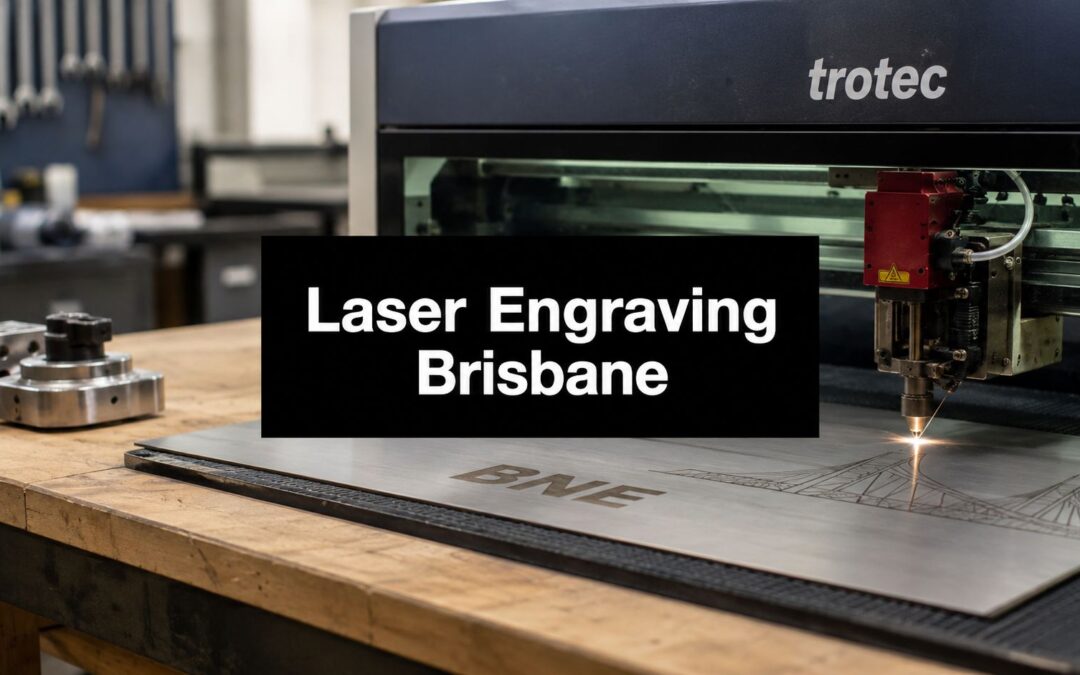
Trotec Laser systems are widely used for this type of work because they allow tight control over speed, power, focus, and repeatability. In industrial engraving, that matters more than marketing language. Good results come from matching machine settings to the substrate, the required contrast, and the final environment.
The evaporative process is straightforward. The laser directs concentrated energy onto a precise area of the material. That energy removes a surface layer or changes the surface so the mark becomes permanent. On laminated engraving stock, the laser exposes the core colour. On some metals and rigid substrates, it creates a durable visible mark without the ink layer that usually becomes the failure point.
A concise explanation of that evaporative method also appears in Evright's parent brand overview at evright.com, where the process is described as a way to produce precision-driven engraving for long-lasting identification and safety signage.
Engraving, marking, and etching aren't always the same
Buyers often use these terms interchangeably, but they affect how you should specify the job.
- Engraving: the laser removes material to create a recessed mark.
- Marking: the laser changes the surface appearance without necessarily cutting to a significant depth.
- Etching: often used loosely in the market, but usually refers to a lighter surface effect.
For harsh service conditions, the right question isn't “what's the nicest finish?” It's “what depth, contrast, and substrate combination will still be readable after years in service?”
That same distinction matters outside industrial use as well. If you want a consumer-facing example of how design intent changes material and finish decisions, this piece on personalized dining plates is useful because it shows how the end use drives the production choice.
Why imagery and live machine footage matter
When assessing capability, ask to see Trotec Laser machine imagery, not generic mechanical diagrams. Real production images tell you more about bed size, workholding, material handling, and the kinds of jobs a shop runs. YouTube videos are useful for the same reason. You can see whether the operator is running true production equipment and whether the workflow suits industrial repeat work rather than one-off hobby output.
Matching Materials to Mission Critical Environments
The laser matters. The material matters just as much.
A clean engraving on the wrong substrate still fails in service. Brisbane buyers deal with coastal moisture, UV, washdowns, industrial heat, cleaning chemicals, and physical abrasion. Material choice should start with the environment, not the artwork.
Material selection by exposure type
If the job is heading into a corrosive or high-moisture environment, stainless steel is usually the safe starting point. If weight matters and the environment is less aggressive, anodised aluminium may be a practical option. If electrical labels or control panel legends need strong contrast, laminated engraving plastics such as Traffolyte remain useful because they give crisp readability fast.
For aerospace, defence, or other tightly controlled applications, thickness also matters. NASA process specifications state that for metallic, moulded, or sheet plastic materials, the minimum base material thickness for laser marking or engraving must be 0.030 inch (0.76 mm), while multi-layer or reinforced laminates require at least 0.060 inch (1.52 mm) to avoid marking failure or substrate damage, as set out in NASA PRC-9003.
Industrial Material Suitability Guide
| Material | Best For | Durability Rating | Environment |
|---|---|---|---|
| 304 stainless steel | General asset tags, indoor industrial labels | High | Factory floors, plant rooms, general commercial use |
| 316 stainless steel | Marine-adjacent sites, washdown areas, corrosive settings | Very high | Coastal Queensland, chemical exposure, high-moisture areas |
| Anodised aluminium | Equipment plates, control labels where lower weight matters | High | Indoor industrial, sheltered outdoor use |
| Traffolyte or laminated engraving plastic | Switchboards, control panels, legend plates, safety labels | High when correctly specified | Electrical, facility, and machinery identification |
| Specialised acrylics | Plaques, covers, display signage, sheltered identification | Moderate to high depending on application | Indoor use, selected outdoor uses with correct grade |
A few practical trade-offs matter here.
- 316 stainless steel: costs more, but it's the better call where salt, moisture, or aggressive cleaning are part of normal service.
- 304 stainless steel: often suitable for many indoor industrial applications, but don't over-specify it into coastal conditions and expect 316 performance.
- Anodised aluminium: excellent for clean, sharp marking, though it isn't the first choice for every high-abuse environment.
- Laminated plastics: ideal where contrast and readability are critical, especially on control panels. They need the correct thickness and grade.
- Acrylics: can work well for plaques and some signage, but the specification must reflect impact risk, UV exposure, and mounting method.
Materials don't fail because they were “bad”. They fail because someone specified them for the wrong environment.
For teams comparing substrates beyond metal, consumer-facing production can still offer useful insight into finish and wear. This article on premium leather merch is a good example of how material choice shapes longevity, feel, and brand outcome, even though the application is different from industrial labelling.
Where the job specifically calls for durable metal identification, our guidance usually starts with laser engraving on metal because the performance envelope is clearer and easier to verify.
Industrial Laser Engraving Applications in Brisbane
The value of laser engraving Brisbane work becomes obvious when you look at the kinds of failures it prevents. Different sectors buy for different reasons, but the pattern is consistent. The label or sign has to stay readable, fixed in place, and fit for purpose long after installation.
A useful way to frame it is by application, not machine type.

Asset tags and equipment identification
The challenge is usually straightforward. Plant, tools, and mobile equipment move through maintenance cycles, contractor use, and harsh handling. Printed labels don't hold up. Deep or permanent engraved tags do.
Typical applications include:
- Mining and heavy industry: tags for pumps, motors, skids, and field assets
- Manufacturing plants: machine IDs, inspection plates, and line-side equipment labels
- Essential services: durable identification for assets that must remain traceable across service life
For these jobs, the key deliverable isn't the tag itself. It's legibility after years of service.
Safety signage and control panels
Brisbane worksites often need signage that can handle outdoor exposure, cleaning, and regular contact. That includes control panel legends, machine labels, switchboard identifiers, warning plates, and facility signage where readability can't be left to a sticker.
This is also where laser engraving earns its keep over time. The contrast is integrated into the material or cut into it, which reduces the common failure points associated with adhesive films and surface printing.
The machine capability behind that matters. Modern commercial laser engravers in the Brisbane region support a maximum engraving area of 610 mm width, 450 mm height, and 358 mm depth, with precision down to 0.01 mm, according to Print Promotion's Brisbane laser engraving capability page. That range suits everything from small labels to larger equipment panels and plaques.
A practical example of Trotec Laser equipment in operation is worth viewing here:
Healthcare, memorial, and civic work
Not every industrial-style engraving job happens on a factory floor.
- Healthcare facilities need durable room signs, equipment labels, and identification plates that remain clear under frequent cleaning.
- Memorial plaques need accuracy, permanence, and a finish that still reads well years later.
- Government and infrastructure projects often require long-life signage where replacement is expensive and access is difficult.
If replacement access is costly, specify the sign as if it needs to outlast the maintenance cycle, not just survive installation.
This is also where process discipline matters. Consistent artwork setup, repeatable machine settings, and material control make the difference between a one-off acceptable result and a reliable program across multiple sites.
Navigating Durability and Compliance Standards
Most buyers don't struggle to find someone who can engrave a plate. They struggle to find someone who can explain whether the result is appropriate for a regulated or safety-critical setting.
That gap is real in Brisbane. The lack of clear local guidance on compliance with AS 1319 for industrial asset labelling remains unresolved, and 78% of Australian industrial manufacturers report confusion over signage compliance requirements, according to Safe Work Australia's 2025 National Industrial Safety Compliance Survey [N]. That confusion shows up in procurement decisions all the time. Teams receive attractive signage proposals without enough detail on legibility, substrate suitability, contrast, or expected durability in service.
What compliance means in practice
For safety signs and industrial identification, compliance isn't just about wording. Buyers need to think about:
- Legibility: can people read the sign quickly under site conditions?
- Contrast: does the engraved result preserve visual clarity?
- Durability: will the message remain readable after cleaning, weather, or abrasion?
- Material suitability: is the substrate right for the installation environment?
A sign can look acceptable at handover and still become a compliance risk later if colour contrast degrades, the face cracks, or the message becomes hard to read.
Questions worth asking before approval
If you're buying engraved signs or asset labels for regulated use, ask the supplier to address the following directly:
- What material is being specified, and why is it suitable for this environment?
- How is contrast achieved and maintained over time?
- What mounting method is recommended for this location?
- Can the supplier explain how the sign supports AS 1319 considerations in practical terms?
That level of scrutiny is especially important for asset identification programs. If a supplier can't discuss material, use case, and installation environment in the same conversation, they're probably selling appearance first and service life second.
For buyers reviewing permanent identification options, custom metal asset tags are often easier to evaluate because the material-performance relationship is clearer than with temporary labels or decorative signage products.
How to Evaluate a Brisbane Laser Engraving Provider
A capable provider should be able to talk through machinery, materials, tolerance, compliance context, and workflow without drifting into vague promises. If the conversation stays at the level of “we can engrave that”, keep digging.

What to check before placing an order
Start with the machine platform. Trotec Laser systems are a useful benchmark because they're associated with precise, repeatable output in commercial and industrial engraving. For Brisbane buyers, machine size matters too. Commercial systems in the region support work up to 610 mm wide, 450 mm high, and 358 mm deep, with precision to 0.01 mm, which gives enough capacity for equipment panels, control plates, and fine-detail identification work.
Then move to process questions.
- Material knowledge: can the supplier explain why one substrate is better than another for moisture, UV, chemicals, or abrasion?
- Quality control: do they inspect contrast, alignment, and consistency, especially on batch jobs?
- Compliance awareness: can they discuss signage and identification from a practical risk perspective?
- Production fit: can they handle both one-off urgent replacements and repeat schedules?
- Visual proof: can they show Trotec Laser machine imagery and real production examples instead of stock graphics?
A procurement view of value
Lowest quote doesn't equal lowest cost. A cheaper plate that needs early replacement, creates rework, or triggers site confusion is more expensive than a correctly specified one.
Operational systems also matter. If your engraving requirement ties into larger maintenance or production workflows, this guide to project management software for manufacturing is useful because it shows how procurement, scheduling, and job tracking interact upstream of fabrication.
Good engraving suppliers don't just ask for artwork. They ask where the item will live, who will use it, and what happens if it becomes unreadable.
For buyers looking across the national market, industrial engravers in Australia is a practical starting point for comparing capability by application rather than by generic service list.
One option in this category is Evright Industrial, which uses Trotec Laser systems for industrial engraving and asset labelling work across applications such as equipment identification, signage, and plaques.
Start Your Project with Evright Industrial
By the time most buyers reach out, they already know what failed. The existing tag peeled. The panel text faded. The old sign no longer meets the standard expected on site. The useful next step isn't a generic quote request. It's a proper specification discussion.

What to have ready
Projects move faster when you can supply the practical details early:
- Item type: asset tag, switchboard label, safety sign, plaque, panel, or equipment plate
- Material preference: if known, or at least the installation environment
- Artwork or data: logos, serial ranges, variable text, or existing plate samples
- Quantity: one urgent replacement or repeat production batch
- Mounting method: adhesive, holes, fixings, or site-installed hardware
- Timeframe: shutdown deadline, audit date, commissioning schedule, or standard lead time
Pricing and turnaround usually depend on material, size, quantity, engraving complexity, and whether the work needs custom setup or variable data handling. A buyer who provides the operating environment and actual use case will usually get a better specification than a buyer who sends artwork alone.
Why the process explanation matters
There's also a useful technical link back to the parent brand. A blurb referenced by Laser Grave Solutions explains how the Trotec Laser machine's evaporative process works, and why that process supports precision-driven engraving for government and infrastructure agencies that need long-lasting security and safety signage. That connection matters because it ties the industrial service back to the broader engraving expertise behind evright.com.
For Brisbane teams, the right outcome is simple. Specify the mark, the material, and the environment together. That's how you get identification that lasts, supports compliance, and avoids repeat spend.
If you need durable laser engraving in Brisbane for asset tags, safety signage, equipment plates, or plaques, contact Evright Industrial. Share the application, substrate, quantity, and site conditions, and the team can help you work through a practical specification before production starts.
Recent Comments