

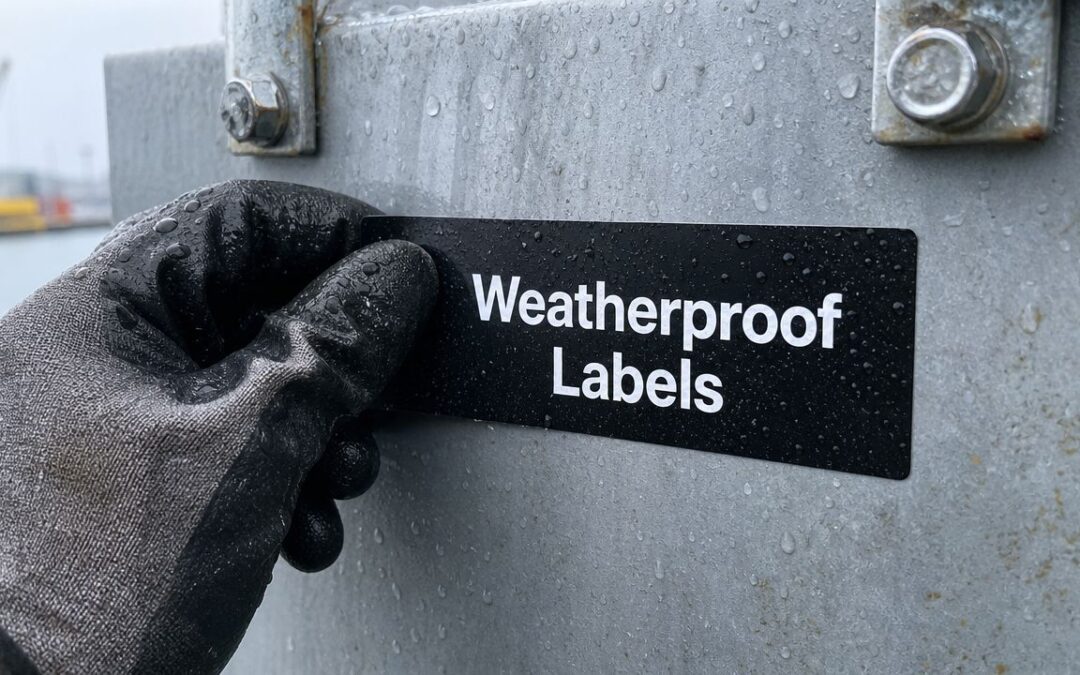
You're usually forced to think about labels when one has already failed.
A technician is standing in front of outdoor gear. The asset ID is faded, the edges have lifted, and the date or warning text can't be read cleanly. An audit slows down. A service record has to be cross-checked manually. Someone starts asking whether the equipment was tagged correctly in the first place. What looked like a small consumable problem turns into lost time, compliance friction, and avoidable risk.
That's common in Australia because harsh weather doesn't attack labels in one neat way. UV, rain, coastal salt, cold storage, heat, washdowns, and rough handling all fail labels differently. A stock that survives a refrigerated warehouse may fail on a sun-exposed switchboard. A print that looks good on day one may still be the wrong choice if the adhesive can't cope with humidity cycles on a coastal site.
The practical answer isn't buying the label with the loudest “weatherproof” claim. It's choosing a label system that matches the actual surface, the exposure, and the consequence of failure.
Why Your Standard Labels Are Failing Outdoors
Most outdoor label failures don't begin dramatically. They start at the corner.
A small lift on one edge lets in moisture and grime. Dust sticks to the adhesive. Sun hardens the exposed area. A few weeks later, the print is still there but the label is half detached. Then an inspection comes around, somebody wipes the surface, and the label comes away in their hand.
What failure looks like on site
In industrial settings, standard office-grade or light-duty labels usually fail in one of four ways:
- Fading first: Black text turns grey, coloured warnings lose contrast, and barcodes stop scanning reliably.
- Adhesive loss: The face stock remains intact, but the bond to the asset breaks down.
- Edge damage: Forklift contact, cleaning, abrasion, or cable movement catches the edge and starts peeling.
- Surface mismatch: The label was applied to powder-coated metal, textured plastic, or slightly oily machinery with an adhesive designed for cleaner, smoother surfaces.
That last one catches plenty of operations teams. A label can look fine at application and still be the wrong product.
A label that fails during an audit is rarely a printing problem alone. It's usually a material and application problem that showed up late.
Why Australian conditions expose weak label choices quickly
Australia is hard on identification products because the environment changes fast and often. The same organisation might run equipment in coastal humidity, inland heat, and refrigerated or washdown areas across different facilities. Labels need to remain legible and stay attached, not just survive a nice test panel in a brochure.
A good weather resistant label is built for that reality. It's meant to keep text readable and the bond intact when ordinary labels crack, fade, or detach. That directly affects:
- Compliance, especially where dates, inspection intervals, warnings, and equipment IDs must stay visible
- Safety, because unreadable labels weaken lockout, test and tag, and hazard communication
- Operating cost, since replacing failed labels repeatedly costs labour, downtime, and reinspection effort
The hidden cost of “good enough”
The wrong label often looks cheaper only at purchase. It becomes expensive when your team has to relabel assets, verify serials by hand, or explain why a critical marking didn't last outdoors.
If you manage maintenance, projects, facilities, or field assets, that's the appropriate standard to use. Not whether a label sticks today. Whether it's still readable and attached when someone needs it most.
The Anatomy of a Weather Resistant Label
A weather resistant label is a built system of layers, and each layer solves a different failure risk.
If the face stock becomes brittle in inland heat, the label cracks. If the adhesive cannot handle salt spray on a coastal site, the corners lift and dirt gets underneath. If the top surface has poor UV or chemical resistance, the text fades long before the asset reaches end of life.

Face stock does the structural work
The face stock is the visible body of the label. It carries the print or mark and gives the label its strength, flexibility, and dimensional stability. In industrial environments, synthetic materials such as polyester, vinyl, and polypropylene are common because they cope with moisture, movement, and rough handling far better than paper.
Australian conditions make that choice more important. A label may need to survive tropical humidity in Queensland, dry heat inland, cold storage, or sharp day-night temperature swings on remote sites. The right face stock stays stable across those changes so the label does not shrink, split, or curl away from the surface. Where chemical washdown is part of the job, material choice also affects how well the label stands up to solvents and cleaners. For sites with that exposure, chemical-resistant industrial label materials are often a better starting point than standard outdoor stocks.
Adhesive decides whether the label stays put
The adhesive determines whether the label remains attached after real site exposure, not just on a clean sample panel in a product sheet.
Adhesive performance changes with:
- Surface energy
- Texture
- Contamination
- Application temperature
- Exposure to humidity, salt, and chemicals
Many failures originate with challenging surfaces and environments. Powder-coated metal, textured plastics, painted assets, cable jackets, and equipment with residual oil all place different demands on the adhesive. A label that bonds well on a smooth indoor enclosure can fail quickly on an outdoor asset near the coast.
On Australian sites, coastal salt and repeated humidity cycles are especially hard on adhesive edges. Once the edge lifts, water and grime work under the label, and failure accelerates.
Practical rule: On difficult surfaces, adhesive selection has more impact on service life than the print method.
Topcoat and laminate protect the readable layer
The topcoat or laminate protects the information layer from UV, abrasion, chemicals, and frequent handling. That protection matters because a label can still be physically attached and yet be useless if the serial number, warning text, or inspection date can no longer be read.
UV exposure is the main Australian pressure point here. High sunlight levels can bleach printed information, reduce contrast, and weaken some surface coatings faster than many imported stock specifications suggest. In washdown or heavy-use areas, abrasion and cleaning agents add a second failure mode. The surface may look fine at a glance, but the readable detail disappears first.
Why the system matters
“Weather resistant” is not one feature. It is the result of the face stock, adhesive, and protective layer being matched to the asset, the surface, and the local conditions.
That is also why engraved and laser-marked constructions perform well in harsh environments. They reduce reliance on a surface print layer that can fade, scratch, or wash away. Where labels support compliance, safety warnings, or long-life asset identification, that difference usually shows up as fewer replacements, fewer inspection issues, and less time spent fixing preventable failures.
Choosing the Right Materials and Adhesives
A label that lasts in Melbourne warehousing can fail fast on a Pilbara site, a coastal treatment plant, or a refrigerated loading dock in Hobart. The difference is rarely the word "weatherproof" on the spec sheet. It is whether the face stock and adhesive were chosen for the actual exposure.
Start with the failure mode. In Australian conditions, that usually means asking four practical questions. Will high UV wash out the text. Will salt spray and humidity attack the bond. Will heat and cold cycle the substrate enough to stress the adhesive. Will cleaners, fuel, or process chemicals hit the surface during normal service.
Material trade-offs that matter on site
Here is the short version of how common materials behave in outdoor and industrial use.
| Material | UV Resistance | Temperature Range | Chemical Resistance | Abrasion Resistance |
|---|---|---|---|---|
| Polyester | Strong for long-term outdoor exposure | Suits demanding hot and cold industrial conditions | Strong | Strong |
| Vinyl | Good, especially where flexibility matters | Good for general outdoor use | Moderate to strong depending on construction | Good |
| Polypropylene | Good for many outdoor and wet applications | Good across varied conditions | Strong | Moderate to good |
| BOPP | Good moisture resistance | Suitable for variable logistics environments | Good | Good |
| Tyvek | Good tear resistance in transport and handling | Suitable for variable climates | Moderate | Good |
Polyester is usually the safe choice for fixed asset IDs, rating labels, and warning labels that need to stay readable for years. It holds up well where abrasion, heat, and regular handling are part of the job.
Vinyl earns its place on curved guards, drums, pipes, and uneven housings because it conforms better than stiffer films. That flexibility helps, but it is still a trade-off. A flexible face stock with the wrong adhesive will lift at the edges just as quickly as a cheaper label.
Polypropylene and BOPP suit many wet-use and general industrial applications where you need a good balance of print quality, water resistance, and cost control. Tyvek is common in freight and logistics because it resists tearing during transport and handling across changing climates. If your team also needs to understand container security, this guide can help you understand container security.
Choose the adhesive for the substrate, not the catalogue photo
Adhesive selection usually decides whether the label survives its first summer.
Use a permanent adhesive on clean, smooth metal or plastic where the label is expected to stay in place for the life of the asset. Use a removable adhesive only where labels need planned replacement and residue would create rework. For powder-coated cabinets, textured surfaces, low-surface-energy plastics, or equipment that is not perfectly clean, use a high-tack adhesive designed to wet out and hold under less-than-ideal conditions.
That matters in coastal Australia. Salt spray, humidity cycling, and surface contamination often break the bond before the face stock shows any serious wear. On outdoor switchboards, pumps, and mobile plant, I would rather see a simpler material with the correct adhesive than a premium film with a general-purpose glue.
Brady Australia's B-595 range is a good example of how suppliers position labels for rough, powder-coated, and oily surfaces, with options intended for industrial asset identification rather than office conditions, as outlined in Brady Australia's B-595 label specifications.
Typical selections by use case
- Polyester with permanent adhesive: equipment IDs, compliance labels, machine plates, and outdoor warning labels
- Vinyl with high-tack adhesive: curved assets, flexible surfaces, bins, pipes, and irregular housings
- Polypropylene or BOPP with suitable permanent adhesive: wet areas, general industrial packaging, and short to medium-term outdoor use
- Synthetic stocks matched to aggressive adhesive systems: marine sites, cold rooms, washdown zones, and exposed service environments
If the label will be cleaned with solvents, exposed to degreasers, or splashed with process chemicals, standard outdoor constructions are often not enough. In those cases, review purpose-built chemical resistant labels instead of assuming one product will handle UV, moisture, abrasion, and chemical exposure equally well.
What usually goes wrong
Most field failures come from mismatched combinations. A decent film on a poorly prepared surface. A good adhesive on a substrate it was never designed for. A label chosen for rain resistance that then gets installed beside caustic washdown or full western sun.
The fix is straightforward. Match the material to the exposure, match the adhesive to the substrate, and test the construction on the actual surface before you commit to a full run.
Key Durability Ratings and AU Standards
A label can look fine on day one and still fail the job six months later. In Australia, that usually happens because the spec sheet said "outdoor" but the site delivers full UV, salt air, wet handling, dust, and hard temperature swings.
UV performance needs more than a marketing claim
UV is the failure mode I check first for exposed Australian sites. High solar load fades print, weakens some films, and dries out poorer adhesive systems, especially on north and west facing assets, remote infrastructure, and equipment parked in open yards.
The practical question is simple. How long does the label stay readable, not just attached?
If a warning label loses contrast or a test date washes out under sun, the label has failed even if the corners are still stuck down. That creates safety risk, inspection delays, and replacement cost. Ask suppliers what the construction was tested against, how legibility was assessed, and whether the result reflects harsh outdoor exposure rather than short-term indoor ageing.
Water resistant and weather resistant are not the same thing
Water resistance usually covers splashes, humidity, and intermittent wet contact. Weather resistance is a broader job. It needs to hold up through rain, UV, dirt, abrasion, handling, and regular temperature cycling.
That distinction matters on Australian sites. A label on an indoor washdown area faces a different problem from a label on a coastal pump station or a mine vehicle parked in full sun. Near the coast, salt spray often gets under poorly matched constructions and starts edge lift. In inland regions, heat and UV usually show up first as print fade and brittle face stock.
For teams moving equipment through freight and storage environments, it also helps to understand container security because labels, asset IDs, and tamper controls often work together in practical chain-of-custody processes.
Standards matter most where labels support compliance
Electrical identification is the clearest example. Test and tag labels need to remain legible for the full inspection interval, and they need to stay attached to the actual substrate in service. A label that smears, fades, or drops off early creates rework and can leave a site exposed during audit or maintenance.
For Australian electrical work, the standard people usually need to check is AS/NZS 3760. The label itself does not create compliance, but poor label durability can undermine a compliant process by making test status hard to verify in the field. Broader identification rules also apply to boards and circuits, especially where technicians need clear, durable legends after handling and outdoor exposure. That is covered well in these switchboard labelling requirements.
Temperature claims also need a careful read. Many industrial labels are sold for wide service ranges, but the printed range on a datasheet does not guarantee long-term field performance on your surface, with your cleaning routine, in your climate. Check the full construction, not just the top-line number.
Weather Resistant Labels in Action Across Industries
A label that lasts on an indoor storeroom shelf can fail within months on a Pilbara site, a coastal pump station, or a service vehicle parked in full sun. Industry matters, but Australian exposure matters just as much. High UV, salt spray, dust, washdowns, and wide day to night temperature swings each attack labels in different ways, so the right choice depends on what is happening on the asset.

Manufacturing and heavy equipment
In manufacturing, the failure point is often adhesion, not print quality. Powder-coated guards, textured housings, oily panels, and rough handling all make a standard label look acceptable on day one and unreliable by quarter end.
Outdoor plant is harder again. UV dries out lower grade facestocks, abrasion damages corners, and washdowns can force water under weak edges. Teams managing long-life equipment usually shift from light printed labels to thicker synthetic constructions or engraved plates because replacement labour, missed asset identification, and shutdown delays cost more than the label itself.
Electrical contractors and essential services
Electrical work depends on fast, unambiguous identification. A faded circuit marker or test label slows inspection, creates avoidable risk, and can trigger rework if a technician cannot confirm what they are looking at in the field.
For exposed cabinets, portable gear, and utility assets, labels sold in marine-grade or outdoor ranges are commonly built for conditions such as UV exposure, moisture, dirt, and tearing. Those properties matter in real service, especially on roadside assets, mine infrastructure, and coastal installations where salt residue and sun work together to break down weaker constructions.
For mobile plant and distributed service fleets, labelling also ties into telematics, maintenance history, and asset visibility. Sheridan Technologies' perspective on designing high-reliability fleet management is useful here, because labels perform best inside a disciplined identification system, not as an isolated purchase.
Healthcare and medical equipment
Healthcare puts labels under a different type of stress. The usual problems are chemical exposure, frequent wiping, and constant handling rather than direct weather.
That still becomes a durability issue. If a cleaner softens the print or the edges start lifting after repeated disinfection, equipment IDs and service details become harder to read, and replacement work starts creeping into routine maintenance. Synthetic stocks with strong topcoats suit short to medium life use. Engraved solutions suit assets that stay in service for years and cannot afford identification drift.
Government infrastructure and public assets
Councils, utilities, and government operators need identification that survives long inspection intervals and public exposure. On these jobs, the common failures are UV fade, edge peel, vandalism damage, and corrosion around fixings in coastal areas.
Asset tracking labels for field equipment and infrastructure help with more than stock control. They support inspections, maintenance records, and contractor accountability across dispersed assets, especially where crews need to confirm the right unit quickly in heat, rain, or poor light.
Memorials and commemorative applications
Memorial work has no tolerance for premature failure. A peeling print face, stained adhesive line, or faded inscription looks careless and is expensive to correct once installed outdoors.
For exposed commemorative applications, engraved metal and other permanent marking methods usually hold up better than surface-printed labels. That is especially true in coastal Australia, where salt air, heat, and UV steadily strip down decorative finishes and exposed ink layers.
Application and Maintenance for Maximum Lifespan
Even the right label fails early if it's applied badly.
Most premature failures I see in practice trace back to one of three causes: the surface wasn't clean, the label was applied in poor conditions, or the team expected full performance before the adhesive had time to settle.
A simple application routine that prevents common failures
Use a repeatable method every time:
Clean the surface properly
Remove dust, oil, salt residue, and moisture. A surface can look clean and still carry contamination that weakens the bond.Dry before application
Trapped moisture is a common cause of edge lift and bubbling, especially outdoors or in cool rooms.Match the label to the surface shape
Don't force a stiff label over rivets, seams, or sharp curves if a more conformable stock is available.Apply firm, even pressure
Adhesive needs contact. Press from the centre outward so you don't trap air at the edges.Allow curing time
Don't assume the label has reached full bond strength the second it touches the asset. Give it time before washdown, transport, or rough handling.
What to watch for after installation
A quick post-application check saves rework later. Look for:
- Edge-peeling: often caused by contamination, poor pressure, or an adhesive that doesn't suit the surface
- Blistering: usually trapped air or moisture
- Wrinkling: often a sign the stock is too rigid for the substrate
- Adhesive bleed: can indicate excess heat exposure or a poor material match
If the edge is lifting in the first days, the label won't recover on its own. Replace it early and fix the cause, not just the symptom.
Maintenance is mostly inspection discipline
Outdoor labels don't need elaborate maintenance. They do need routine checks during normal asset inspections. If a label is starting to fade, lose contrast, or lift at the corners, replace it before the information becomes questionable.
That's especially important for safety labels, service dates, and asset IDs that feed maintenance or audit records. A label isn't doing its job once people have to guess what it says.
The Evright Advantage for Durable Laser-Engraved Solutions
A printed outdoor label can survive for years on one site and fail within months on another. In Australia, the difference is often UV load, salt in the air, washdown frequency, and how much abrasion the surface sees in normal service.
For tougher identification jobs, the problem is usually not the adhesive alone. It is the information layer. Once ink fades, laminate scuffs, or the face stock loses contrast, the label may still be stuck in place but it has stopped doing its job. That creates obvious problems for asset tracking, electrical identification, safety compliance, and maintenance records.

Why laser engraving changes the durability equation
Laser engraving marks the substrate itself instead of relying on a printed surface layer. That changes the failure mode completely. You are no longer depending on ink and topcoat to stay intact through sun exposure, chemical splash, handling, and routine cleaning.
That matters on Australian sites. High UV can bleach printed graphics. Coastal locations accelerate corrosion and attack exposed edges. Large temperature swings can make lower-grade materials shrink, harden, or lose bond over time. Engraved plates and tags do not solve every problem, but they remove one of the most common causes of failure, which is loss of legibility at the surface.
Trotec Laser equipment is widely used because it produces consistent, precise marks across industrial engraving work. For switchboard labels, compliance plates, machine IDs, and long-life signage, clean repeatability matters. A label that looks sharp on dispatch day is not enough. It has to stay readable after years in service.
Better for critical identification
Laser-engraved solutions suit applications where replacement is difficult, failure carries compliance risk, or the item is expected to stay in the field for a long service life.
- Permanent asset identification on plant, equipment, and fixed infrastructure
- Safety signage exposed to sun, abrasion, or regular cleaning
- Switchboard and electrical legends where clear identification reduces servicing errors
- Memorial plaques that need long-term readability and a stable finish outdoors
I usually frame the choice this way. If a faded or damaged label would create downtime, rework, or an audit problem, printed stock may be the wrong economy. Engraving often costs more up front, but it can cut replacement cycles and reduce the risk of unreadable identification on exposed assets.
A short look at the process helps. This video shows the kind of laser capability that supports durable industrial marking.
Recent Comments