

In Australia's competitive industrial landscape, every piece of equipment, from a critical production line robot to a specialised medical device, represents a significant investment. Yet, many organisations struggle with asset loss, unscheduled downtime, and inefficient maintenance schedules, all stemming from outdated or inadequate tracking systems. Paper logs, inconsistent spreadsheets, and flimsy labels are no match for the rigours of a modern industrial environment, leading to costly errors and operational blind spots.
Effective asset management is not just about knowing where things are; it's the foundation of operational efficiency, regulatory compliance, and financial accuracy. A robust strategy ensures that you can locate, maintain, and deploy your valuable assets precisely when needed, minimising waste and maximising productivity. This is especially true when you consider the broader implications of not just tracking equipment, but also managing the personnel who operate it. For those looking to deepen their understanding, exploring a complete guide on Asset Personnel Tracking is a valuable step towards a holistic operational view.
This article provides a direct, actionable roadmap. We will detail 10 essential asset tracking best practices designed for Australian industries aiming to secure their investments and streamline workflows. From implementing permanent identification with advanced Trotec Laser machines to integrating digital management systems and establishing clear ownership protocols, these strategies are crucial for building a resilient operational framework. By adopting these proven practices, you can transform your assets from a logistical challenge into a powerful strategic advantage, driving profitability and operational excellence.
1. Implement Durable, Permanent Asset Identification Systems
Effective asset tracking begins with a fundamental principle: the identifier must outlast the asset itself. This is where durable, permanent identification systems like laser engraving and industrial-grade labelling become essential. Unlike temporary stickers or painted markings that fade, peel, or corrode in harsh conditions, these methods permanently etch or affix identifiers directly onto equipment, ensuring they remain legible throughout the asset’s entire lifecycle.
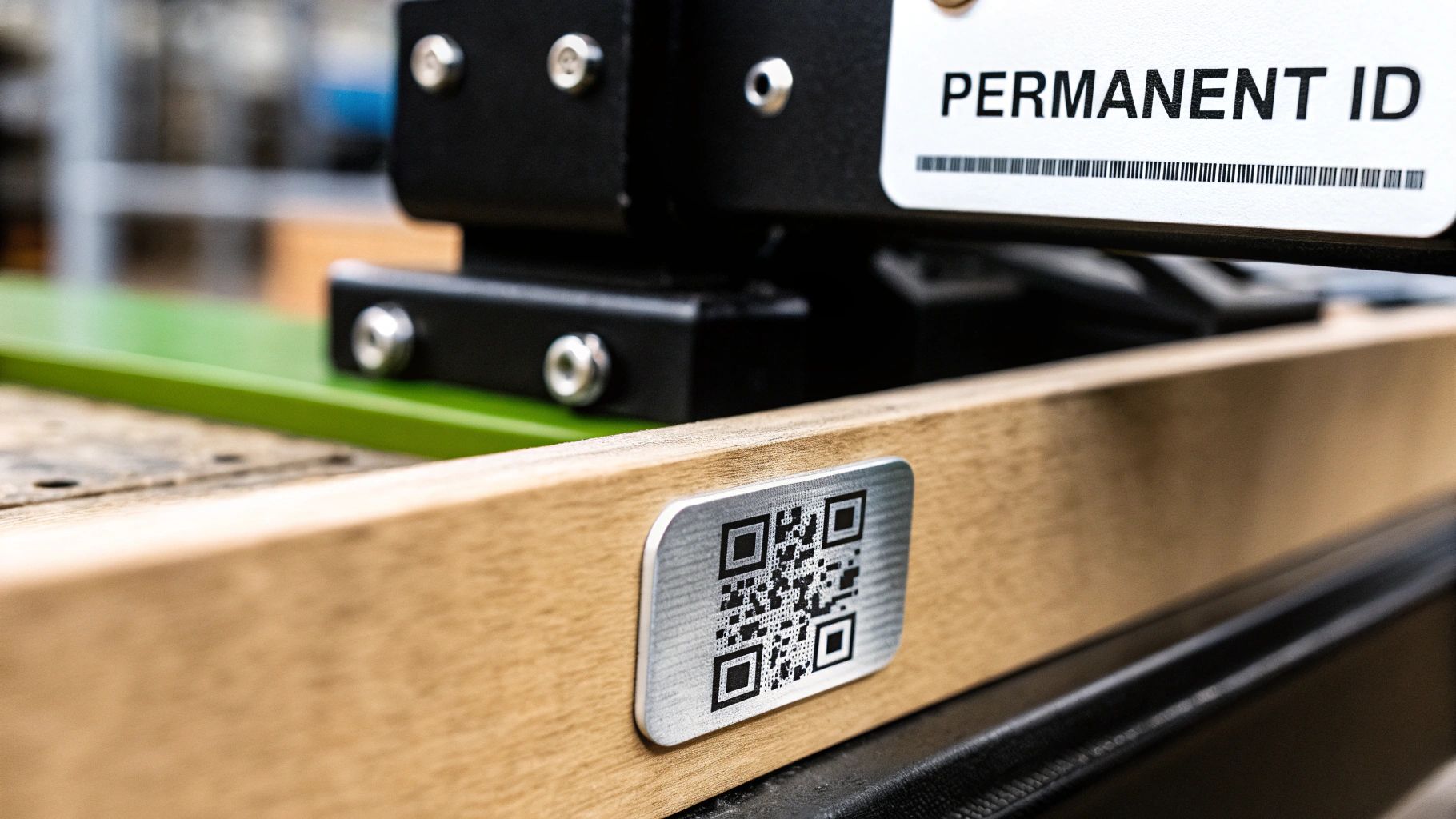
This practice is crucial in sectors where reliability is non-negotiable. For instance, manufacturing facilities use precision Trotec Laser machines to engrave serial numbers on production machinery, guaranteeing traceability. Similarly, electrical contractors rely on engraved Traffolyte labels for switchboards and circuit panels to comply with safety standards, ensuring critical information remains clear for decades.
Why It’s a Best Practice
The core benefit is uninterrupted data integrity. When a label is lost or becomes unreadable, the asset effectively drops off the grid, leading to lost time, replacement costs, and potential compliance breaches. Permanent identification eliminates this risk, making it a cornerstone of modern asset tracking best practices. It supports everything from preventative maintenance schedules in a factory to regulatory compliance for medical devices in a hospital.
Actionable Implementation Tips
- Standardise Placement: Before implementation, decide on a consistent location for labels or engravings on each type of asset. This streamlines the scanning process for audits and maintenance checks.
- Integrate Digital Data: Combine permanent physical IDs with QR codes or barcodes. Engraving a QR code directly onto a machine part with a Trotec Laser creates a durable link to its digital twin, providing instant access to maintenance logs, manuals, and service history.
- Choose the Right Material and Method: The asset's material and operating environment dictate the best identification method. For instance, anodised aluminium or stainless steel are ideal for high-wear industrial settings, as they resist chemicals and abrasion. You can explore a variety of durable options with high-quality engraved metal labels.
- Plan Your ID Scheme: Design a logical and scalable identification scheme before you start engraving. A well-structured system (e.g.,
DEPT-ASSETTYPE-####) prevents confusion and costly revisions down the line.
2. Integrate Asset Tracking with Digital Management Systems
Connecting a durable physical identifier to a digital management system transforms asset tracking from a manual chore into a dynamic, automated ecosystem. This integration bridges the gap between the physical asset on your floor and its corresponding data record, enabling real-time visibility, automated updates, and seamless data synchronisation. It is the key to unlocking operational efficiency and eliminating the costly human errors inherent in manual data entry.

This synergy is vital in complex environments. For instance, a manufacturing plant can link an RFID tag on a piece of machinery, backed up by a Trotec Laser-engraved QR code, directly to its maintenance log in Maximo or SAP. Similarly, healthcare facilities use this approach to track high-value mobile medical devices, ensuring equipment is always available where needed and service records are up-to-date, a critical component of effective healthcare asset management software.
Why It’s a Best Practice
The primary benefit is creating a single source of truth for your entire asset inventory. When a field technician scans a QR code on a distributed piece of equipment, the system can instantly pull up its entire history, log the inspection, and schedule the next service. This level of integration dramatically reduces administrative overhead, improves decision-making with accurate data, and provides an auditable trail for compliance. It’s a foundational element of modern asset tracking best practices that boosts both accountability and productivity.
Actionable Implementation Tips
- Start with Critical Assets: Begin your integration project by focusing on high-value or operationally critical assets. This allows you to refine your process on a smaller scale before rolling it out company-wide.
- Ensure Permanent Scannability: Use a high-precision Trotec Laser machine to permanently engrave QR codes onto metal tags. This guarantees the code remains scannable even in harsh industrial conditions, protecting the crucial link to your digital system.
- Choose a Mobile-Friendly System: Select software that offers robust mobile app access. This empowers field personnel to update records, access manuals, and perform audits directly from their devices on-site. For advanced integration, consider specialised solutions like Enasys Asset Tracking Software.
- Train Staff Thoroughly: Your system is only as good as the data entered into it. Invest in comprehensive training for all users on proper scanning procedures, data entry protocols, and the importance of consistency.
- Schedule Regular Audits: Establish a routine to physically verify assets against their digital records. This practice helps identify and correct discrepancies, ensuring your database remains accurate and reliable over time.
3. Establish Standardised Asset Coding and Naming Conventions
Beyond just a durable tag, the information encoded on that tag must be logical, consistent, and instantly understandable. Establishing a standardised asset coding and naming convention across your organisation is a foundational practice that prevents confusion, streamlines data entry, and ensures clear communication between departments. Without it, one team’s “Generator Unit 2” might be another’s “Backup Power-02B,” creating data silos and operational chaos.
This disciplined approach transforms random numbers into a powerful organisational language. For example, a large manufacturing facility might use a code like PROD-A1-MTR-001 to denote a motor (MTR) in Production Area 1, machine #001. Similarly, hospitals often use schemes like MED-SURG-2A-015 for surgical equipment on Floor 2, Wing A, Room 15. This structure provides immediate context, making asset management more intuitive and efficient for everyone involved.
Why It’s a Best Practice
The primary benefit is enhanced operational clarity and data accuracy. A logical naming system dramatically reduces the risk of human error during data entry, maintenance logging, and audits. When every asset follows the same format, it becomes simpler to filter, search, and analyse data within your management software. This practice is a cornerstone of effective asset tracking best practices because it ensures the data collected is clean, reliable, and useful for making informed business decisions, from scheduling maintenance to calculating depreciation.
Actionable Implementation Tips
- Involve Key Stakeholders: Collaborate with managers from operations, maintenance, and IT to design a coding system that meets everyone’s needs. This ensures universal adoption and prevents future conflicts.
- Design for Scalability: Create a system that allows for growth. Your convention should accommodate new departments, asset types, and locations without forcing a complete overhaul of existing asset IDs.
- Keep Codes Concise: While descriptive, codes must be concise enough to be easily engraved onto labels or directly onto assets using a Trotec Laser. Avoid overly complex schemes that are hard to remember or type.
- Document and Centralise: Once finalised, document the entire naming convention in a shared, accessible location, such as a company wiki or digital database. This guide is crucial for training new staff and ensuring consistency over time.
4. Conduct Regular Physical Asset Audits and Reconciliation
Even the most advanced digital tracking system is only as reliable as the real-world data it reflects. Performing scheduled physical audits is the crucial process of verifying that your asset register accurately matches the physical reality on the ground. This involves systematically locating, identifying, and assessing the condition of each asset and reconciling those findings against your digital records to detect loss, theft, or misplacement early.
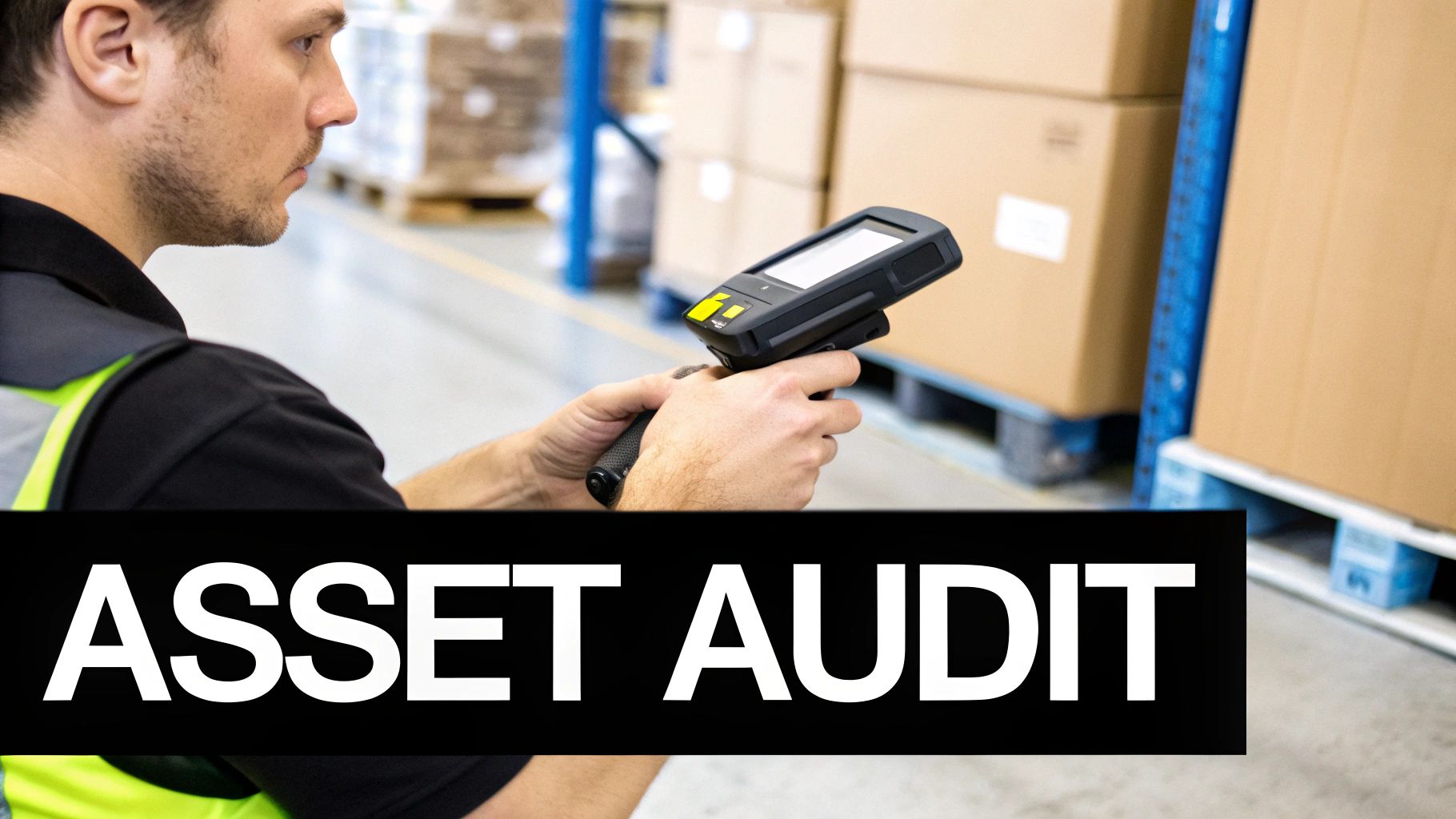
This practice is fundamental for maintaining operational integrity and financial accuracy. For example, manufacturing plants often conduct annual equipment audits during scheduled maintenance shutdowns to account for every tool and machine. Likewise, hospitals perform quarterly audits of high-value mobile medical equipment, like infusion pumps and ventilators, to ensure they are available where needed and to comply with health regulations.
Why It’s a Best Practice
The primary benefit is maintaining data accuracy and operational readiness. An outdated asset register can lead to phantom assets appearing on financial reports, wasted time searching for non-existent equipment, and compliance failures. Regular audits, mandated by frameworks like Australian Auditing Standards (ASAE) for asset verification, close the loop between digital records and physical assets. They identify systemic issues, such as security vulnerabilities or process gaps, allowing for timely remediation.
Actionable Implementation Tips
- Schedule Audits Strategically: Plan physical counts during low-activity periods, such as weekends or planned shutdowns, to minimise disruption to daily operations.
- Leverage Mobile Technology: Equip audit teams with mobile devices and scanning apps. This allows for rapid identification of assets via their permanent Trotec Laser-engraved barcodes or QR codes and enables real-time updates to the central database, even in areas with limited connectivity.
- Document Asset Condition: Go beyond simple presence-checking. Use the audit as an opportunity to photograph assets, note their physical condition, and flag items that require maintenance, creating a proactive approach to asset lifecycle management.
- Investigate Discrepancies Immediately: When an asset is missing or an extra one is found, don't wait. A swift investigation can often uncover simple mistakes, like an unrecorded transfer, or reveal more serious issues like theft, preventing further losses.
5. Implement Clear Asset Labeling Standards and Placement Protocols
A durable asset tag is only effective if it can be found and read quickly. This is why establishing clear, consistent standards for label content, size, and placement is a critical component of any successful asset tracking system. Creating a uniform protocol ensures that anyone, from a maintenance technician to an auditor, can locate and identify equipment without confusion or delay, significantly streamlining operations.
This practice is essential for maintaining order and efficiency at scale. For instance, a hospital might mandate that all portable medical devices have a 50mm x 50mm Trotec Laser-engraved QR code placed at eye level on the main housing, away from patient contact points. Similarly, electrical contractors often adhere to standards requiring consistent font sizes on circuit breaker labels to ensure legibility and compliance. This standardisation turns asset identification from a time-consuming search into a predictable, reflex action.
Why It’s a Best Practice
The primary benefit is operational efficiency and reduced human error. When labels are placed inconsistently, staff waste valuable time searching for them, which can delay critical maintenance or inventory audits. A standardised protocol eliminates this guesswork, ensuring that asset data can be captured rapidly and accurately. This approach also enhances safety, as clear, predictable labelling for critical equipment like electrical panels or machinery controls prevents dangerous mistakes and supports compliance with industry regulations like the AS/NZS 3000 Wiring Rules.
Actionable Implementation Tips
- Develop a Visual Style Guide: Create a simple document that specifies label dimensions, material, font, and exact placement for each category of asset. Use photos to illustrate correct and incorrect examples.
- Prioritise Visibility and Accessibility: Choose locations that are easily visible without needing to move heavy equipment or disassemble components. For assets in low-light environments, use high-contrast or reflective materials.
- Protect Labels from Damage: Place labels away from high-wear areas, moving parts, heat sources, and chemical exposure. This ensures the identifier remains intact and scannable for the asset's entire lifecycle.
- Partner with a Professional Engraver: For guaranteed consistency and durability, work with a specialist. At Evright, we use industry-leading Trotec Laser machines to produce precisely engraved labels and plates that meet your exact specifications every time, ensuring your standards are upheld across thousands of assets.
- Integrate with Safety Signage: Align your asset labelling standards with broader facility safety protocols. This creates a cohesive visual system that improves both asset management and workplace safety, a key element explored in professional safety signage in Adelaide.
6. Develop Comprehensive Asset Lifecycle Documentation
Tracking an asset is more than knowing its location; it’s about understanding its entire journey. Developing comprehensive lifecycle documentation involves creating and maintaining a detailed record for each asset, from its acquisition and installation to its eventual disposal. This complete history is the narrative of the asset's performance, cost, and value to the organisation.
This practice is essential for informed decision-making across departments. For example, a manufacturing firm can analyse equipment maintenance logs against performance data to predict failures and optimise capital budgeting. Similarly, hospitals meticulously document medical device servicing to meet strict regulatory compliance standards, ensuring patient safety and avoiding penalties. This complete history provides the data needed for strategic planning and operational excellence.
Why It’s a Best Practice
The primary benefit is data-driven asset management. A complete lifecycle history transforms asset tracking from a simple inventory function into a powerful analytical tool. It enables businesses to calculate the true total cost of ownership, justify upgrades, and improve maintenance strategies. As popularised by standards like ISO 55000, this approach ensures assets deliver maximum value throughout their operational life, supporting everything from warranty claims to long-term infrastructure planning.
Actionable Implementation Tips
- Centralise Your Data: Move away from scattered spreadsheets. Use a centralised digital system, like an Enterprise Asset Management (EAM) platform, to serve as a single source of truth for all asset documentation.
- Link Digital Records to Physical IDs: The most effective asset tracking best practices connect the physical to the digital. Use a high-precision Trotec Laser to engrave a permanent QR code onto an asset. This creates an indestructible link that maintenance staff can scan to instantly access its complete digital lifecycle record.
- Standardise Data Entry: Create mandatory digital forms with required fields for maintenance events, modifications, and inspections. This ensures every entry is consistent, complete, and useful for future analysis.
- Assign Clear Ownership: Designate specific roles or individuals responsible for updating an asset’s record. This accountability prevents documentation from becoming outdated or incomplete.
- Establish Retention Policies: Define how long to keep documentation for retired assets. This is crucial for regulatory compliance, financial audits, and analysing historical performance trends.
7. Establish Clear Asset Ownership and Responsibility Assignment
An asset without an owner is an asset at risk. Establishing clear ownership assigns direct accountability for a piece of equipment's condition, usage, and maintenance to a specific individual or team. This practice transforms asset management from a passive, administrative task into an active, responsibility-driven process, ensuring that every tool, machine, and device is properly cared for.
This principle is a core component of effective asset tracking best practices, moving beyond simple location tracking to encompass the entire lifecycle of an asset. For example, a manufacturing facility might assign a senior machine operator as the primary owner of a critical CNC machine, making them responsible for daily checks and reporting issues. Similarly, hospitals assign biomedical engineers as the responsible parties for specific medical devices, ensuring regulatory compliance and patient safety.
Why It’s a Best Practice
The primary benefit is a dramatic reduction in negligence-related loss and downtime. When someone is formally responsible for an asset, they are more invested in its performance and longevity. This culture of accountability clarifies who to contact when an issue arises, streamlines maintenance scheduling, and ensures that documentation remains current. It closes the loop between tracking an asset and actually managing it effectively.
Actionable Implementation Tips
- Document Ownership Digitally and Physically: Record the assigned owner in your central asset management software. Crucially, reinforce this by using a Trotec Laser to engrave the owner’s department or role (e.g., "Owned by: Electrical Team B") onto a durable asset tag, creating a permanent, visible link of responsibility.
- Integrate into Job Roles: Make asset responsibility a formal part of job descriptions. This clarifies expectations from day one and integrates asset care into routine operational duties.
- Establish Clear Handover Protocols: Create a simple, standardised procedure for transferring ownership when an employee changes roles or leaves the organisation. This ensures no asset is left in an accountability limbo.
- Empower Owners with Information: Provide owners with easy access to the asset’s complete history, including maintenance schedules, user manuals, and service logs, often linked via a QR code on the asset itself. This empowers them to make informed decisions about its care.
8. Implement Risk-Based Asset Tracking Prioritisation
Not all assets are created equal, and your tracking strategy shouldn't treat them as such. A risk-based approach involves prioritising your asset tracking efforts based on factors like cost, operational criticality, regulatory requirements, and theft likelihood. This ensures resources are allocated efficiently, focusing the most robust tracking methods on assets that pose the greatest risk to your business if lost, damaged, or unaccounted for.
This strategic approach is a cornerstone of effective asset management in critical sectors. For instance, a hospital will implement rigorous, real-time tracking for life-saving surgical equipment but may use a simpler check-in/check-out system for administrative assets like laptops. Similarly, essential service providers will invest in GPS and durable Trotec Laser engraved identifiers for field equipment crucial to maintaining public infrastructure, while using less intensive methods for standard office furniture.
Why It’s a Best Practice
The primary benefit is maximised return on investment (ROI). By concentrating your budget and efforts on high-value, high-risk items, you mitigate the most significant threats to productivity and compliance without overspending on non-critical assets. This targeted methodology, inspired by ISO 31000 risk management principles, transforms asset tracking from a blanket operational cost into a strategic, value-driven initiative. It is one of the most important asset tracking best practices for organisations with large and diverse asset portfolios.
Actionable Implementation Tips
- Categorise by Risk: Establish clear criteria to classify assets into tiers (e.g., high, medium, low risk). Factors should include replacement cost, impact of downtime on operations, and any specific compliance mandates.
- Match Method to Risk: Apply your most durable and detailed identification methods to your highest-risk assets. Use precision Trotec Laser machines to permanently engrave serial numbers and QR codes onto critical machinery, while using high-quality industrial labels for medium-risk items.
- Conduct Regular Reviews: Risk profiles change. Review and update your asset risk assessments annually or whenever significant operational changes occur, such as the introduction of new equipment or changes in regulations.
- Analyse Loss Data: Use historical data on asset loss, theft, and failure to inform your risk categorisation. Identifying patterns can help you proactively apply enhanced tracking to vulnerable asset types.
9. Utilise Technology Solutions: RFID, IoT, and Automation
While durable physical identifiers are foundational, modern technology amplifies their power, enabling real-time tracking with minimal manual effort. Deploying solutions like Radio-Frequency Identification (RFID), the Internet of Things (IoT), and automated data collection transforms asset management from a periodic task into a continuous, data-rich process. These systems provide unparalleled visibility into an asset's location, condition, and utilisation patterns, significantly reducing human error and boosting operational efficiency.
For example, a large-scale manufacturing plant can use RFID tags on high-value tools and equipment, with automated alerts triggered if an item leaves a designated geofenced area. Similarly, hospitals can deploy IoT sensors on critical medical devices to monitor operational hours and performance, enabling predictive maintenance that prevents unexpected failures and ensures patient safety. This level of automation is a core component of advanced asset tracking best practices.
Why It’s a Best Practice
The primary benefit is proactive, real-time visibility. Instead of relying on manual scans during scheduled audits, these technologies provide a constant stream of data, allowing managers to make informed decisions instantly. This shift from reactive to proactive management minimises asset downtime, prevents theft or loss, and optimises asset utilisation across the entire organisation. It is the key to unlocking the full potential of Industry 4.0 standards.
Actionable Implementation Tips
- Start with a Pilot Program: Before a full-scale rollout, test your chosen technology on a small, manageable subset of assets to identify potential challenges and refine your processes.
- Create Redundant Identification: Combine high-tech solutions with permanent identifiers. For instance, integrate an RFID chip into a durable, Trotec Laser-engraved metal tag that also features a human-readable serial number and a QR code. This ensures the asset remains traceable even if the electronic component fails.
- Choose Environment-Specific Hardware: Select RFID tags and IoT sensors rated for your specific operating conditions. Consider factors like extreme temperatures, chemical exposure, moisture, and physical impact to ensure longevity.
- Establish Clear Data Governance: Create policies for managing the continuous stream of data from your assets. Define who has access, how data is stored, and how it will be used for analytics and reporting to ensure it translates into actionable insights.
- Plan for Maintenance: Factor in the lifecycle of your technology. For battery-powered tags or sensors, establish a clear protocol for monitoring battery life and executing replacements to avoid gaps in tracking coverage.
10. Create Comprehensive Asset Tracking Training and Change Management Programs
Even the most advanced asset tracking technology is only as effective as the people who use it. Developing comprehensive training and change management programs ensures that all staff understand asset tracking procedures, the systems in place, and their individual responsibilities. This practice drives the successful adoption of new systems and maintains data integrity across the organisation over the long term.
A robust training program moves beyond a simple software tutorial. It must instil a culture of accountability where every team member understands why accurate asset tracking is critical. For instance, essential service providers can implement online training modules for geographically distributed field staff, ensuring everyone follows the same protocol for scanning equipment. Similarly, government agencies can integrate asset management procedures into new employee onboarding to establish best practices from day one.
Why It’s a Best Practice
The primary benefit is consistent adoption and long-term success. Without proper training and managing the transition, even the best-laid plans can fail. Staff may revert to old habits, misuse the system, or fail to see the value, leading to inaccurate data and a poor return on investment. Effective change management addresses resistance and builds buy-in, while ongoing training reinforces correct procedures, making it one of the most crucial asset tracking best practices for organisational change.
Actionable Implementation Tips
- Tailor Training to Specific Roles: Customise training content for different users. An operator needs to know how to scan an asset, while a manager needs to know how to generate reports and analyse data.
- Create Simple, Visual Reference Guides: Develop and distribute easy-to-follow guides, like laminated posters near workstations, showing correct label placement and scanning procedures. This provides a quick, accessible reminder for all staff.
- Use a Multi-Faceted Approach: Combine various training methods to accommodate different learning styles. Use a mix of in-person sessions, video tutorials, written manuals, and hands-on practice with scanners and software.
- Establish “Super-Users”: Identify and train key team members to act as internal champions or “super-users.” These individuals can provide on-the-ground peer support, answer day-to-day questions, and encourage correct usage among their colleagues.
- Regularly Update Training Materials: As your systems, procedures, or technologies evolve, ensure your training materials are updated to reflect these changes. This prevents outdated information from causing confusion and errors.
Top 10 Asset Tracking Best Practices Comparison
| Practice | Implementation complexity 🔄 | Resource requirements ⚡ | Expected outcomes ⭐📊 | Ideal use cases | Key advantages 💡 |
|---|---|---|---|---|---|
| Implement Durable, Permanent Asset Identification Systems | Medium 🔄 — specialized equipment & setup | Medium–High ⚡ — engraving hardware, materials, skilled operator | High ⭐⭐⭐ — long-term legibility, audit-ready 📊 | Harsh environments, regulatory compliance (manufacturing, healthcare, utilities) | Permanent ID reduces relabel costs; plan scheme before deployment 💡 |
| Integrate Asset Tracking with Digital Management Systems | High 🔄 — system integration & workflows | High ⚡ — software licenses, IT, mobile devices | Very High ⭐⭐⭐ — real-time visibility, analytics 📊 | Multi-site operations, hospitals, large inventories | Automates reporting and maintenance; enables data-driven decisions 💡 |
| Establish Standardized Asset Coding and Naming Conventions | Medium 🔄 — cross-team planning | Low–Medium ⚡ — time, documentation effort | High ⭐⭐⭐ — fewer duplicates, consistent records 📊 | Any organization with many asset types | Simplifies training and reporting; document and enforce convention 💡 |
| Conduct Regular Physical Asset Audits and Reconciliation | Medium 🔄 — scheduling & procedures | Medium–High ⚡ — staff time, scanning tools | High ⭐⭐ — detects loss/theft, improves accuracy 📊 | Regulated sectors, large warehouses, maintenance windows | Finds discrepancies early; use mobile scanning and offline apps 💡 |
| Implement Clear Asset Labeling Standards and Placement Protocols | Medium 🔄 — standard creation & rollout | Low–Medium ⚡ — labels, templates, minor fixture changes | High ⭐⭐ — faster identification, fewer damaged labels 📊 | Environments needing quick visual ID (labs, plants, electrical panels) | Consistent placement improves readability; provide visual guides 💡 |
| Develop Comprehensive Asset Lifecycle Documentation | High 🔄 — continuous process & governance | Medium–High ⚡ — digital systems, storage, data entry | Very High ⭐⭐⭐ — supports maintenance, depreciation, compliance 📊 | Capital-intensive assets, regulated industries | Enables predictive maintenance and financial planning; centralize records 💡 |
| Establish Clear Asset Ownership and Responsibility Assignment | Low–Medium 🔄 — policy and role updates | Low ⚡ — documentation, communication | High ⭐⭐ — improved care and accountability 📊 | Operations with shared equipment, field teams, hospitals | Clarifies accountability; record owners in system and on labels 💡 |
| Implement Risk-Based Asset Tracking Prioritization | High 🔄 — risk analysis & policy | Medium ⚡ — analytics, periodic reviews | High ⭐⭐ — optimized resource allocation, cost savings 📊 | Budget-constrained orgs, diverse asset portfolios | Focus efforts on high-impact assets; review risk annually 💡 |
| Utilize Technology Solutions: RFID, IoT, and Automation | Very High 🔄 — deployment, integration, scaling | Very High ⚡ — tags, sensors, networks, platform costs | Very High ⭐⭐⭐ — real-time, predictive alerts, reduced manual counts 📊 | Distributed/high-value assets, predictive maintenance use cases | Enables continuous monitoring; pilot before wide rollout and plan data governance 💡 |
| Create Comprehensive Asset Tracking Training & Change Management Programs | Medium–High 🔄 — design, delivery, updates | Medium ⚡ — trainers, materials, time | High ⭐⭐ — higher adoption, fewer procedural errors 📊 | Any org adopting new systems or processes | Role-specific training and super-users boost adoption; update regularly 💡 |
Bringing It All Together: Your Next Steps in Asset Management
Navigating the complexities of modern operations requires more than just knowing what assets you have; it demands a deep, real-time understanding of where they are, what condition they are in, and how they contribute to your bottom line. Throughout this guide, we've explored ten critical asset tracking best practices, moving from foundational principles to advanced technological integrations. The journey from chaos to control is not a single leap but a series of deliberate, interconnected steps.
The core message is one of synergy. A state-of-the-art software system is only as reliable as the data it receives, and that data originates from the physical asset itself. This is why establishing durable, permanent identification systems is not just the first step; it is the most crucial one. Without a clear, readable, and indestructible label, barcode, or RFID tag, your entire asset management framework is built on a foundation of sand. Likewise, a brilliant training program or a meticulous audit schedule will falter if your team cannot quickly and accurately identify equipment in the field.
Key Takeaways for Immediate Action
To truly transform your operations, focus on the powerful interplay between the physical and the digital. The most successful asset tracking strategies are those that seamlessly bridge this gap.
- Foundation First: Prioritise the physical tagging of your assets. High-quality, Trotec Laser-engraved plates and durable labels are the non-negotiable starting point. They ensure data integrity from the very beginning by resisting wear, chemical exposure, and environmental damage.
- Integration is Power: Your physical tags and digital systems must speak the same language. Integrating scannable identifiers with your CMMS or ERP software automates data entry, minimises human error, and creates a single source of truth for every asset.
- People and Process: Technology is only an enabler. True success comes from establishing clear ownership, standardised procedures, and comprehensive training. When every team member understands their role in the asset lifecycle, the system functions as a well-oiled machine.
Mastering these asset tracking best practices delivers far more than just a tidy inventory list. It is a direct route to enhanced operational efficiency, reduced downtime, and improved safety compliance. When you can instantly locate a critical piece of equipment, track its maintenance history with a simple scan, and forecast its replacement needs accurately, you unlock significant cost savings and boost productivity. This level of control allows you to move from a reactive "fix-it-when-it-breaks" model to a proactive, strategic approach to asset management, directly impacting your organisation's profitability and resilience.
Your Path Forward
Implementing a robust asset tracking system is a journey, not a destination. It begins by securing the physical identity of each asset. This is where the precision and permanence of advanced laser engraving technology, like that from industry-leader Trotec, becomes indispensable. It provides the bedrock upon which all other digital and procedural best practices can be confidently built.
Start by assessing your current identification methods. Are your labels fading, peeling, or easily damaged? Can they withstand the specific environmental challenges of your workplace? Addressing this foundational element is the most impactful first step you can take. By ensuring every asset has a permanent, scannable identity, you are not just organising your inventory; you are laying the groundwork for a more efficient, compliant, and profitable future.
Ready to build a resilient foundation for your asset management strategy? Evright Industrial specialises in creating durable, custom laser-engraved asset tags, compliance plates, and safety signage using state-of-the-art Trotec laser technology. At Evright, we handle the entire process for you—simply upload your designs or data to Evright Industrial, and we'll deliver precision-engineered identification solutions that underpin your asset tracking success.
Recent Comments