
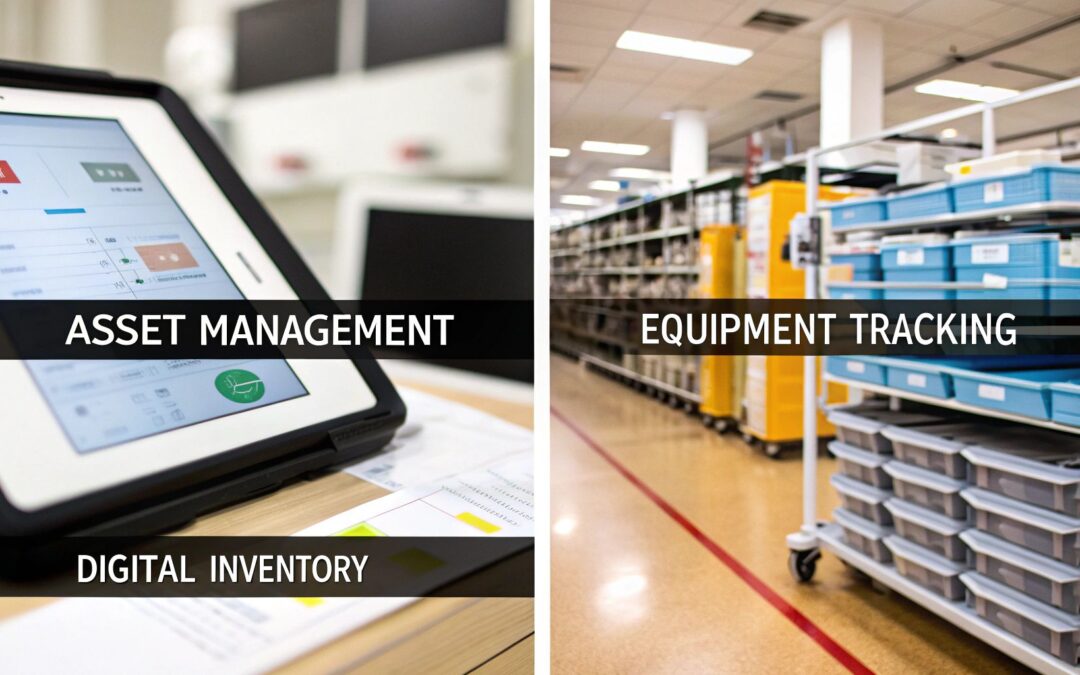
Picture this: you're trying to run a bustling airport, but you have no air traffic control. That's what a modern hospital feels like without a proper system for tracking its equipment—a recipe for chaos. Healthcare asset management software acts as that central command, giving you a live, dynamic map of every single piece of equipment. It's all about making sure the right tools are in the right place, at the right time, every time.
So, What Exactly Is Healthcare Asset Management Software?
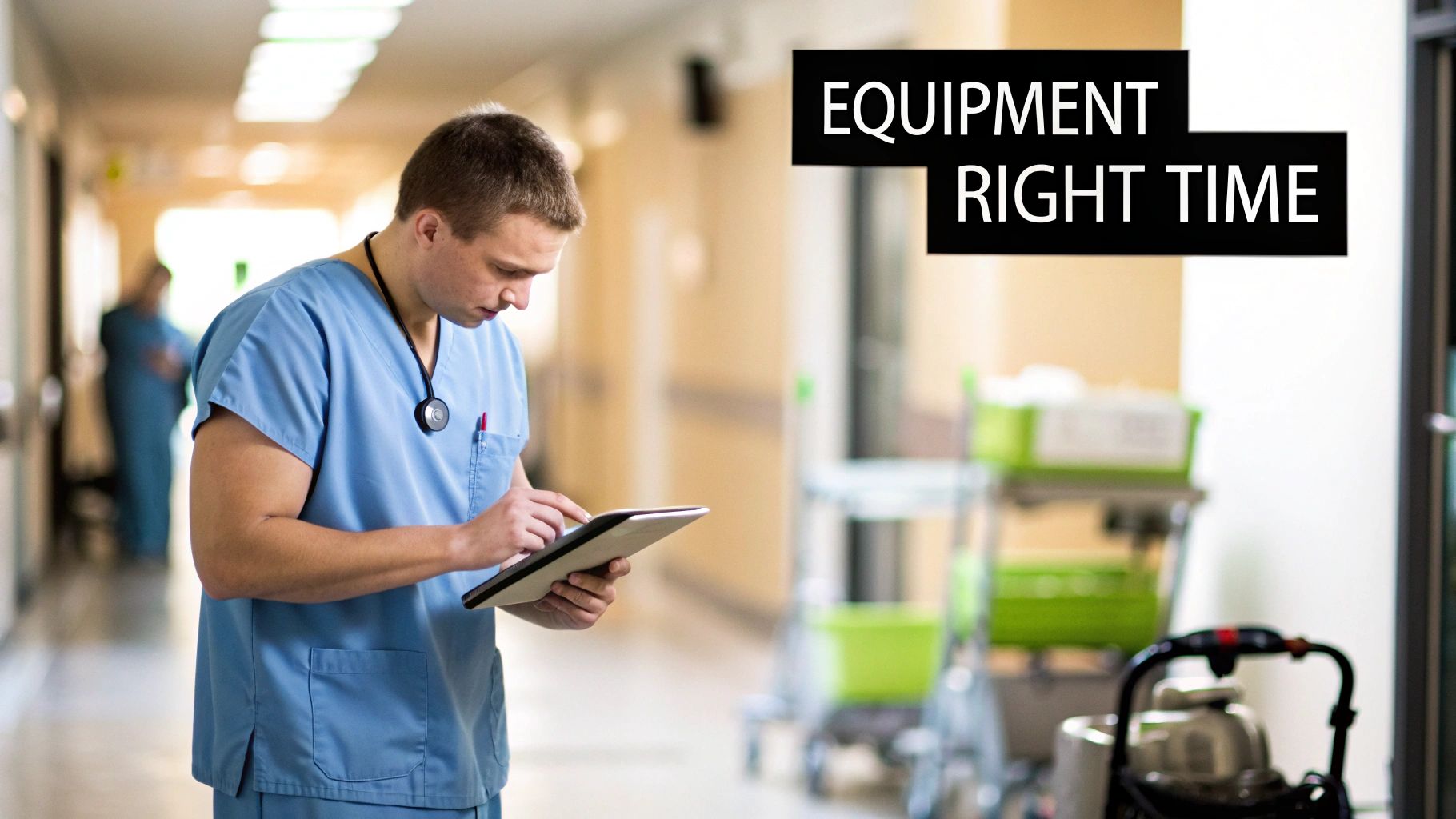
At its core, healthcare asset management software is a specialised platform that gives medical facilities a systematic way to track and manage all their physical assets. We're talking about everything from the big-ticket diagnostic machines like MRIs and CT scanners right down to the mobile gear that’s always on the move—infusion pumps, wheelchairs, and vital signs monitors.
Instead of wrestling with outdated spreadsheets or chasing paper trails, this software brings everything into one centralised, digital inventory. It’s so much more than a simple list; it delivers real-time data on an asset's location, its maintenance status, how often it’s being used, and its compliance records. This isn't just another IT upgrade. It's a fundamental shift in how a hospital operates, one that directly boosts patient safety, empowers your staff, and strengthens the bottom line.
This whole approach is built on the principles of effective Asset Lifecycle Management (ALM), covering the entire journey of a piece of equipment, from the day it's purchased to the day it's retired. It’s about managing every device efficiently and intelligently throughout its entire operational life.
The Real Purpose Behind The Platform
The main goal here is to solve the costly and dangerous problems that come from misplaced, underused, or poorly maintained medical assets. Think about it: every minute a nurse spends searching for a device is a minute they're not with a patient, and those minutes can have critical consequences. In fact, it's well-documented that nurses can lose a huge chunk of their shift just looking for equipment.
By providing instant location data and clear maintenance schedules, this software gives that precious time back to caregivers. It tackles several key challenges head-on:
- Total Equipment Visibility: It gets rid of the guesswork. No more hide-and-seek with mobile assets, which means fewer delays in patient care.
- Proactive Maintenance: It automates service alerts, so you know your equipment is always safe, properly calibrated, and ready to go.
- Effortless Compliance: It simplifies audit trails and documentation, making it far easier to meet the strict standards required in healthcare.
- Smarter Spending: It provides real-world usage data that helps you make better purchasing and rental decisions, preventing you from wasting money on equipment you don’t need.
The Foundation of Reliable Tracking
Of course, for any of this to work, the software needs a solid, reliable connection to each physical asset. That connection is forged through durable asset tags, often created with incredibly precise technology like Trotec Laser machines. These advanced systems create permanent, high-contrast markings on labels that are tough enough to withstand the harsh sterilisation cycles common in any medical facility.
These heavy-duty tags ensure that barcodes or QR codes stay perfectly scannable for years, providing the accurate, dependable data feed the software relies on. Here at Evright, we use this exact technology to deliver the kind of labelling solutions that form the true backbone of a successful asset management strategy.
The Core Features Driving Hospital Efficiency
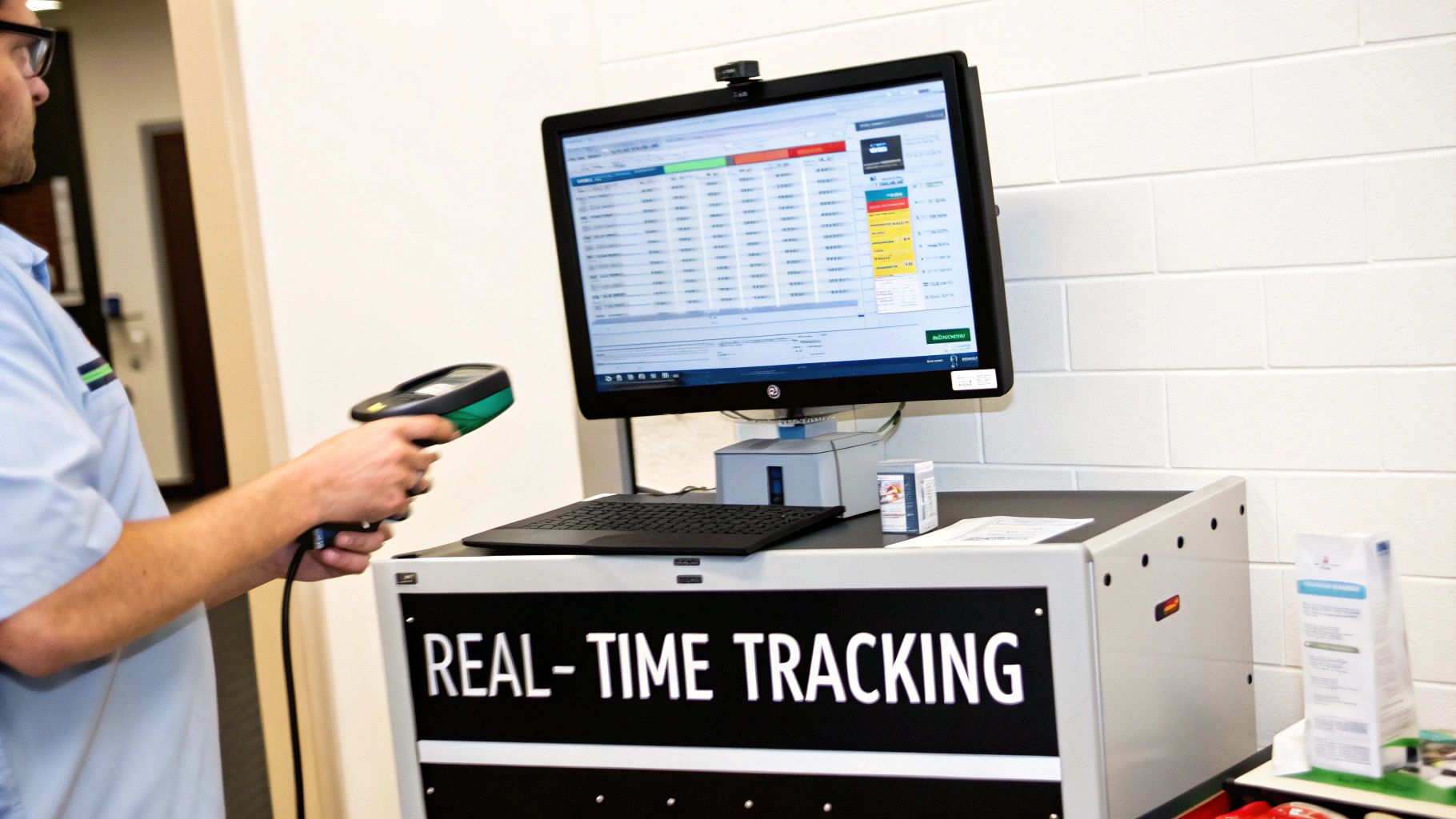
Good healthcare asset management software is much more than a fancy inventory list; it’s an active partner in the day-to-day running of a facility. Its real strength comes from a suite of features built to automate tasks, bring clarity to chaos, and most importantly, give precious time back to clinical staff.
These features aren't just tech for tech's sake. Each one is designed to solve a very real, very common problem in hospitals. Think about the last time a nurse had to hunt for a bladder scanner during a busy shift, or when a biomedical technician needed to confirm a ventilator's service history. This is where the software steps in, providing the digital backbone for modern patient care.
Let's break down the key features that truly make this technology a game-changer.
Real-Time Location Services
One of the biggest wins is real-time location services (RTLS). Imagine it as an internal GPS for all your critical, movable equipment. Using tech like RFID (Radio-Frequency Identification) or BLE (Bluetooth Low Energy), staff can instantly pinpoint any tagged asset on a digital map of the hospital.
This simple feature puts an end to those frustrating, time-wasting searches that can delay patient treatment. A nurse needing an infusion pump can just check a tablet, see the nearest available one, and grab it. No more guesswork, no more wasted minutes.
Proactive Maintenance Scheduling
Another cornerstone is automated maintenance scheduling. This works like a built-in health check for every single piece of medical equipment. Instead of relying on manual logs and hoping for the best, the software automatically tracks service histories and flags when preventative maintenance is due, based on manufacturer specs or actual usage.
For example, the system will create a work order when a defibrillator needs its annual calibration and ping the biomedical engineering team. It’s a proactive approach that keeps equipment in top condition, preventing failures during emergencies and making compliance audits a breeze.
This shift from reactive repairs to proactive maintenance is a massive driver of efficiency. By anticipating needs, hospitals can minimise unexpected downtime, extend the lifespan of expensive equipment, and ensure a higher standard of patient safety.
The growth of this tech in Australia really highlights these benefits. The Australia digital health market, which includes this kind of healthcare asset management software, was valued at USD 7.7 billion in 2024 and is tipped to hit USD 28.6 billion by 2033. Right now, integrations like RFID are used in 65% of surveyed Australian hospitals, helping them cut repair costs by 28% and extend asset life by up to two years. You can discover more insights about the Australian digital health market growth.
To give you a clearer picture, here’s a quick look at the core functions you should expect to see in a modern system.
Key Features of Healthcare Asset Management Software
| Feature | Description | Benefit for Healthcare Facilities |
|---|---|---|
| Real-Time Location Services (RTLS) | Uses RFID, BLE, or GPS to track the precise location of tagged assets within the facility. | Reduces time wasted searching for equipment, improves staff efficiency, and gets critical devices to patients faster. |
| Automated Maintenance Scheduling | Tracks service history and schedules preventative maintenance based on usage or time, sending automated alerts. | Prevents unexpected equipment failures, ensures regulatory compliance, and extends the lifespan of valuable assets. |
| Check-in/Check-out System | Allows staff to formally assign equipment to a specific department, patient, or user for a set period. | Increases accountability, reduces equipment loss or hoarding, and provides a clear chain of custody. |
| Reporting & Analytics | Gathers data on asset usage, maintenance costs, and lifecycle to generate insightful reports and dashboards. | Enables data-driven decisions for purchasing, helps identify underutilised assets, and optimises resource allocation. |
| System Integration | Connects with other hospital IT systems like EHRs, ERPs, and CMMS for a unified data flow. | Creates a single source of truth, streamlines administrative and clinical workflows, and improves billing accuracy. |
These features all work together, turning what could be a simple tracking tool into a powerful operational hub for the entire facility.
Robust Reporting and Analytics
A modern system also gives administrators powerful reporting and analytics dashboards. These tools offer a bird’s-eye view of how all assets are being used—or not used—across the hospital. This kind of data-driven insight is absolutely crucial for making smart financial decisions.
By analysing usage patterns, a hospital manager might find that one department is hoarding pumps while another is constantly short. Or they might realise the hospital is renting expensive equipment that it already owns but isn't using effectively. These analytics are gold for optimising purchasing and making sure resources are where they need to be.
Of course, this data is only as good as the physical tags it comes from. This is why having precise, durable tags created with something like a Trotec Laser machine is so important for long-term accuracy.
Seamless System Integration
Finally, the best software doesn't work in a bubble; it integrates with other hospital systems. Top-tier platforms connect seamlessly with:
- Electronic Health Records (EHRs): Linking a device's usage directly to a patient's record for accurate billing and care coordination.
- Enterprise Resource Planning (ERP) systems: Aligning asset data with the hospital’s main financial and procurement workflows.
- Computerised Maintenance Management Systems (CMMS): Creating a unified workflow for all maintenance, repairs, and service requests.
This integration creates a single, cohesive data ecosystem. When asset information flows freely between clinical and administrative systems, the entire facility just runs better, which ultimately means safer, more efficient patient care. To keep that data stream clean and unbroken, Evright Industrial provides durable asset tags that can handle the tough hospital environment. Their advanced Trotec laser engraving creates permanent, scannable identifiers that are the physical foundation for your entire digital tracking system.
Cashing In on Smarter Asset Management
It's one thing to talk about fancy software features, but the real question is always: what’s the return? When it comes to healthcare asset management software, we’re not just talking about another line item on the IT budget. This is a genuine strategic investment, one that delivers tangible, measurable results by saving money, boosting staff productivity, and creating a safer, more organised hospital environment.
The most immediate win is cutting down on lost equipment. In a busy hospital, it’s frighteningly easy for expensive mobile devices to go missing. These "ghost assets"—equipment you own but can't find—add up to huge replacement costs. A real-time tracking system makes this problem all but disappear. It also stops the expensive habit of renting equipment simply because staff think something isn’t available when it’s actually just hiding in another department.
Slashing Costs and Optimising Budgets
Beyond just finding lost gear, this kind of software completely changes how hospitals buy new equipment. Instead of relying on guesswork or what a department head feels they need, you get hard data on how often every single asset is actually used. This stops you from splashing cash on equipment that will just sit in a corner collecting dust.
It’s all about smarter capital planning. Imagine the software’s analytics show that one ward is swimming in infusion pumps while another is constantly short. Instead of buying new ones, a simple reallocation solves the problem, instantly saving thousands and getting resources where they’re actually needed.
By shifting from a reactive, manual scramble to a proactive, data-driven strategy, hospitals unlock serious financial efficiencies. The software gives you the clarity to fine-tune purchasing, cut out wasteful spending, and get the most out of every dollar invested in your medical equipment.
Here in Australia, the numbers really tell the story. Major hospitals have seen up to a 30% reduction in equipment loss and idle time after bringing in asset management software. For a medium-sized facility, that often translates to annual savings of over AUD 500,000. These platforms also use predictive analytics to get ahead of maintenance, cutting equipment downtime by an average of 25%. You can dig deeper into these healthcare software market findings.
Supercharging Workflows and Patient Care
The operational perks are just as significant. Think about how much time nurses spend hunting for equipment—time they should be spending with patients. By giving them instant location data on a tablet or computer, you eliminate that frustrating search. This is a massive boost for productivity and morale.
When your clinical teams have the right tools at the right moment, the entire hospital just runs better. Workflows are smoother, and you can feel the difference in the atmosphere.
Proactive maintenance, managed through the software, also means fewer surprise equipment failures. This is a huge deal for a couple of reasons:
- Better Patient Outcomes: It ensures critical gear like ventilators and defibrillators are always properly calibrated and ready to go, reducing the risk of something going wrong during a procedure.
- Lower Clinical Risk: Having a complete, auditable service history for every device makes compliance a breeze and protects the hospital from potential liability.
At the end of the day, all this operational excellence relies on one thing: good, clean data. The most sophisticated software in the world is useless if the physical tags connecting it to the assets are unreliable. This is why it’s absolutely critical to pair your system with durable, precision-engraved labels. Using something like a Trotec Laser machine, these tags are built to survive harsh sterilisation cycles, so their barcodes and QR codes stay scannable for the life of the equipment. It's the only way to guarantee the data flowing into your system is always accurate and trustworthy.
The Critical Role of Durable Physical Asset Tags
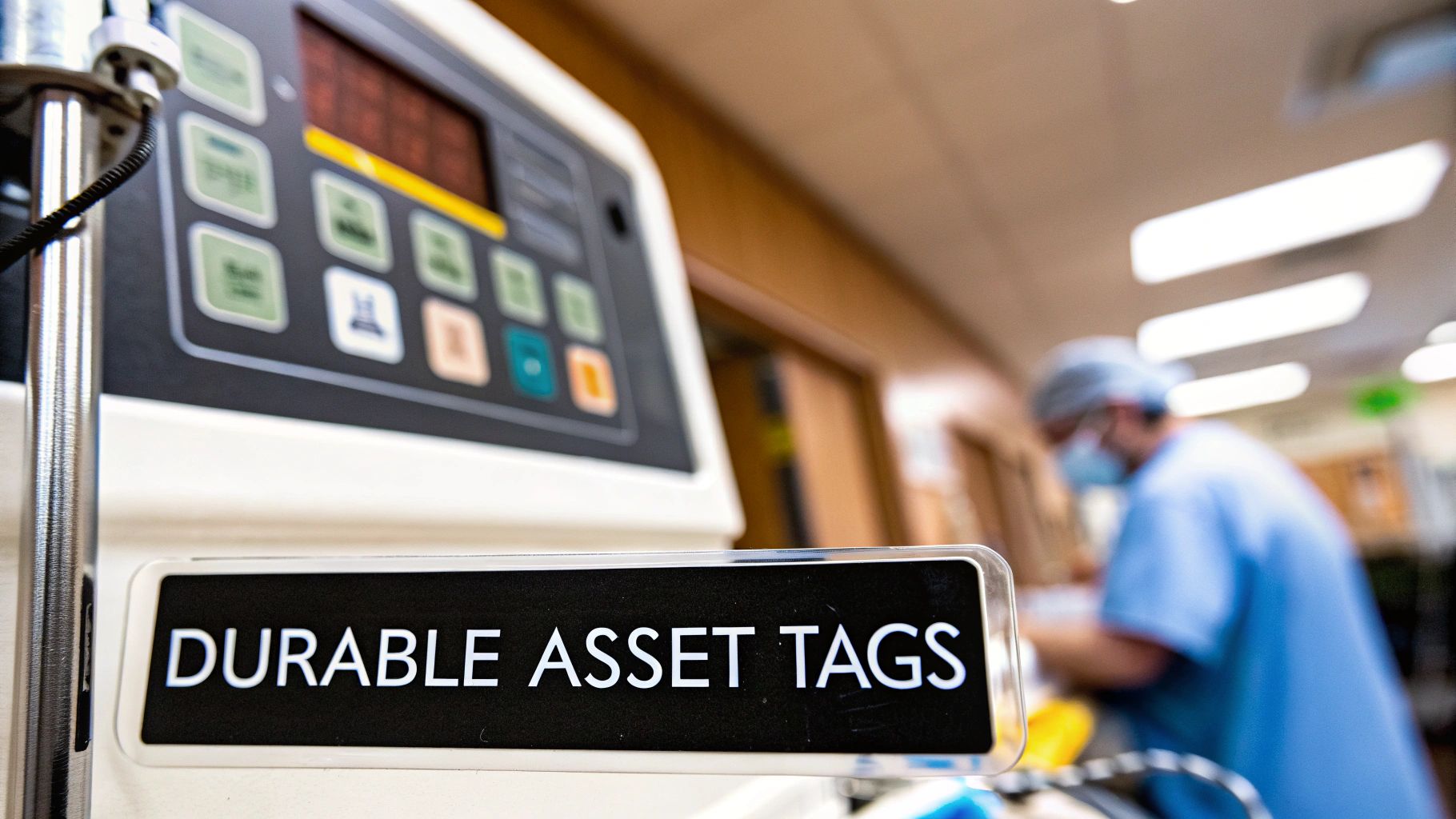
Let's be blunt: even the most sophisticated healthcare asset management software is completely useless without good data. If the information flowing into the system is weak, patchy, or just plain wrong, the whole investment falls apart. This is where durable physical asset tags come in. They are the single most important link in the chain, acting as the bridge between your tangible equipment and its digital twin in the software.
Imagine trying to track a fleet of IV pumps using paper stickers. It’s a non-starter. After just a few rounds of cleaning with harsh hospital-grade disinfectants, those labels would be peeling, smudged, and unreadable. The barcode your software needs becomes worthless, turning a valuable asset into a digital ghost. It’s a common mistake that dooms many asset-tracking projects before they even get off the ground.
The reality of a medical setting is brutal on any kind of label. Equipment is constantly being moved, bumped, and put through rigorous sterilisation. Standard labels simply don't stand a chance. The resilience of the physical tag isn’t a minor detail; it directly determines whether your entire tracking system will succeed or fail in the long run.
Why Standard Labels Fail in Healthcare
A healthcare environment is uniquely hostile to physical markers. It’s not like an office or a warehouse. Medical facilities have a specific set of conditions that degrade and destroy conventional tags, leading to data loss and operational chaos.
Several factors are working against flimsy labels:
- Aggressive Chemical Cleaners: Hospitals rely on powerful disinfectants to keep infections at bay. These chemicals will happily dissolve the inks and adhesives on standard paper or plastic labels.
- Constant Sterilisation: Many devices have to endure high-temperature or chemical sterilisation, like autoclaving. These intense processes will warp, melt, or completely destroy a weak tag.
- Physical Abrasion: Equipment is handled constantly, transported on carts, and squeezed into tight storage spaces. All that rubbing and bumping quickly wears away printed barcodes and text.
The moment a tag becomes unreadable, the asset effectively vanishes from the digital map. This creates data gaps, frustrates staff, and slowly erodes the value of your software investment.
The Unbreakable Foundation: Precision Laser Engraving
This is where you need to get serious about your marking technology. To create tags that can genuinely withstand these extremes, industry leaders turn to the power and precision of Trotec Laser machines. These advanced systems don't just print on a surface; they permanently engrave information directly into tough materials like stainless steel or specialised, durable plastics.
This process, laser engraving, uses a focused beam of light to etch barcodes, QR codes, serial numbers, and other vital data with microscopic accuracy. The result isn't a layer of ink on the material—it's a physical part of the tag itself. It can’t be washed off, worn away, or smudged.
By creating a permanent, high-contrast mark that is physically part of the asset tag, laser engraving builds an unbreakable foundation for data integrity. It guarantees that a device purchased today will still be perfectly scannable in five or ten years, no matter how many cleaning cycles it endures.
This is exactly how specialists like Evright Industrial produce incredibly durable, tamper-proof, and easily scannable asset tags. Using Trotec laser technology, they craft identifiers that become the bedrock of a reliable healthcare asset management software system. These precision-engraved tags ensure flawless data capture for years, letting your software do its job without a hitch. If you're curious about how these permanent identifiers are made, you can learn more about their process for creating engraved metal labels and see how they lock in long-term success.
The technology works by firing a high-energy laser beam onto the tag’s surface. The laser's intensity is precisely controlled to vaporise the material, creating a deep, permanent engraving that is crisp and clear. This method allows for tiny details like small text and complex barcodes to be rendered perfectly, ensuring high scannability rates for the entire life of the asset. That reliability is the key to getting a real return on your software investment.
Navigating TGA Compliance and Regulatory Demands
In healthcare, compliance isn't just a box-ticking exercise. It's the absolute foundation of patient safety and legal integrity. For any Australian facility, meeting the strict standards set by bodies like the Therapeutic Goods Administration (TGA) is simply non-negotiable. This is where healthcare asset management software shifts from being a nice-to-have into an essential ally, cutting through the complex web of regulatory demands.
Think of the software as your facility’s compliance engine. It works tirelessly in the background, automatically creating audit trails, maintenance logs, and usage histories for every single piece of equipment. It builds a complete, unchangeable digital diary of an asset's entire life within your hospital walls.
Picture this: a TGA auditor arrives unannounced and asks for the complete service and calibration history of a specific anaesthesia machine. Without a central system, that simple request could send staff scrambling through filing cabinets and scattered spreadsheets. With the software, a detailed, accurate report is generated in seconds. It’s an instant demonstration of flawless compliance and operational control.
Streamlining Audits and Recalls
The real power of this technology shines brightest during high-stakes events like audits and equipment recalls. The software gathers all the necessary documentation in one place, making compliance reviews smooth and stress-free. Instead of manually piecing together records, you can instantly pull up a clear, chronological history for any device an auditor points to.
This capability becomes even more vital when managing an equipment recall. The moment a manufacturer issues a recall notice, the clock starts ticking. You have to locate and pull every single affected device from service to protect patients. A manual search is slow, inefficient, and leaves too much room for human error.
With healthcare asset management software, you can run a quick search and instantly generate a list of every affected device and its last known location. This turns a potential crisis into a controlled, swift, and documented response, safeguarding patients and shielding the hospital from significant liability.
A Powerful Risk Management Tool
Ultimately, the software acts as a powerful risk management platform. By ensuring every asset is properly maintained, tracked, and documented, it protects your organisation from potential fines, legal action, and damage to your reputation. It provides the hard evidence needed to prove your facility is upholding the highest standards of care—a non-negotiable part of modern governance in any healthcare setting.
Regulatory pressure from the TGA, which has mandated traceable equipment since its 2021 updates, has already pushed 80% of large hospitals in Australia to upgrade their asset management systems. It’s not hard to see why. Software integrations have been shown to deliver 40% faster audits, and by optimising asset lifecycles, they can even help reduce e-waste by 30%.
While TGA compliance is a huge piece of the puzzle, a full grasp of healthcare regulations also means getting familiar with tools like a HIPAA risk assessment, especially when handling patient data and system security. Alongside TGA standards, robust data security and safety protocols are essential. This is an area where clear, durable signage also plays a critical supporting role. For facilities in South Australia, understanding local standards for things like safety signage is another part of building a comprehensive compliance framework. You might find our overview of safety signage requirements in Adelaide helpful here.
This integrated approach shows how a well-implemented system, supported by reliable physical markers from technologies like Trotec Laser machines, does more than just track assets. It builds a safer, more accountable healthcare environment for everyone.
How to Choose and Implement the Right System
Choosing and launching a healthcare asset management system is a huge step towards running a tighter ship. Get it right, and you’ll see benefits ripple across the entire facility. But the wrong platform? That can create more headaches than it solves. The trick is to go into the selection process with a clear checklist and a solid plan for implementation.
Your evaluation needs to go much deeper than just ticking off a feature list. Think long-term. Look for a system that can grow with your facility. Scalability is non-negotiable; the software has to handle more assets and more users down the line without grinding to a halt.
Just as important is the user interface (UI). Let’s be realistic: if the software isn't second nature for busy clinical staff, they simply won't use it. Poor adoption is the fastest way to kill a project.
And finally, you have to confirm its integration capabilities. The system must talk to your existing hospital IT infrastructure—your Electronic Health Record (EHR), your financial systems—to create one seamless, connected environment.
Key Questions to Ask Potential Vendors
You need to arm yourself with the right questions to really vet potential software partners. A bit of thoughtful digging now will expose the true strengths and weaknesses of each platform before you sign on the dotted line.
Here’s a quick checklist to guide those conversations:
- Onboarding and Training: What does your staff training actually look like? Is it a one-size-fits-all video, or is it tailored to different roles, like nurses versus biomedical technicians?
- Support and Maintenance: What are your standard support hours, and more importantly, what's the real-world response time when a critical issue pops up?
- Data Security: How are you protecting our sensitive asset and patient data, and can you confirm you're fully compliant with Australian privacy laws?
- Hardware Compatibility: What specific tags and scanners work with your software? Do you have recommended partners for the kind of durable tagging we need in a hospital?
This simple flowchart shows the three-step process—Report, Locate, Secure—that the software makes possible for managing critical compliance events like equipment recalls.
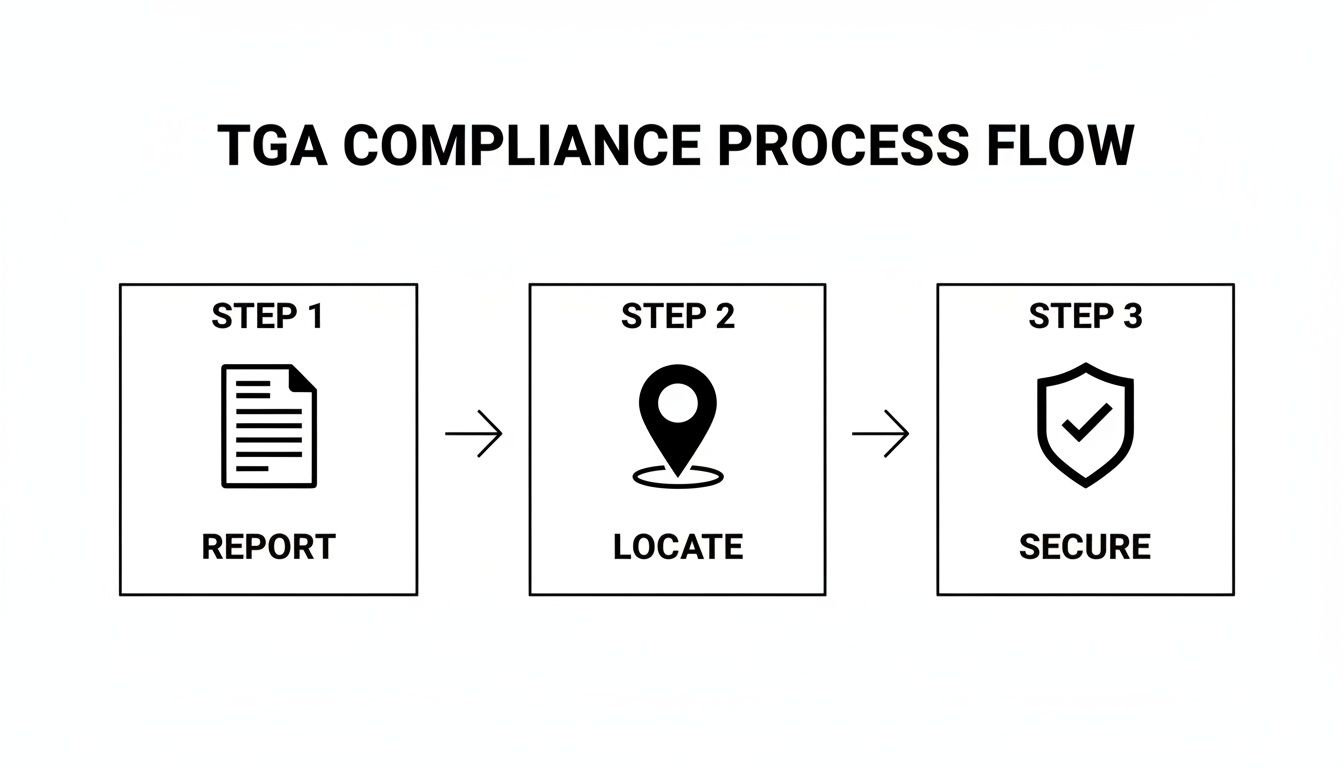
It’s a great visual for how a streamlined workflow helps staff quickly flag an issue, find the exact asset, and pull it from circulation for corrective action.
Building a Foundation for Success
Implementation isn’t a flick of a switch; it's a phased process. It starts with a full audit of your current assets. You can't manage what you don't know you have. From there, you move into project planning, staff training, and finally, the go-live.
But here’s a crucial step that often gets missed: getting buy-in from your clinical teams from day one. Their adoption is the single biggest predictor of whether this whole initiative succeeds or fails.
The most successful implementations pair the software launch with a robust physical tagging strategy from the very beginning. Without durable, reliable tags, the software is flying blind.
This is where the precision of Trotec Laser machines is a game-changer. Partners like Evright Industrial use this technology to create permanent, easily scannable labels that are tough enough for the hospital environment. They become the resilient physical foundation for your entire digital asset management strategy.
If you’re looking for durable labelling that can withstand the rigours of healthcare, you might find their guide on choosing the right traffolyte labels near you helpful. By focusing on both the digital system and its physical connection to your equipment, you set your facility up for long-term success.
Common Questions Answered
When you're looking at bringing asset management software into your facility, a few questions always come up. Here are the straight answers to some of the most common ones we hear from healthcare managers.
What's the Real Cost of This Software?
The price tag can swing quite a bit depending on the size of your facility, how many assets you're tracking, and which features are non-negotiable for your team. You'll find everything from flexible subscription models that suit smaller clinics, right through to comprehensive enterprise systems built for major hospital networks.
While there's an initial investment, most facilities find the system pays for itself within 12 to 24 months. That return on investment comes directly from stopping equipment from going missing, making smarter purchasing decisions, and just running a more efficient operation. Just remember to factor in the cost of both the software and the durable asset tags that make it all work.
Will Our Clinical Staff Get Bogged Down With Training?
Not at all. Modern systems are built to be intuitive, often with mobile apps that feel as familiar as the ones your staff already use on their phones. The whole point is to take administrative work off your clinical team’s plate, not add another complicated tool to their day.
Of course, a bit of initial training is key to a smooth start. But the best platforms are designed to be picked up quickly. A good rollout plan will have short, sharp training sessions geared towards specific roles—from the nurses using equipment on the ward to the biomedical techs who keep it all running.
Can This Software Work With Our Existing Hospital Systems?
Absolutely. The leading platforms are designed to play nicely with others. They can connect directly into the critical systems you already rely on, such as:
- Electronic Health Records (EHR): This lets you link a specific piece of equipment's usage to a patient's file, which is brilliant for accurate record-keeping and billing.
- Enterprise Resource Planning (ERP): This syncs all your asset data with the hospital's main financial and purchasing workflows, giving you a complete picture.
When these systems talk to each other, you create one central, reliable source of information for every asset you own. It automates tedious tasks and keeps your data consistent, which is crucial for running smoothly and staying on the right side of regulations.
Remember, for any of this to work, the physical tags on your equipment have to be up to the job. Evright Industrial uses advanced Trotec Laser technology to create permanent, easy-to-read labels that won't fail in a demanding hospital environment. This ensures your software is always working with accurate, real-time data. See our durable labelling solutions for yourself at https://evrightindustrial.com.au.
Recent Comments